Clear Sky Science · en
The role of self-compassion in the relationship between resilience and negative affect
Why Being Kinder to Yourself Matters
Feeling stressed, anxious, or low is common, and many people wonder why some manage to bounce back more easily than others. This study explores how two inner strengths—resilience (the capacity to recover from setbacks) and self-compassion (treating yourself with kindness rather than harsh self-criticism)—work together to shape our emotional health. Understanding this link can help everyday people, not just clinicians, see how changing the way we talk to ourselves might ease emotional pain.
Bouncing Back from Life’s Ups and Downs
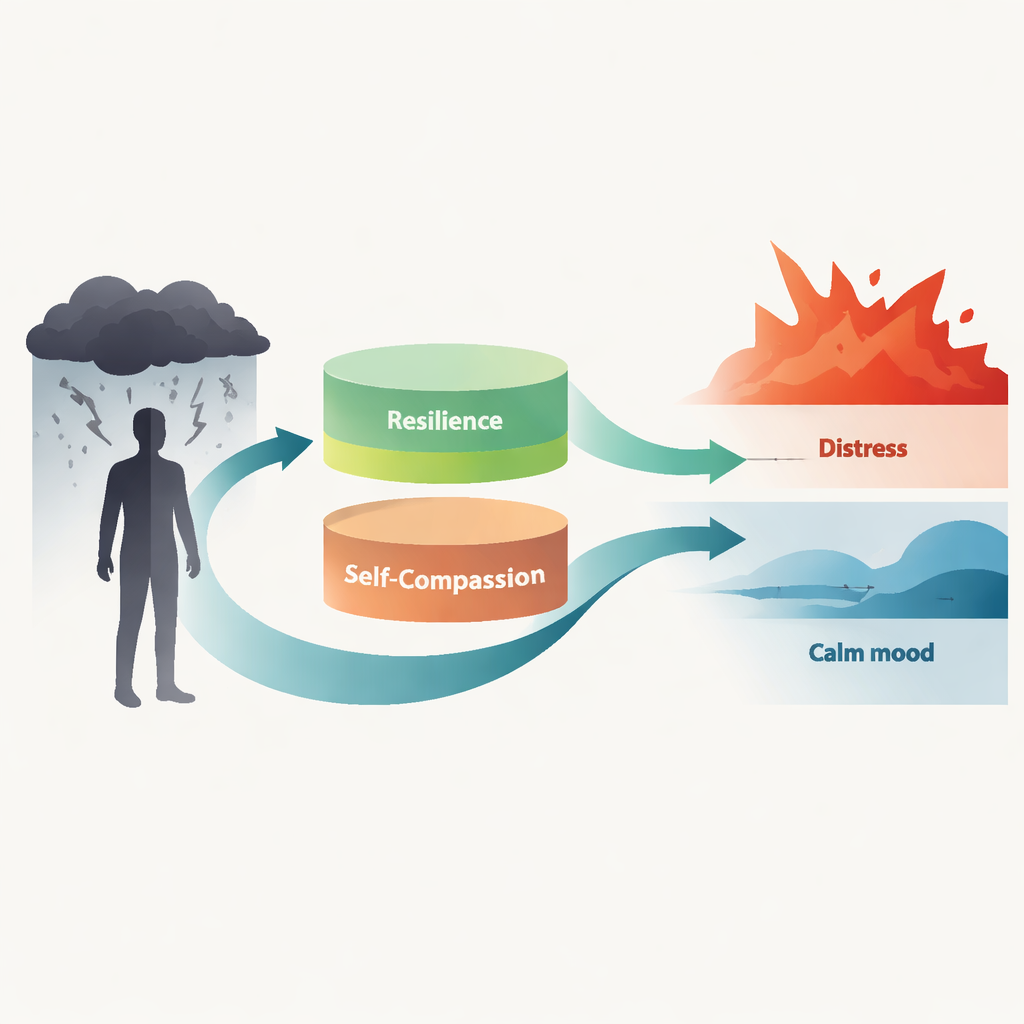
The researchers focused on “negative affect,” a broad term for the emotional load of stress, anxiety, and depression. These problems often appear together and can seriously disrupt daily life, relationships, and work. Modern therapies such as mindfulness- and acceptance-based approaches already aim to strengthen people’s resilience and self-compassion. This study set out to test a specific idea: that resilience does not simply protect people on its own, but does so in part by helping them respond to difficulties with greater self-kindness and emotional balance.
What the Study Did
The team surveyed 488 adults in the general Greek Cypriot population, spanning a wide age range. Participants filled in three short questionnaires: one measuring symptoms of depression, anxiety, and stress; one assessing how resilient they felt—how well they could “bounce back” after hard times; and one capturing self-compassion, including tendencies toward self-kindness versus self-judgment. The researchers then used statistical models to see how these three ingredients—resilience, self-compassion, and negative affect—were connected, while accounting for age and gender.
How Inner Strength and Self-Kindness Work Together
First, the findings confirmed that people who reported higher resilience tended to have fewer symptoms of depression, anxiety, and stress. Resilience was also strongly linked with higher self-compassion. Second, self-compassion itself was a powerful predictor of better emotional health: individuals who were more understanding and less critical of themselves showed much lower levels of negative affect. In fact, self-compassion alone explained a substantial portion of the differences in people’s emotional distress scores.
The Hidden Pathway from Toughness to Emotional Health
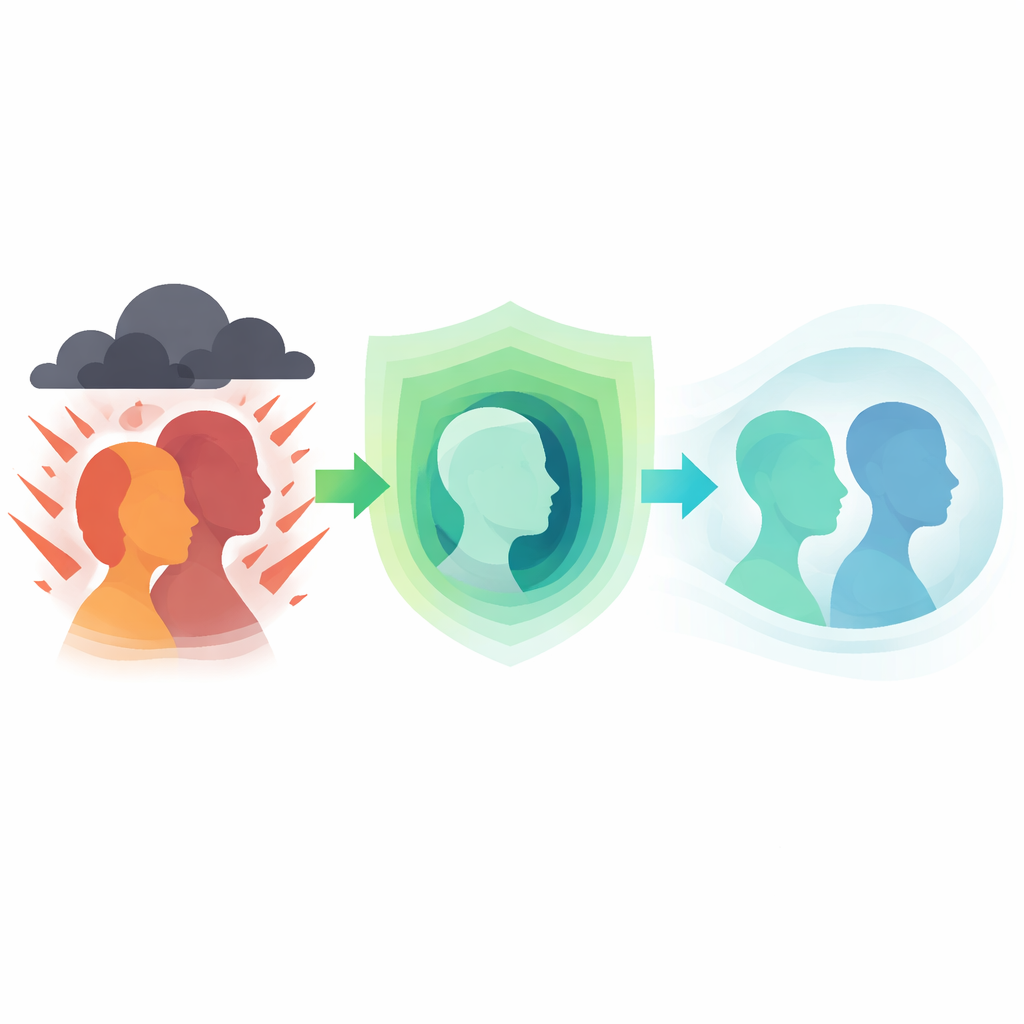
The most important result came from examining the pathway between these traits. When the researchers tested whether self-compassion acts as a bridge between resilience and emotional distress, they found strong evidence that it does. For overall negative affect—and specifically for depression and stress—resilience was linked to better outcomes largely through higher self-compassion. When self-compassion was included in the analyses, the direct link between resilience and these symptoms shrank or disappeared. For anxiety, self-compassion still carried a significant part of the effect, although resilience retained a smaller direct link. One striking pattern suggested that resilience without much self-compassion might sometimes look more like emotional toughness or stoicism, which can keep people going but may leave underlying distress unresolved.
What This Means for Everyday Life and Therapy
Put simply, the study suggests that “being strong” is not enough on its own to protect emotional health; how gently you treat yourself when things go wrong is a crucial part of the picture. Resilience seems to work best when paired with self-compassion, turning the ability to withstand hardship into genuine emotional recovery. For individuals, this points toward practical steps like learning to notice self-critical thoughts, responding with warmth instead of blame, and viewing struggles as part of being human rather than as personal failures. For therapists and mental health programs, it supports weaving self-compassion training into resilience-building efforts to help people reduce stress, anxiety, and depression more effectively.
Citation: Lajunen, T.J., Adonis, M., Giagkou, M. et al. The role of self-compassion in the relationship between resilience and negative affect. Sci Rep 16, 11939 (2026). https://doi.org/10.1038/s41598-026-42585-x
Keywords: self-compassion, resilience, stress and anxiety, depression, emotional wellbeing