Clear Sky Science · en
In situ formation of nanocrystalline Ni(OH)2 in alkaline electrolyte explains superior capacitance and cycling stability of Ni3S2/NF electrodes
Why this matters for future energy storage
Solar panels and wind turbines are only as useful as our ability to store their power when the sun sets or the wind calms. This study explores a promising path toward better supercapacitors—devices that charge in seconds yet can last for tens of thousands of cycles. The researchers show that a nickel-based material, grown directly on a porous metal sponge, quietly transforms during use into a structure that stores energy more effectively and remains remarkably stable over time.
Building a power sponge
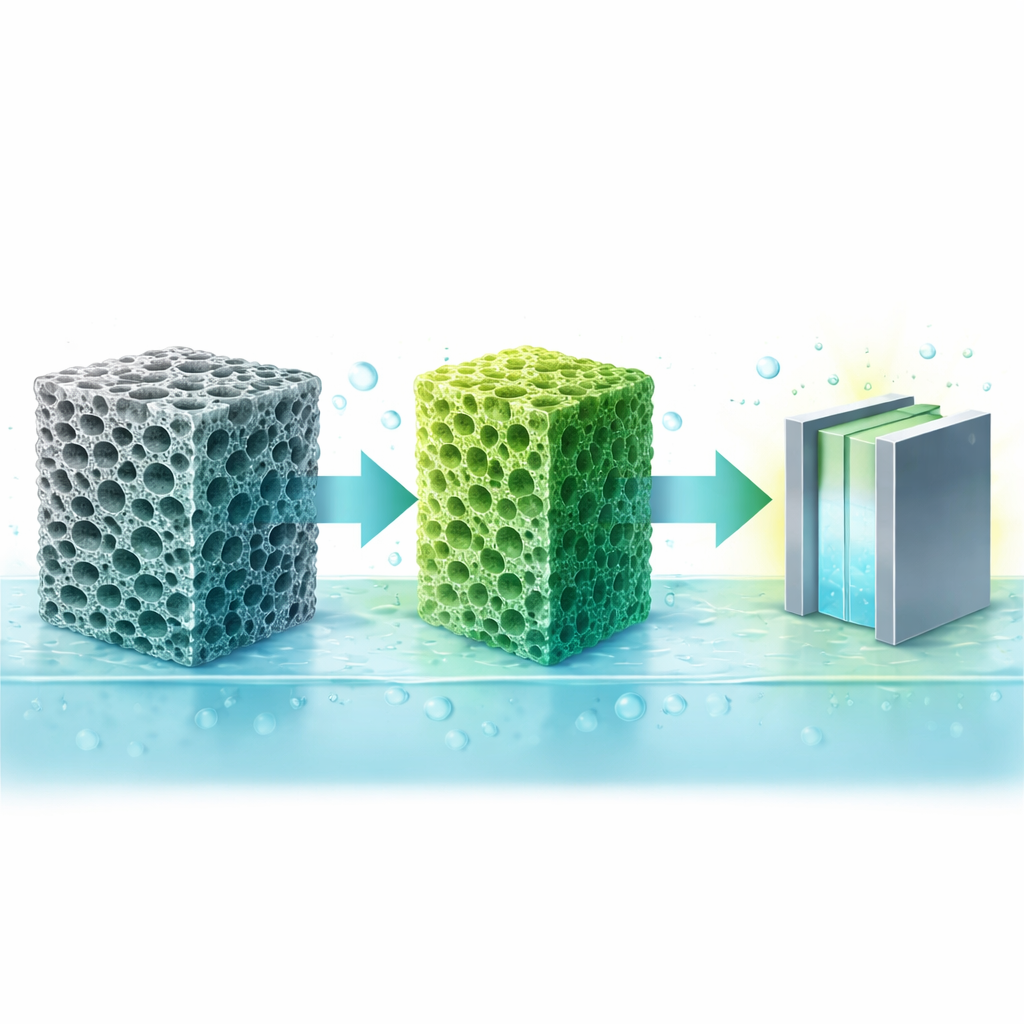
The team started with nickel foam, a lightweight metallic sponge with a huge internal surface area. Using a simple one-step heat-and-solution process, they converted the outer region of this foam into a layer of nickel sulfide (specifically Ni3S2). This layer forms as thin, porous sheets that cling strongly to the metal, creating a free-standing electrode that needs no extra binders or supports. The large internal area and good electrical contact of the foam allow charges to move quickly, a key requirement for fast-charging supercapacitors.
A surface that reshapes itself
When the new electrodes were first tested in a concentrated alkaline liquid, their behavior was anything but static. During the first few dozen charging and discharging sweeps, the electrical storage capacity rose instead of falling. At the same time, light-scattering and X-ray measurements showed that the original nickel sulfide at the surface was being chemically altered. Sulfur slowly left the outer region, and nickel atoms combined with oxygen and hydrogen from the liquid to form a thin skin of nickel hydroxide and related nickel–oxygen compounds. At this early stage the inner sulfide structure stayed largely intact, but the surface layer—where the electrochemical action takes place—was already being rewritten.
From simple coating to smart sandwich
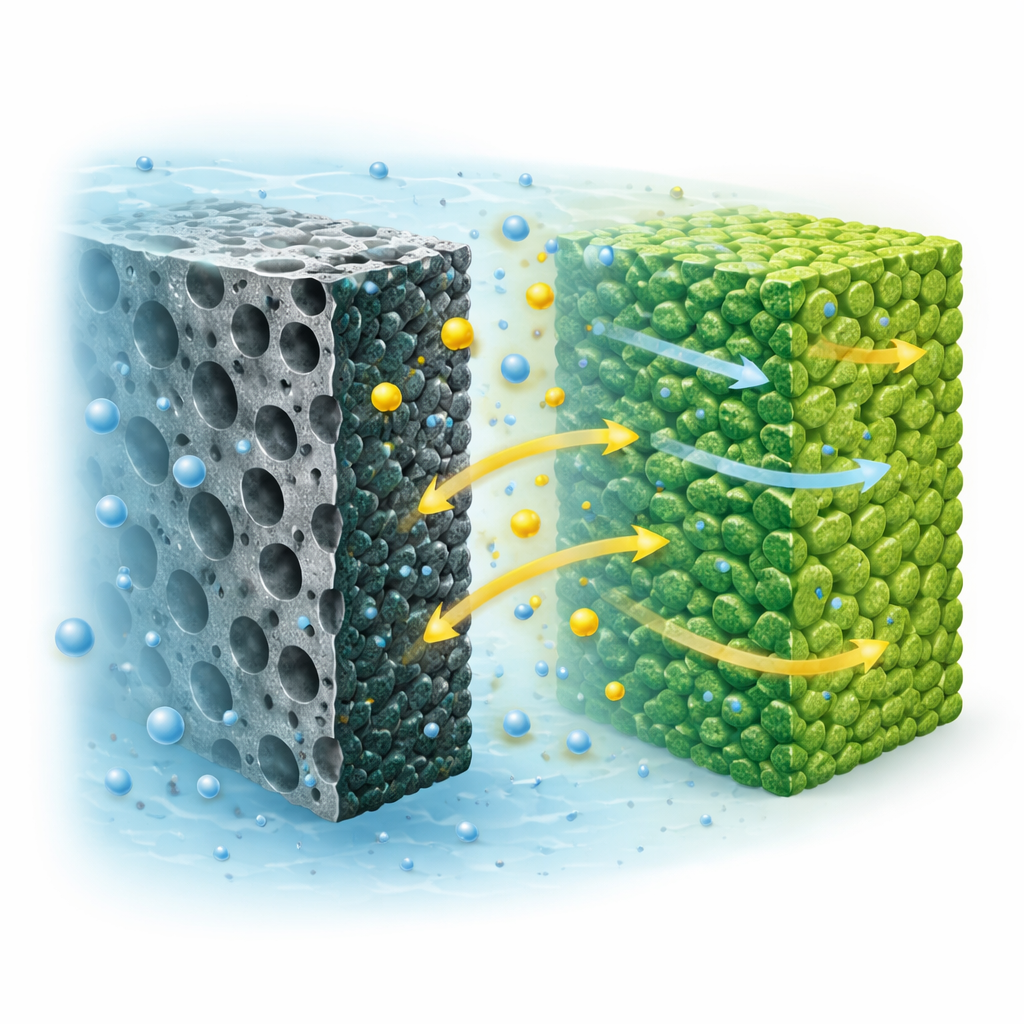
With many more charge–discharge cycles, the story evolved further. After tens of thousands of cycles, clear signatures of tiny nickel hydroxide crystals appeared, only a few billionths of a meter across. These formed a new multi-layered architecture: a nanocrystalline nickel hydroxide shell resting on the original nickel sulfide, all anchored to the nickel foam framework. Although the total geometric surface area of the electrode actually decreased, its ability to store charge remained high and could even be revived after losses by running a different style of voltage sweep. This shows that most of the energy storage now comes from chemical reactions in the hydroxide layer rather than from simple surface area.
A self-optimizing power layer
The researchers found that pushing the electrode to somewhat higher voltages during activation caused the nickel hydroxide layer to reorganize into a more open, water-rich form. This rearranged phase makes it easier for ions from the liquid to slip in and out during charging, boosting the effective capacity. Meanwhile, the underlying nickel sulfide and foam act like a robust electrical backbone and mechanical buffer, conducting electrons and absorbing strain as the outer layer breathes with each cycle. Together, this self-formed "shell-on-core" structure maintains around three-quarters of its capacity even after more than 30,000 cycles and serves as the positive side of a working hybrid supercapacitor device that retains over 80% of its capacity after 22,000 device-level cycles.
What this means for real devices
For a non-specialist, the key message is that the superior performance of these nickel-based electrodes is not just a property of the starting material—it emerges during operation. The nickel sulfide surface naturally converts in the alkaline liquid into a nanoscopic nickel hydroxide skin that is exceptionally good at repeated charge storage, while the original sulfide and metal foam keep everything well-connected and stable. Recognizing and harnessing this built-in transformation provides a practical recipe for long-lived, high-capacity supercapacitors and suggests that many other metal sulfide electrodes may hide similar self-improving behavior waiting to be designed into future energy storage systems.
Citation: Abdullin, K.A., Gabdullin, M.T., Gritsenko, L.V. et al. In situ formation of nanocrystalline Ni(OH)2 in alkaline electrolyte explains superior capacitance and cycling stability of Ni3S2/NF electrodes. Sci Rep 16, 12209 (2026). https://doi.org/10.1038/s41598-026-42576-y
Keywords: supercapacitors, nickel foam, nickel sulfide, nickel hydroxide, energy storage