Clear Sky Science · en
Seed quality and nutritional composition of conventional and zinc biofortified wheat under hermetic and conventional storage techniques
Why Storing Wheat Right Matters for Everyone
For hundreds of millions of families, especially in countries like Pakistan, wheat is not just a side dish—it is the main food on the table. New “biofortified” wheat varieties are bred to carry extra zinc, a nutrient many people lack and which is vital for growth and immunity. But there is a catch: once wheat is harvested, it may sit in farmers’ storerooms for months before it is eaten or planted again. This study asks a simple but powerful question with big implications for food security: does the way farmers store wheat quietly erase those nutritional benefits and damage the seed’s ability to sprout?
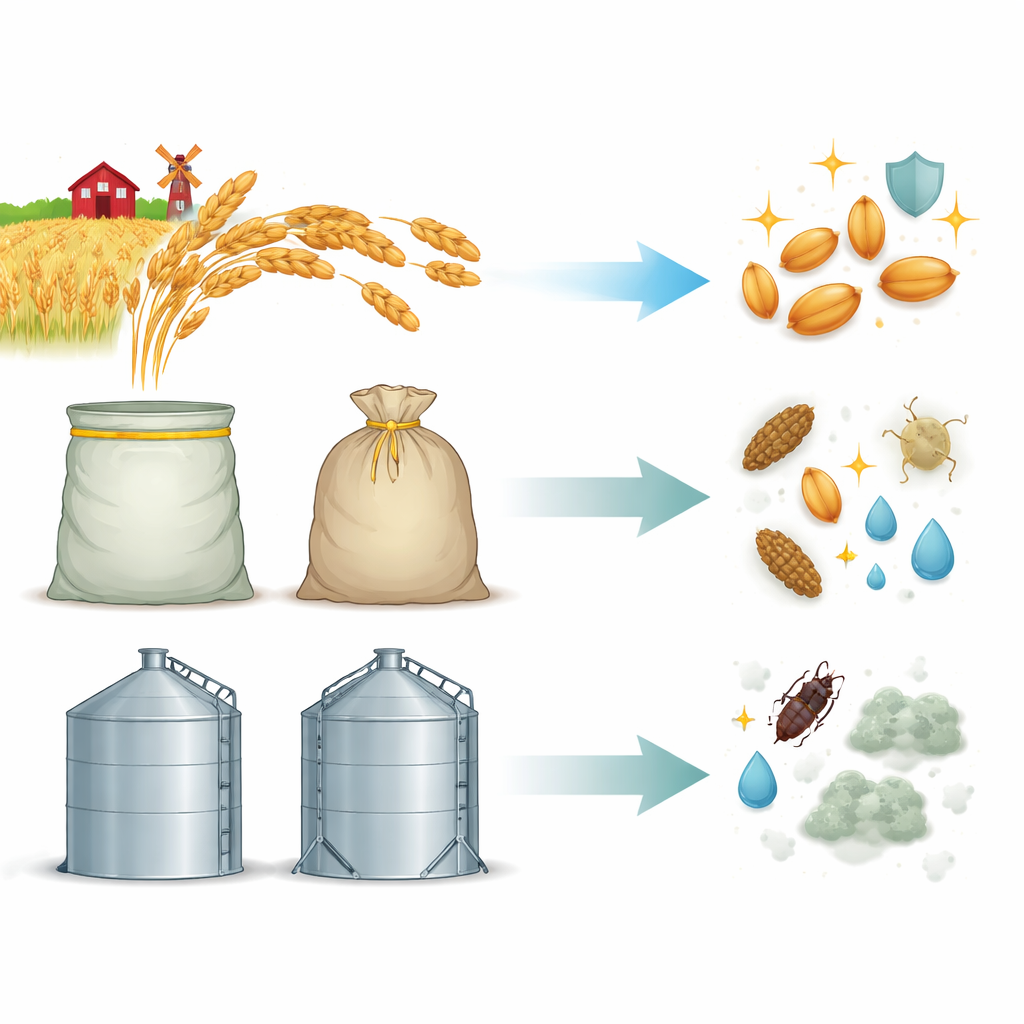
Different Ways to Store the Same Grain
The researchers worked with four wheat varieties, including two zinc-rich types and two regular types, and stored them for a full year under real farm conditions at four locations in Pakistan. They compared common storage methods—woven polypropylene (PP) bags and metal silos—with newer airtight “hermetic” bags, both imported and locally made. Each storage unit held 20 kilograms of freshly harvested wheat, and samples were taken every three months to track how the seeds were aging and how their nutrients were holding up.
Moisture: The Invisible Enemy
One of the clearest patterns was how strongly moisture shaped the fate of the grain. In the leaky PP bags and unsealed metal silos, wheat steadily absorbed water from humid air, especially at the two Khanewal sites, where humidity was high. Seed moisture climbed above 15% in some cases, particularly for the variety Nawab-21. In contrast, hermetic bags kept moisture low and stable, because their plastic layers act as a barrier to water vapor. That dry, closed environment slowed the chemical reactions that age seeds and helped preserve their internal structures.
From Healthy Seed to Weak Sprout
As moisture rose in conventional storage, seed health declined. Germination—the ability of seeds to sprout—dropped sharply in PP bags and metal silos, with Nawab-21 falling to roughly half of its starting germination after a year at the most humid sites. Measures of seed “leakiness,” such as the electrical conductivity of water in which seeds were soaked, climbed in these settings, signaling damaged cell membranes. In hermetic bags, by contrast, most varieties retained high germination and low leakiness. Biochemical markers told the same story: seeds from PP bags and silos showed higher levels of malondialdehyde, a byproduct of fat breakdown that signals oxidative stress, along with more reducing sugars and greater activity of the starch-digesting enzyme alpha-amylase—classic signs of seeds burning through their food reserves and deteriorating.
Keeping Nutrition and Pests in Check
The study also tracked what happened to key nutrients. Zinc and iron levels stayed remarkably steady in hermetic bags, with only small declines after twelve months. In conventional storage, however, these minerals fell more noticeably, especially where grains were heavily eaten by insects such as the lesser grain borer and other stored-grain pests. Protein content followed a similar pattern, dropping from around 12–13% to as low as 5–8% in PP bags and metal silos, while remaining far better preserved in hermetic bags. Farmers paid another price in outright losses: up to 30% of grain weight and 66% of kernels were damaged in conventional storage, compared with less than 1% losses in hermetic bags. Mold-produced toxins called aflatoxins were detectable, though still low, in PP bags at the humid sites, while they were essentially absent in hermetic storage, which starves both insects and fungi of oxygen and excess moisture.
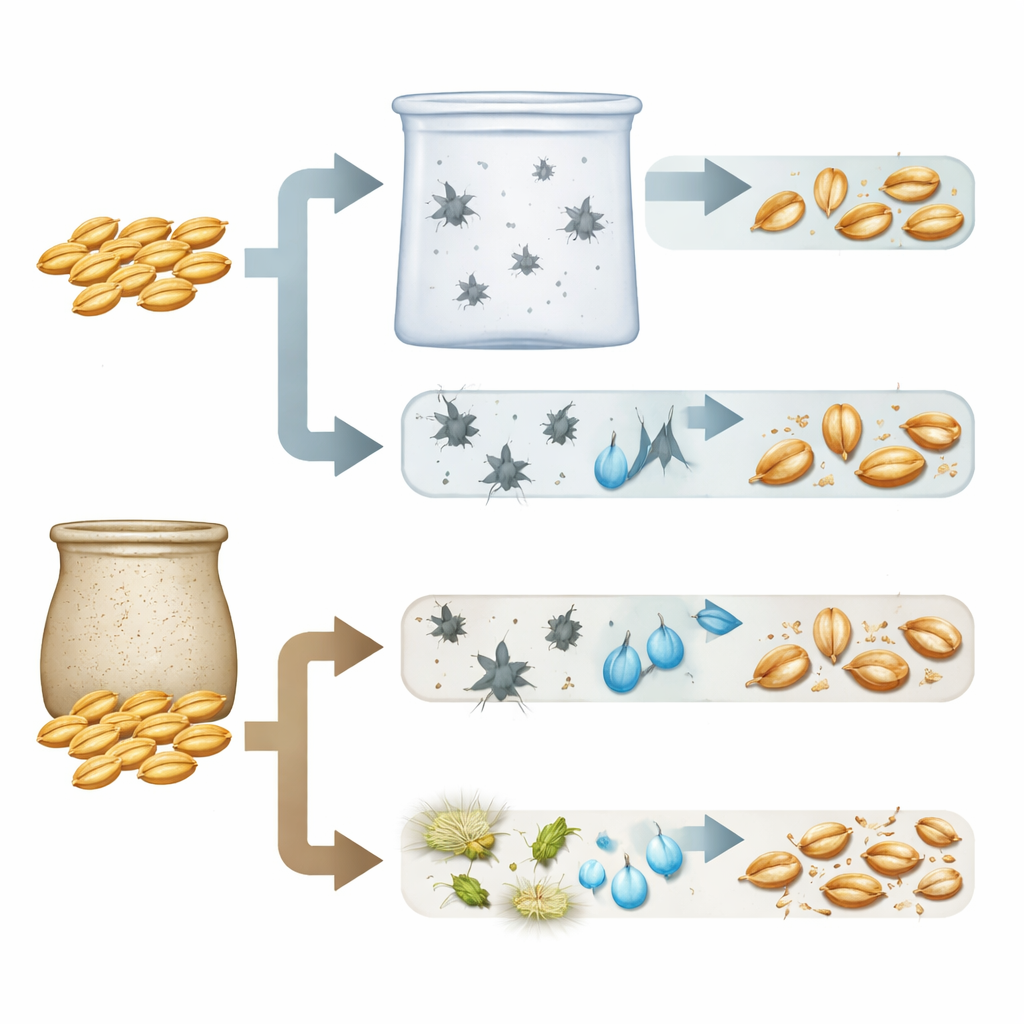
What This Means for Food and Farmers
In plain terms, the study shows that how wheat is stored can make the difference between seed that is vigorous and nutritious and seed that is tired, insect-riddled, and less nourishing. Hermetic bags acted like simple, low-tech safes for both food and seed: they kept wheat dry, limited oxygen, blocked pests, and largely protected zinc, iron, and protein in both biofortified and regular varieties. Conventional PP bags and metal silos, by contrast, allowed humidity, insects, and fungi to degrade the grain, cutting yields for the next crop and quietly reducing the nutritional value of a staple food. For farmers and policymakers aiming to fight hidden hunger and postharvest losses, the message is straightforward: investing in airtight storage is a practical, scalable way to protect both the quantity and quality of wheat that feeds millions.
Citation: Muazzam, M., Bakhtavar, M.A., Farooq, U. et al. Seed quality and nutritional composition of conventional and zinc biofortified wheat under hermetic and conventional storage techniques. Sci Rep 16, 12337 (2026). https://doi.org/10.1038/s41598-026-42572-2
Keywords: hermetic grain storage, zinc biofortified wheat, postharvest losses, seed quality, aflatoxin prevention