Clear Sky Science · en
Extraction of natural fibres from Agave fourcroydes leaves and multi-property evaluation for potential textile applications
From Desert Plants to Everyday Materials
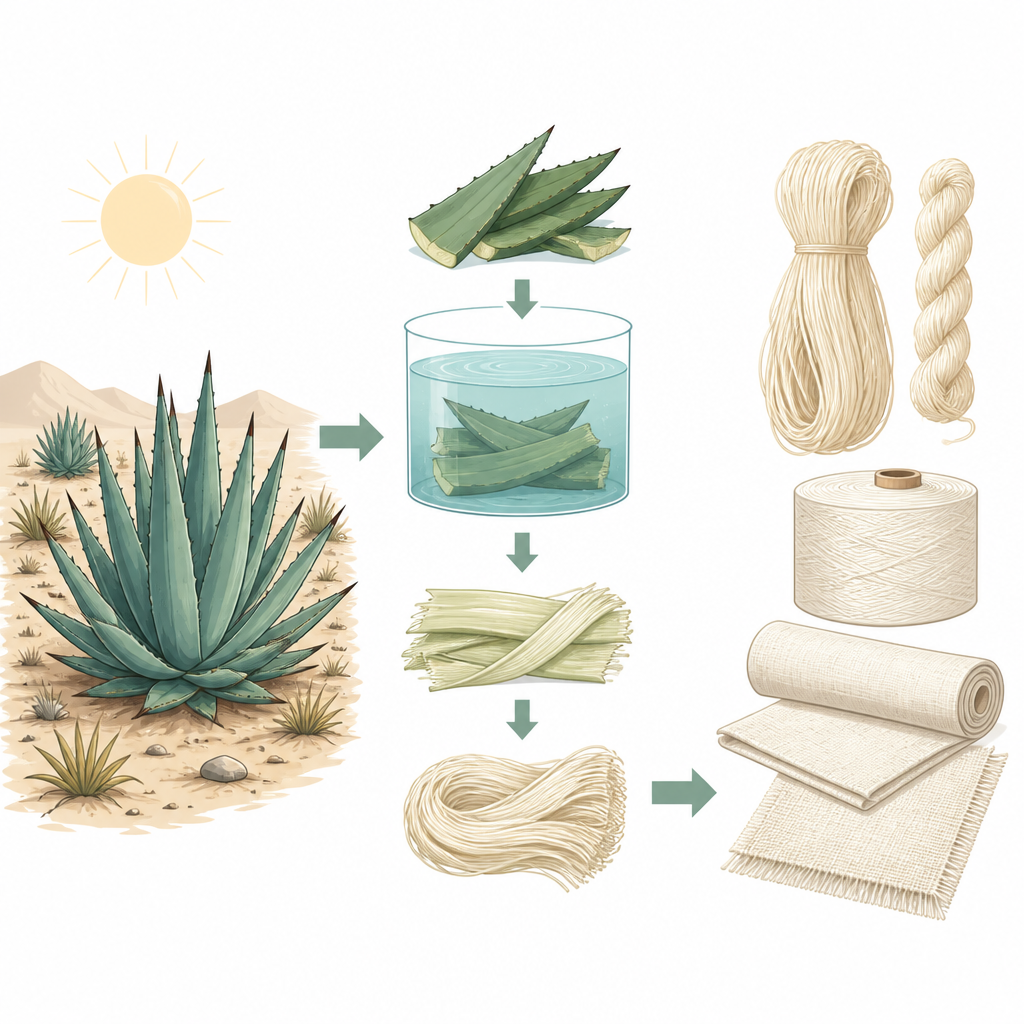
Many of the clothes and packaging materials we use come from resources that place a heavy burden on the environment. This study explores whether a hardy desert plant called Agave fourcroydes, long used for rope, can also provide fibres suitable for modern textiles. If successful, it could turn a tough, drought tolerant crop into a new, eco friendly source for yarns, fabrics, and packaging materials that rely less on water and chemicals than conventional fibres.
A Tough Plant with Hidden Potential
Agave fourcroydes, also known as henequen, grows in hot, dry regions where many crops struggle. Its long, sword like leaves contain strong fibres that have traditionally been used for cordage and mats. However, almost all earlier research focused on using these fibres to reinforce plastic composites, not on how they might behave in spinning and weaving. The authors set out to fill that gap by treating henequen leaves like a candidate textile fibre and asking clear questions: How long are the fibres, how strong and fine are they, how dense and heat resistant, and what do they look like up close under the microscope.
How the Fibres Were Freed from the Leaves
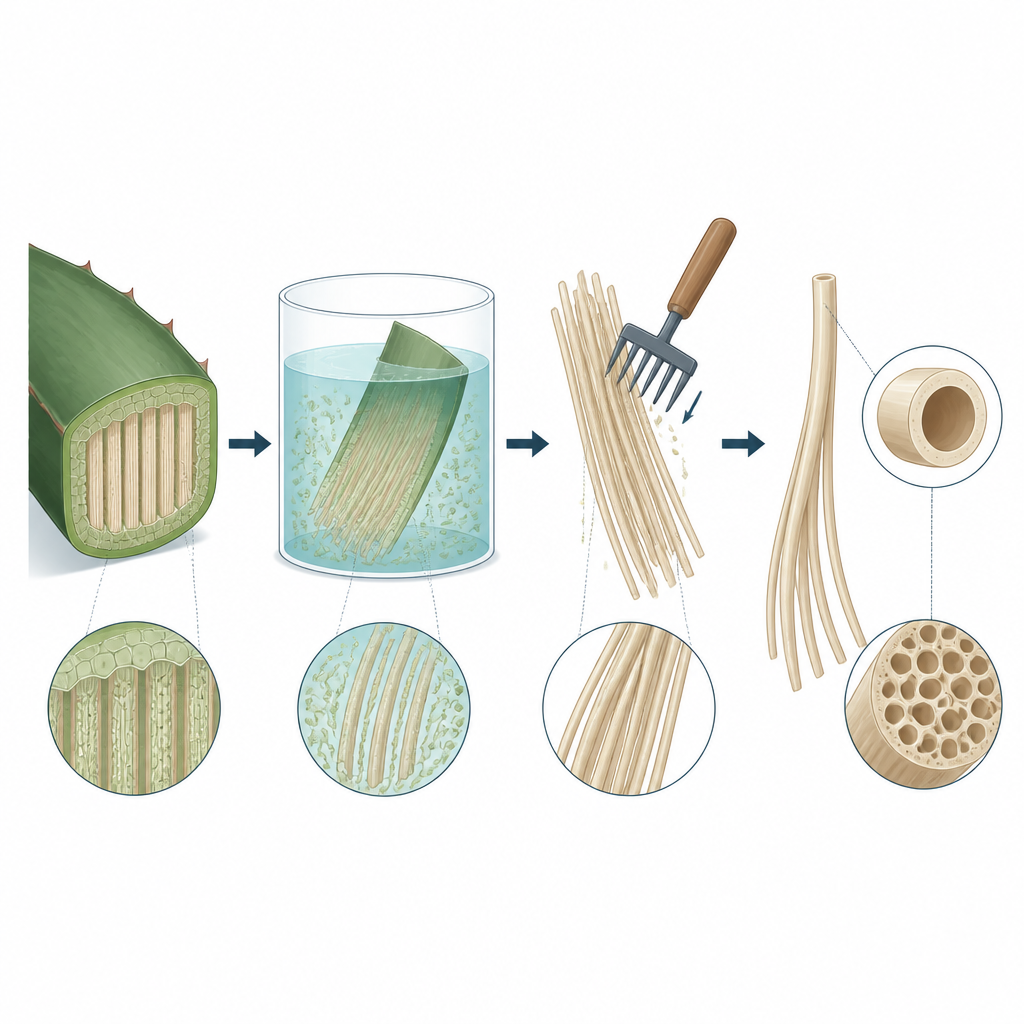
To obtain the fibres, the team harvested mature leaves from plants growing in a forest area near Hyderabad, India. After removing the sharp tips and edges, they bundled the leaves and soaked them in water for 19 days, a process called retting. Natural microbes gradually broke down the soft, gummy tissue that holds the leaf together, leaving the tougher fibre bundles mostly intact. The researchers then pounded and rinsed the leaves to release the fibres and laid them in the sun for a week to dry. This simple, water based method yielded about 4 percent fibre by weight from each leaf, comparable to well known species such as sisal.
Looking Inside the Fibres
Once dried, the fibres were measured and examined using a suite of tests similar to those used for jute and other industrial fibres. The strands were found to be very long, in the range of 50 to 110 centimetres, qualifying as extra long staple fibres that are attractive for spinning strong yarns. Microscopic images showed a rough outer surface with small hairs and pores, which increases friction between fibres and helps them grip each other during twisting. Cross sections revealed a honeycomb like interior with hollow channels called lumens, a structure that can trap air, lower weight, and improve thermal insulation and breathability in fabrics. Chemical analysis confirmed the expected mix of plant building blocks such as cellulose, hemicellulose, lignin, and waxes.
Strength, Thickness, Weight, and Heat Tolerance
For practical textile use, a fibre must not only be long but also strong enough and not too thick or heavy. Tests showed that bundles of Agave fourcroydes fibres have strength levels above the minimum typically required for textile processing, though somewhat lower than the strongest bast fibres. Their fineness, expressed as tex, placed them on the coarser side compared with cotton or jute, but similar to other leaf fibres used for ropes and packaging. The measured true density was close to that of sisal and pineapple leaf fibre, indicating compact cell walls despite the internal hollows. Colour measurements showed a natural grey to dark grey tone, suggesting that some products might avoid or reduce dyeing, which is one of the most water and chemical intensive stages in textile manufacturing. Thermal analysis revealed that the fibres remain stable up to about 220 degrees Celsius, high enough to withstand typical spinning, finishing, and ironing conditions without serious damage.
What This Means for Future Textiles
Putting all these results together, the study suggests that fibres from Agave fourcroydes are promising for certain types of textiles, especially where durability, bulk, and eco friendly sourcing matter more than softness or fineness. Their extra long length, adequate strength, hollow structure, and good heat tolerance make them suitable for coarse yarns, packaging textiles, and functional products where insulation and robustness are valued. While more work is needed to fine tune spinning methods and explore blending with other fibres, this drought tolerant desert plant appears capable of supplying a sustainable new stream of natural fibre for the textile sector.
Citation: Pathan, Y., Alapakam, N., Hemavathy, R.V. et al. Extraction of natural fibres from Agave fourcroydes leaves and multi-property evaluation for potential textile applications. Sci Rep 16, 15409 (2026). https://doi.org/10.1038/s41598-026-42567-z
Keywords: agave fibre, natural textiles, sustainable materials, leaf fibre extraction, eco friendly packaging