Clear Sky Science · en
CD44v6 is associated with tumor aggressiveness and chemoresistance in bladder cancer
Why this matters for patients and families
Bladder cancer is one of the most common cancers worldwide and is notorious for coming back and becoming harder to treat over time. Many patients eventually receive powerful chemotherapy drugs such as cisplatin, but tumors often adapt and survive. This study focuses on a particular molecule on the surface of bladder cancer cells, called CD44v6, and asks a simple, crucial question: can this molecule help explain why some tumors are more aggressive and resistant to treatment—and could it become a new handle for earlier diagnosis and smarter therapies?
A surface flag on dangerous tumor cells
Every cell in our body carries a forest of tiny protein “antennas” on its surface that help it sense and respond to its surroundings. CD44 is one such antenna, and CD44v6 is a special version that appears mainly on certain tissues and many tumors. The researchers began by looking at large cancer databases and tumor samples from patients with different stages of bladder cancer. They found that most bladder tumors carried CD44v6, and its presence became more frequent and intense as the disease advanced and spread. Importantly, CD44v6 was abundant on tumor cells but absent from normal bladder lining, hinting that it might serve as a tumor-specific flag that distinguishes cancerous from healthy tissue.
Linking CD44v6 to tumor behavior
To move beyond correlation, the team examined how CD44v6 relates to the internal wiring of cancer cells. By sequencing RNA—the “activity readout” of genes—from patient tumors and from carefully engineered cell lines with low, high, or selectively high CD44v6, they found that tumors rich in this molecule shared a common gene signature. These tumors activated gene programs linked to cell movement, interactions with the surrounding tissue scaffold, low oxygen stress, and key stress-response regulators such as the p53 family. When they mapped these CD44v6 patterns onto existing molecular subtypes of bladder cancer, CD44v6-positive tumors neatly lined up with known high-risk, basal/squamous-like groups that are associated with worse outcomes and poorer responses to chemotherapy. 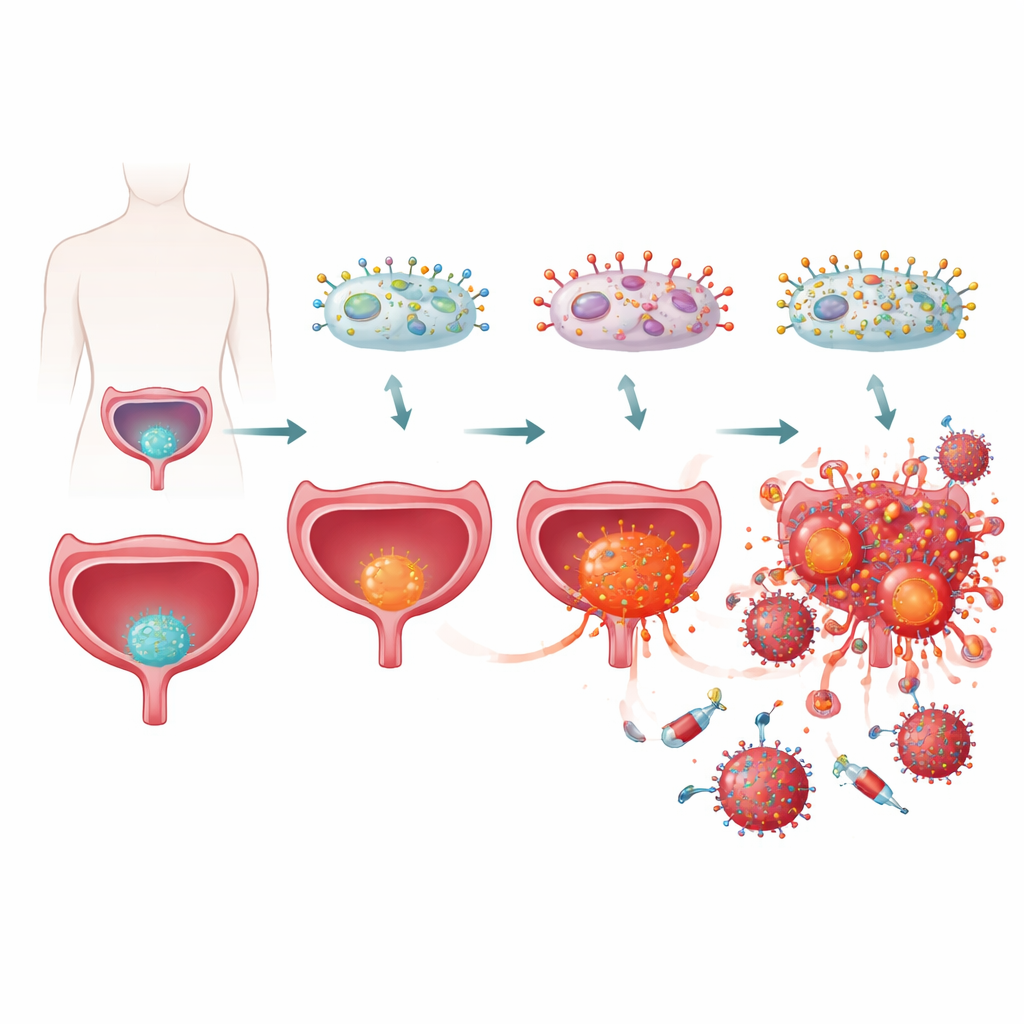
From lab dishes to tumors in mice
Next, the researchers tested how CD44v6 affects the actual behavior of bladder cancer cells. Using human cell lines grown in the lab, they sorted cells into groups with low CD44, high CD44, or high CD44v6 and compared how quickly they grew, moved, and invaded through barrier-like membranes. Cells enriched in CD44v6 tended to be more invasive and, in some contexts, more mobile—especially in models that started out less aggressive. When these different cell populations were implanted into mice, those carrying CD44v6-high cells formed faster-growing, poorly organized tumors that blurred the boundary between tumor and surrounding tissue. These tumors also showed reduced levels of E‑cadherin, a protein that usually helps cells stick together in orderly layers, reinforcing the picture of CD44v6 as a marker of a more mobile, shape-shifting, and aggressive cancer cell state. 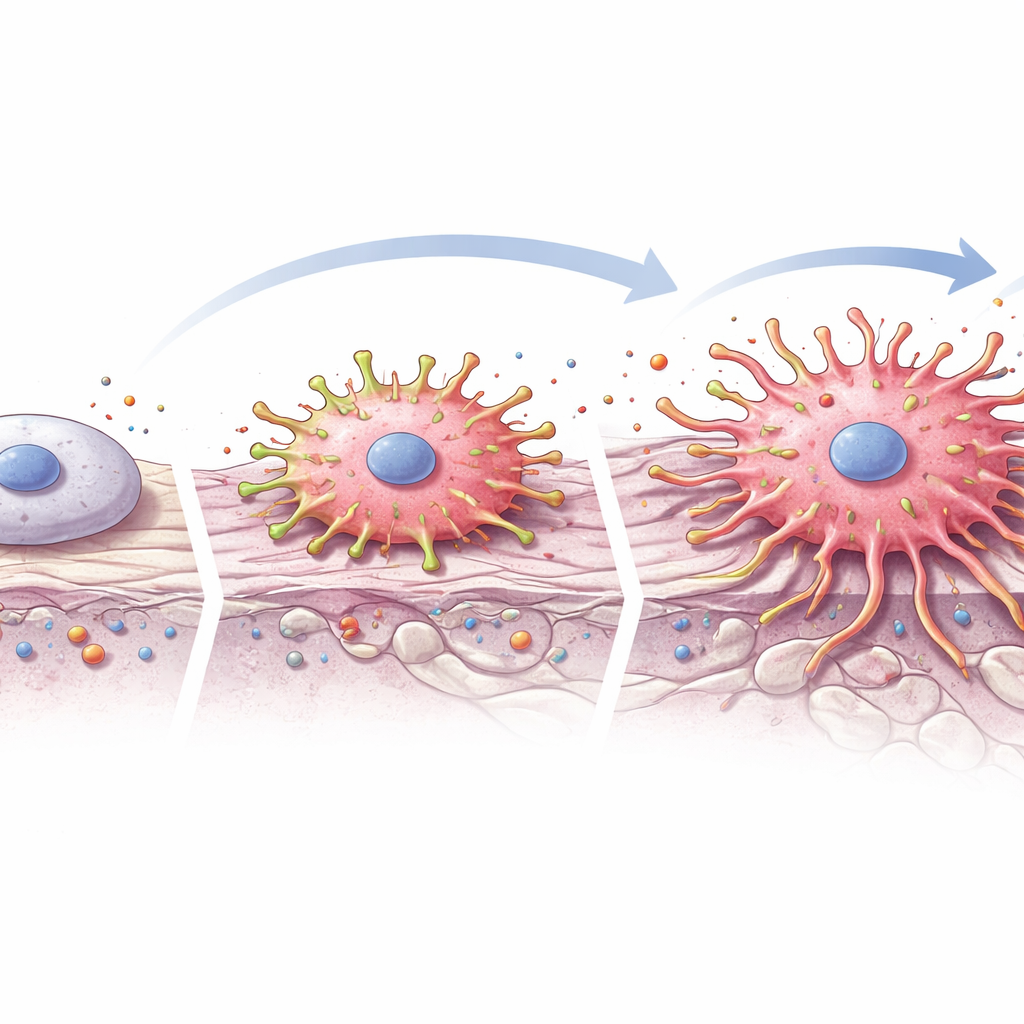
How CD44v6 ties into drug resistance
The study also probed why some bladder cancers withstand cisplatin, a standard chemotherapy. By analyzing small regulatory RNA molecules (miRNAs) and gene activity, the authors found that CD44v6-high cells turned on many genes previously linked to resistance to platinum-based drugs and to so‑called cancer stem cell traits. In lab experiments, when mixed cell populations were exposed to cisplatin, the survivors were enriched in CD44v6-positive cells, both in cell cultures and in tumors grown in mice. Direct drug-sensitivity tests confirmed that CD44v6-high cells needed higher doses of cisplatin to be killed, supporting the idea that this surface molecule marks—and may help drive—a population of particularly resilient cancer cells that can repopulate the tumor after treatment.
What this could mean for future care
Taken together, the findings suggest that CD44v6 is more than a passive bystander: it marks bladder cancer cells that are better at invading tissue and escaping chemotherapy, and it aligns with known high-risk molecular subtypes. For patients, this raises two promising possibilities. First, measuring CD44v6 in tumor samples could help doctors better estimate how aggressive a bladder cancer is and how likely it is to respond to standard treatments. Second, because CD44v6 is largely absent from normal bladder tissue but abundant on dangerous cancer cells, it is an appealing target for new therapies such as antibody-drug conjugates or engineered immune cells. While more work is needed to translate these discoveries into clinical tools, this study provides a strong scientific foundation for using CD44v6 both as a warning signal of high-risk disease and as a bullseye for future, more precise bladder cancer treatments.
Citation: Lodewijk, I., Rubio, C., Eriksson, P. et al. CD44v6 is associated with tumor aggressiveness and chemoresistance in bladder cancer. Sci Rep 16, 13108 (2026). https://doi.org/10.1038/s41598-026-42566-0
Keywords: bladder cancer, CD44v6, chemoresistance, biomarkers, targeted therapy