Clear Sky Science · en
Long period quakes linked to Mefite D’Ansanto (Italy) mantellic CO2 emissions
Hidden Rumblings Beneath a Quiet Valley
In a remote valley of southern Italy, an eerie lake quietly exhales huge amounts of carbon dioxide from deep within the Earth. Although the landscape seems peaceful, sensitive instruments reveal faint, rhythmic quivers in the ground. This study explores those subtle shakes – called long-period quakes – to uncover how rising gas and underground water interact in the rocks below, and what that might mean for both local hazards and our broader understanding of how deep Earth fluids influence earthquakes.
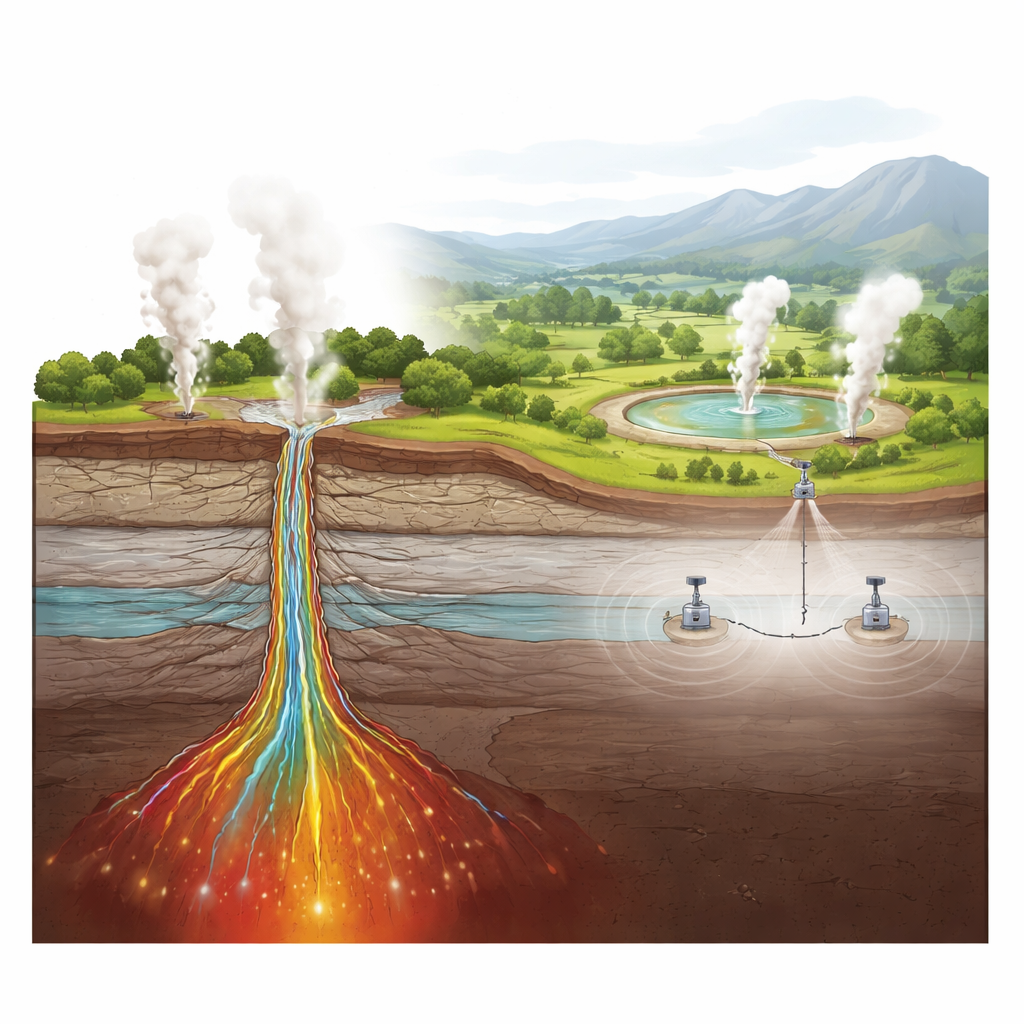
A Natural Laboratory of Earth’s Deep Breath
Mefite D’Ansanto, the focus of the study, is one of the largest known natural sources of cold, mantle-derived carbon dioxide at Earth’s surface. The gas escapes through vents and a small bubbling lake set above folded and faulted rock layers between two earthquake-prone regions of the southern Apennines. Previous work had shown that the area is constantly “humming” with hydrothermal tremor – a continuous, low-level vibration linked to gas and fluid flow underground. On top of this background noise, researchers noticed brief, low-energy bursts that looked different: short wave trains, only a few seconds long, with simple tones concentrated between about 0.7 and 7 hertz. These signals resembled the long-period events typically seen in active volcanoes, even though Mefite has no magma at the surface.
Listening for Repeating Underground Notes
The team deployed a small array of seismometers around the vents for several months in 2021 and used one particularly clear event as a “template” to search for similar signals in the continuous recordings. By carefully cross‑correlating the chosen waveform with the data and screening by amplitude, they built a catalogue of nearly a thousand matching long-period quakes at the station closest to the lake, and hundreds more at nearby stations. An advanced signal‑separation technique, Independent Component Analysis, showed that these events consistently contain two main tonal bands: one around 2–4 hertz, similar to the ever-present tremor, and another near 6.5–7.5 hertz that stands out as a distinct, almost single‑note contribution. This pattern suggests that the quakes represent a specific source process that can shift between different “modes” of vibration.
Cracks, Bubbles, and Ringing Rock
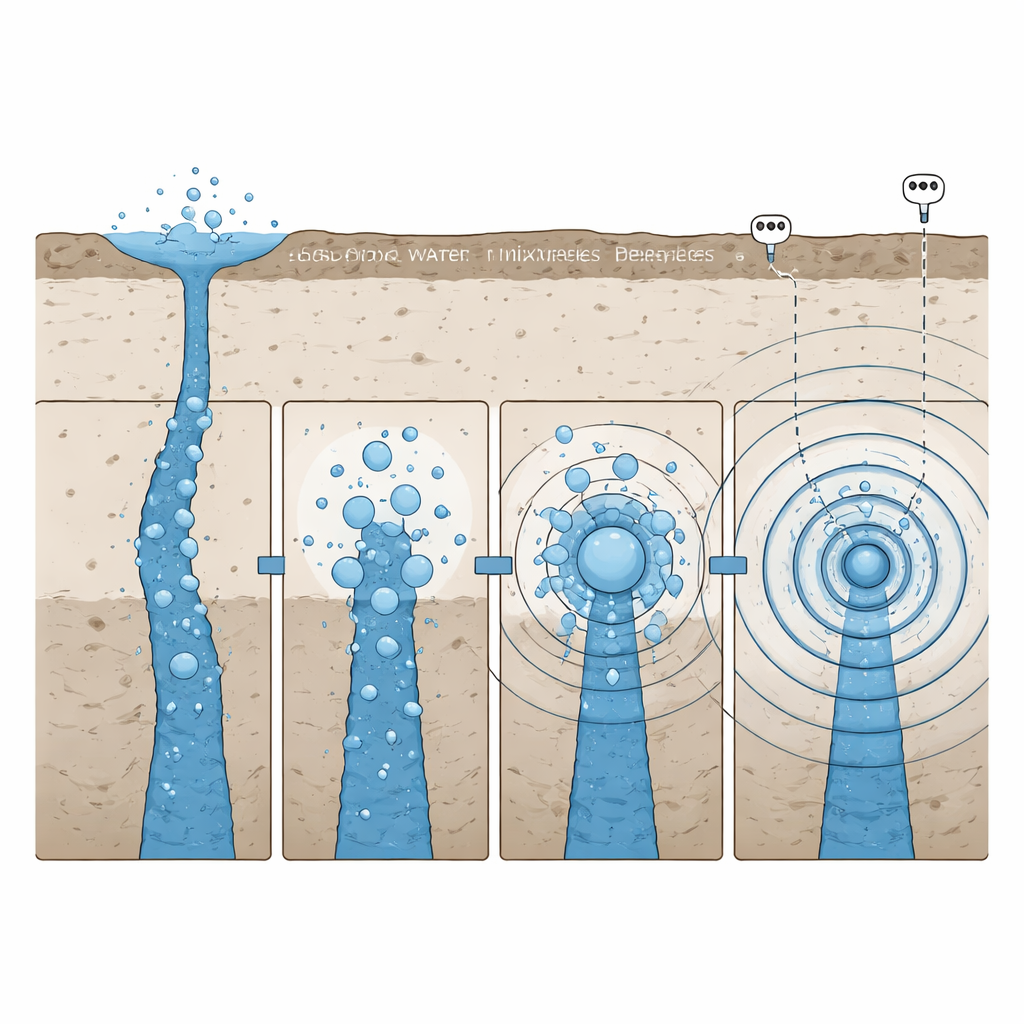
To probe what might be vibrating, the researchers analyzed how the signals fade with time using a method known as Sompi analysis. The dominant tones, between about 3.5 and 10 hertz, decay quickly, indicating a low “quality factor” – the hallmark of a lossy resonator such as fluid sloshing in a rough crack. By combining these values with simple physical formulas, they inferred fluid‑filled cracks a few meters long but only fractions of a millimeter wide, located roughly 40 meters below the surface, deeper than the main sources of the continuous tremor. A separate bubble‑resonance calculation suggests that the effective size of gas patches in the water is on the order of several centimeters, comparable to the size of the vents now visible at the dried‑out lake bed. All lines of evidence point to CO₂‑rich water vibrating within narrow fractures as gas bubbles form, grow, and oscillate.
Mixed Waves on Their Way to the Surface
The team also examined how the ground moves during each event. At the closest station, many stronger quakes show nearly straight‑line particle motion pointing back toward the lake, a hallmark of compressional waves that travel fastest through rock. Farther away, the motion becomes more elliptical, indicating a growing contribution from surface waves that ripple along the top of the ground. By measuring tiny time delays between stations and using a shallow seismic‑velocity image of the subsurface, the authors concluded that the long‑period quakes are made of a mix of body waves and surface waves traveling through layered, water‑bearing rocks. Their apparent speeds and directions are consistent with a compact source beneath the vents rather than with distant earthquakes.
Why These Gentle Quakes Matter
Altogether, the study shows that the unusual long‑period quakes at Mefite D’Ansanto are not miniature tectonic earthquakes, nor simple noise, but the rhythmic ringing of gas‑charged water in narrow cracks, roughly 40 meters below the bubbling lake. Pressure changes in the rising CO₂–water mixture appear to drive the system: when pressure rises enough, the fractures and bubble clouds respond like natural musical instruments, briefly emitting low‑frequency tones that seismometers can hear. Because the same deep‑sourced gas is thought to influence larger regional earthquakes, tracking these subtle signals may offer a new way to monitor how fluids move through the crust. Mefite thus serves as a rare, non‑volcanic test site where scientists can watch – and listen to – Earth’s deep breath as it quietly shakes the ground.
Citation: Cusano, P., Morabito, S., Petrosino, S. et al. Long period quakes linked to Mefite D’Ansanto (Italy) mantellic CO2 emissions. Sci Rep 16, 12453 (2026). https://doi.org/10.1038/s41598-026-42564-2
Keywords: long-period seismicity, CO2 degassing, hydrothermal tremor, fluid-filled cracks, southern Apennines