Clear Sky Science · en
Prediction model of postoperative mortality for congenital heart disease: evidence from two large-scale cohorts
Why this matters for children with heart defects
Each year, thousands of babies are born with heart defects that require complex surgery in the first years of life. Most children now survive these operations, but a small group still faces a high risk of dying soon after surgery. Parents and doctors urgently want to know which children are in greatest danger so they can intervene early. This study introduces a simple bedside tool, built from routine blood tests, to better estimate the short-term survival chances of very young children undergoing surgery for congenital heart disease.
Looking beyond the difficulty of the operation
Until now, most systems for judging surgical risk in children with heart defects have focused on how technically difficult the operation is. These scoring methods group procedures into levels of complexity, but they do not fully account for how sick or fragile each child is before and immediately after surgery. As a result, they can misjudge risk for certain age groups, especially infants and toddlers. The researchers behind this study suspected that common laboratory tests, which reflect how the body’s organs and metabolism are actually functioning, might paint a more accurate picture of danger after surgery.
Two large groups of young patients
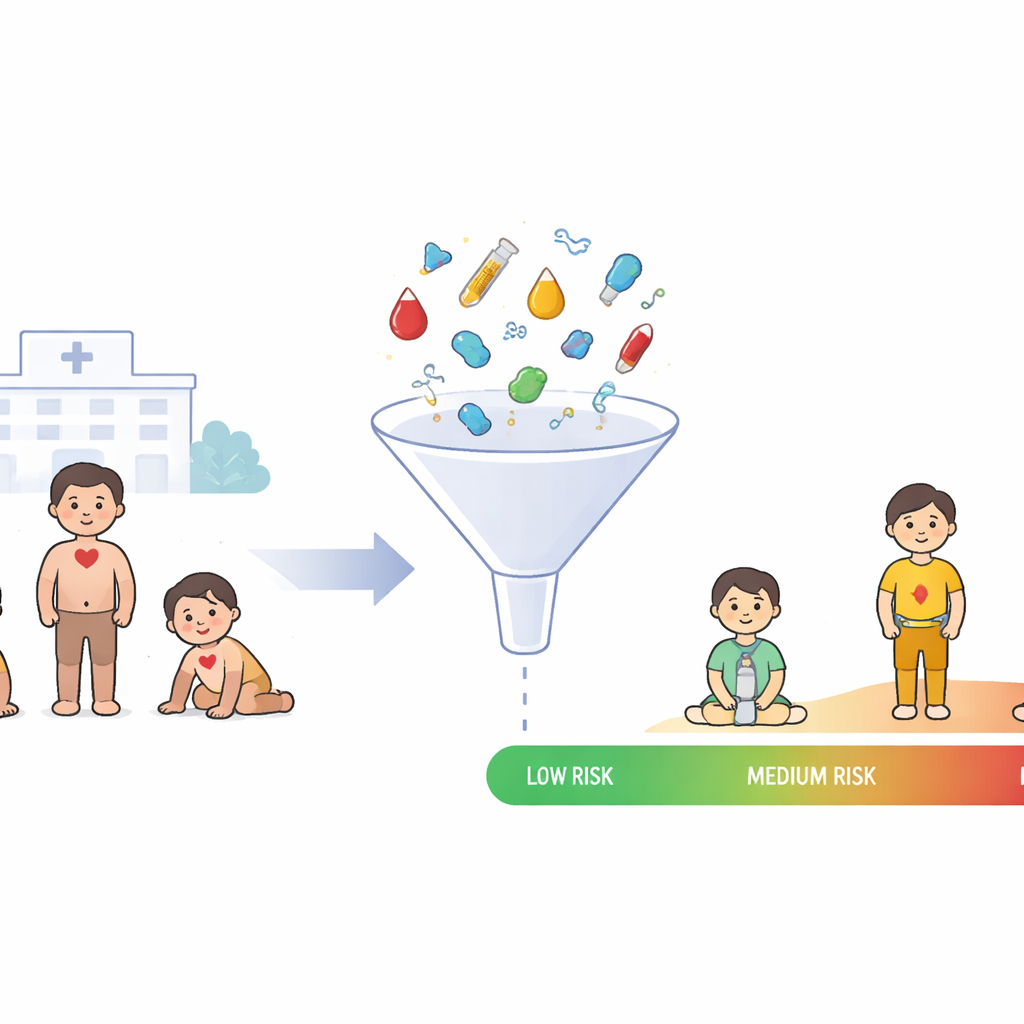
The team analyzed records from 3,409 children under three years of age who had heart surgery using a heart-lung machine at two major pediatric centers in China. One group of 2,368 children was used to build the prediction tool, and a second group of 1,041 children from a different hospital served to test it. For each child, the researchers gathered 98 pieces of information, including age, weight, operation details, and a wide range of blood test results taken before surgery and soon after arrival in intensive care. The main outcome they tracked was “operative mortality,” defined as death in hospital or within 30 days of the operation.
Six everyday blood markers tell a powerful story
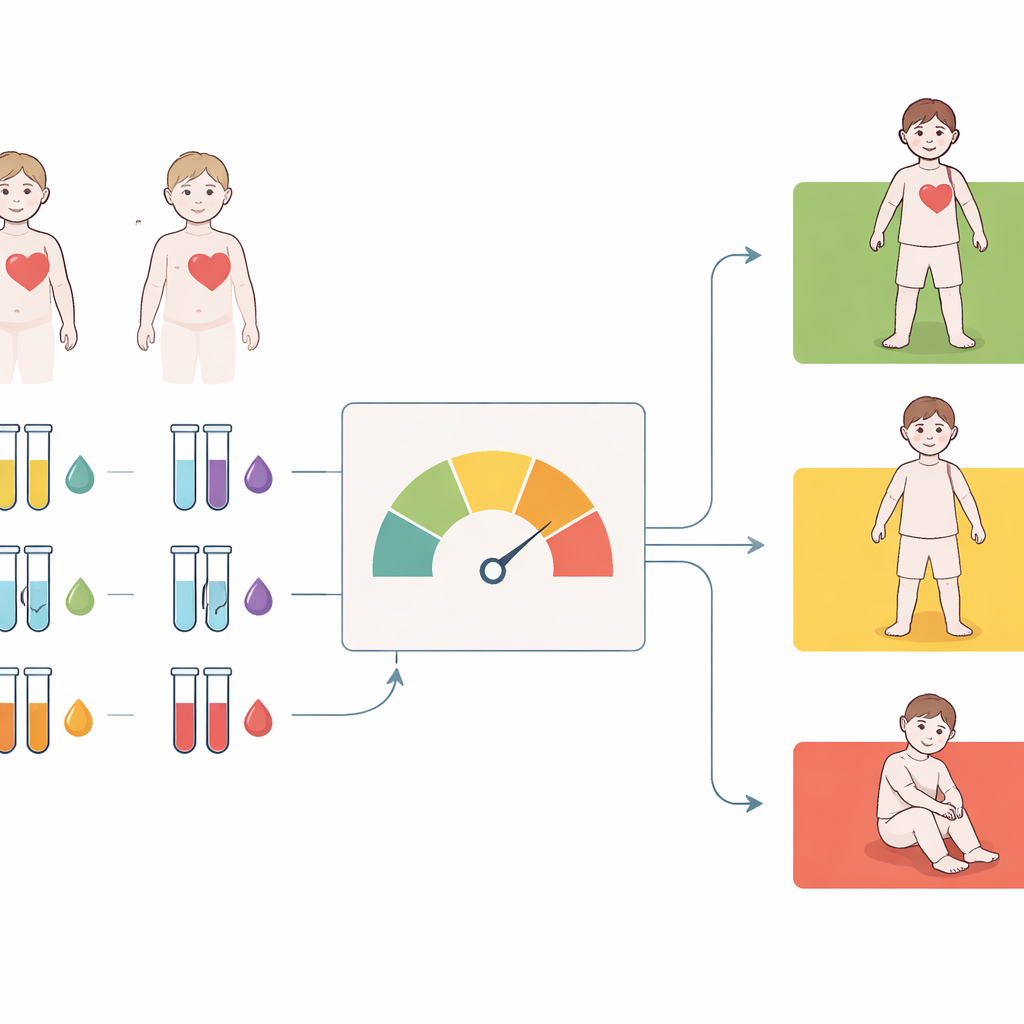
Using modern statistical techniques, the investigators sifted through all 98 variables to find the strongest and most reliable predictors of death after surgery. They identified six routine blood measurements that together carried most of the useful information. Before surgery, children with poorer kidney function (higher creatinine), lower blood protein (a sign of weaker nutrition and immunity), higher blood sugar, and higher blood fats were more likely to die. After surgery, two early warning signs stood out: a rise in lactate, reflecting poor oxygen delivery and stress on the circulation, and a rise in cystatin C, indicating strain on the kidneys and broader inflammation. Remarkably, once these six markers were included in the model, age and weight did not add much extra predictive power, suggesting that the blood tests themselves capture how physiologically mature or fragile a child really is.
A visual bedside tool to guide care
The researchers translated these six markers into a practical chart called a nomogram. On this chart, each measurement is assigned a number of points; adding the points gives an estimated probability that the child will die soon after surgery. In the development group, the tool was extremely accurate at separating high- from low-risk children, and its performance remained acceptable when tested on the second hospital’s data. The tool does not replace existing anatomical risk scores based on the type of heart defect and operation. Instead, it adds a “physiological lens,” highlighting children whose organs and metabolism are under greater strain than their anatomy alone would suggest. This can alert clinicians to the need for closer monitoring, more aggressive support, or preoperative optimization of nutrition, blood sugar, fats, and kidney function.
What the findings mean for families and doctors
For families, this study does not change the fact that surgery is often the only path to survival for children with serious heart defects. But it does offer doctors a clearer way to estimate short-term risk and to explain that risk using familiar concepts like kidney function, nutrition, and circulation. Because the six key markers come from routine blood tests, the tool could be widely adopted without new technology. While the model still needs to be tested in more countries and larger groups, it suggests that careful attention to a child’s metabolic and organ health before and immediately after surgery may reduce deaths in this vulnerable population, turning more high-risk operations into long-term success stories.
Citation: An, J., Du, X., Bai, Z. et al. Prediction model of postoperative mortality for congenital heart disease: evidence from two large-scale cohorts. Sci Rep 16, 12834 (2026). https://doi.org/10.1038/s41598-026-42562-4
Keywords: congenital heart disease, pediatric cardiac surgery, risk prediction, postoperative mortality, nomogram