Clear Sky Science · en
Disulfiram attenuates immobilization-induced knee joint contracture by suppressing Caspase-1/GSDMD-mediated pyroptosis
Why stiff knees after rest matter
Anyone who has worn a cast or brace knows how joints can feel stiff and uncooperative once they finally come free. For many people, especially after serious injuries or surgery, this stiffness can harden into lasting joint contracture—a situation where the joint physically cannot bend as it used to. This study explores a surprising cellular “fiery death” process inside joint tissues and tests whether an old anti-alcoholism pill, disulfiram, might help protect the knee from becoming locked and fibrotic after weeks of forced rest.
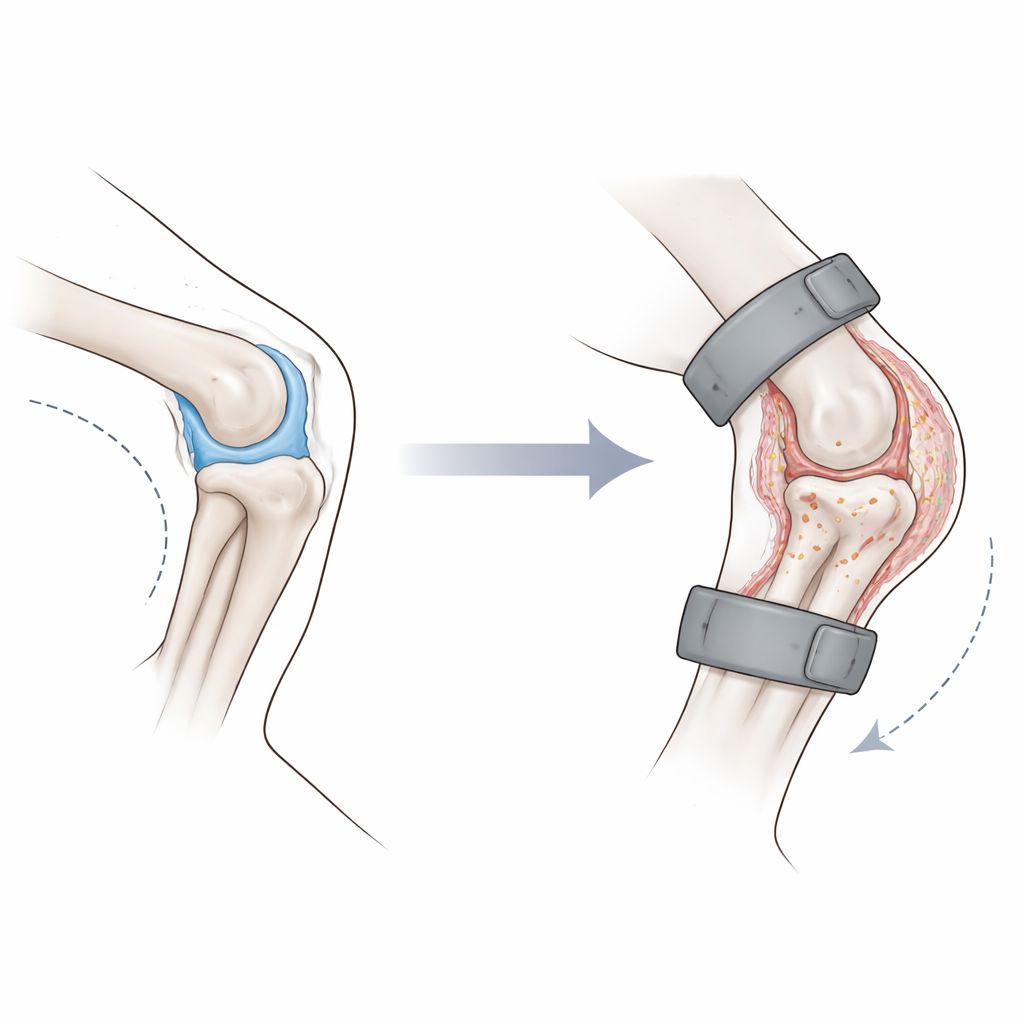
What happens when a joint is held still
The researchers focused on knee contracture, a common problem when the leg is kept straight for long periods during recovery. In this condition, the thin envelope around the joint—the joint capsule—gradually thickens and fills with scar-like tissue, making it increasingly hard to bend the knee. Using a rat model, the team immobilized one knee in full extension for four weeks, closely mimicking extended bracing or casting in people. They then measured how far the joint could move and carefully examined the capsule tissue for signs of inflammation, scarring, and a particular form of inflammatory cell death thought to drive fibrosis.
A dangerous cycle inside joint tissue
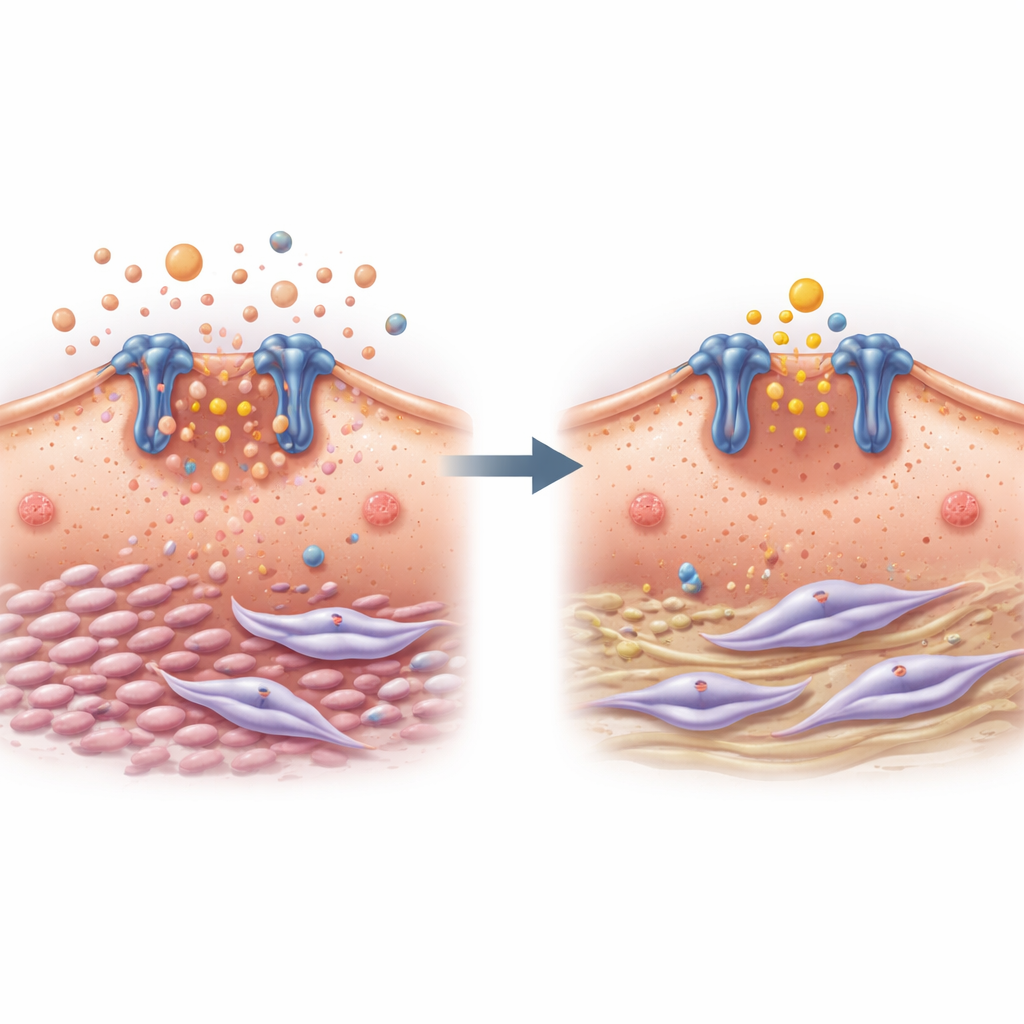
The study zeroed in on pyroptosis, a highly inflammatory kind of programmed cell death. In pyroptosis, an internal alarm system activates enzymes called caspases, which cut a protein named GSDMD. The cut fragment punches open pores in the cell membrane, allowing inflammatory molecules to gush out and harm nearby tissue. In the immobilized rat knees, the team found strong evidence that this process was switched on: levels of GSDMD and its cleaved, pore-forming fragment rose markedly, along with increased activity of Caspase-1 and higher amounts of two potent inflammatory signals, IL‑1β and IL‑18. At the same time, joint motion dropped sharply, inflammatory cells crowded into the capsule, and collagen fibers piled up, all signs of a stiff, fibrotic joint.
Repurposing an old drug for a new job
Because disulfiram is known to block the pore-forming action of cleaved GSDMD, the scientists tested whether it could short-circuit this destructive cycle. A third group of rats received daily disulfiram by mouth during the four-week immobilization. Compared with untreated immobilized animals, these rats retained more knee mobility and showed fewer infiltrating cells and less collagen buildup in the joint capsule. On a molecular level, disulfiram reduced the amount of cleaved GSDMD and substantially lowered protein levels of IL‑1β and IL‑18, even though the genes that encode these molecules were still switched on. This suggests the drug is acting mainly at the level of pore formation and cytokine release, rather than shutting down their production inside the cell.
What this could mean for future treatments
The findings support the idea that keeping a joint fixed does more than simply “let it rust.” Mechanical changes during immobilization appear to trigger an inflammatory cell-death pathway that floods the joint capsule with signals that encourage fibroblasts to become myofibroblasts—the cell type that spins out excess collagen and stiff scar tissue. By blocking the final execution step of pyroptosis, disulfiram seems to ease this inflammatory pressure and slow the march toward permanent contracture in this animal model. The dose used in rats translates to a human range already familiar in clinical use, although the drug’s long-term safety in joint tissues and its effectiveness in established, long-standing contractures remain to be tested.
Take-home message for patients and clinicians
For people facing weeks of bracing or casting after knee injuries or surgery, this work offers a new way to think about stiffness: not only as a mechanical problem, but as a biological one driven by a self-sustaining loop of inflammation and scar formation. In rats, disulfiram—an inexpensive, decades-old medication—helped preserve motion and reduce scarring by blocking a key step in this loop. While more research is needed before such an approach can be used in patients, targeting this “fiery” cell-death pathway may one day become part of a combined strategy, alongside physical therapy and surgical care, to keep healing joints flexible instead of frozen.
Citation: Lu, Q., Kan, X., Zhang, Q. et al. Disulfiram attenuates immobilization-induced knee joint contracture by suppressing Caspase-1/GSDMD-mediated pyroptosis. Sci Rep 16, 12779 (2026). https://doi.org/10.1038/s41598-026-42560-6
Keywords: joint contracture, knee immobilization, fibrosis, pyroptosis, disulfiram