Clear Sky Science · en
The TRAF6/SPP1 axis participates in osteoarthritis progression through regulating the catabolism and anabolism of cartilage matrix
Why aching joints are more than just wear and tear
Many people think osteoarthritis, the most common form of arthritis, is simply the result of joints wearing out over time. This study shows that the story is far more dynamic. Deep inside knee cartilage, cells constantly balance breaking down old tissue and building new material. The authors uncover a key signaling partnership between two molecules, TRAF6 and SPP1, that can tip this balance toward damage or repair. Understanding this control switch could open the door to treatments that slow, or even partially reverse, cartilage loss instead of just masking pain.
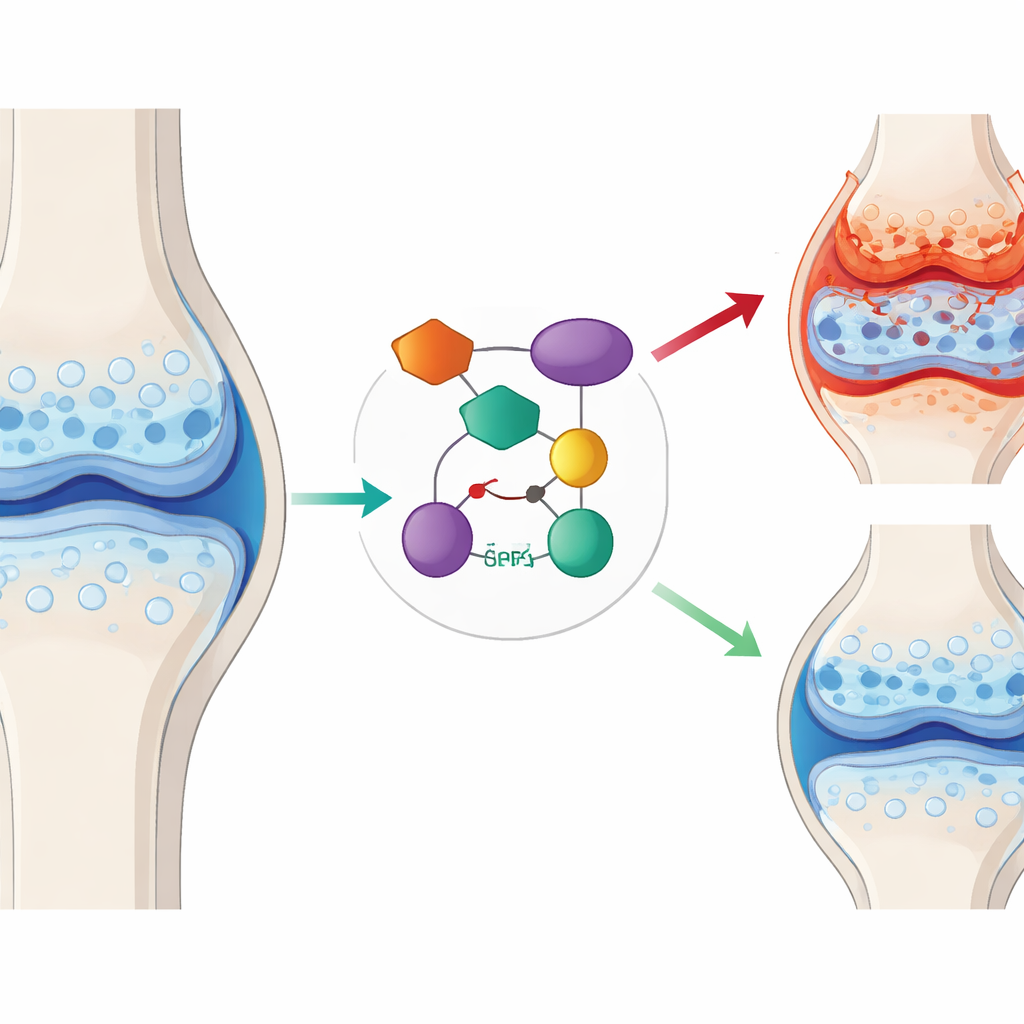
A busy city inside joint cartilage
Cartilage in joints such as the knee may look like a smooth, simple cushion, but it behaves more like a carefully maintained city. Specialized cells called chondrocytes build and recycle the surrounding support material, known as the cartilage matrix, which is rich in collagen and other proteins. In a healthy joint, construction and demolition stay in balance. In osteoarthritis, this balance breaks down: enzymes that chew up the matrix become overactive, while rebuilding slows. The result is thinning, cracked cartilage that can no longer protect bone, causing stiffness and pain when we walk, climb stairs, or simply stand.
A molecular switch with two faces
The researchers focused on TRAF6, a signaling adaptor protein known to respond to inflammatory cues, and SPP1 (also called osteopontin), a secreted protein found at higher levels in arthritic joints. Using rat cartilage cells grown in the lab, they dialed TRAF6 levels up and down and measured which genes changed. SPP1 emerged as one of the most strongly affected. When TRAF6 was boosted, SPP1 increased; when TRAF6 was silenced, SPP1 dropped. This showed that TRAF6 sits upstream and acts as an on‑switch for SPP1 in cartilage cells. The team then examined human cartilage from joint‑replacement surgery and found that both TRAF6 and SPP1 were elevated in osteoarthritic tissue, along with enzymes that break down cartilage and reduced levels of matrix‑protective proteins.
How the pathway drives damage and repair
To understand what SPP1 actually does, the authors challenged cartilage cells with a fragment of fibronectin, a molecule that mimics the stressful environment of an osteoarthritic joint and pushes cells toward matrix breakdown. Under this stress, a key structural protein of cartilage, collagen II (COL2A1), fell, while the destructive enzyme MMP13 rose. Adding SPP1 reversed much of this effect: collagen II levels climbed and MMP13 levels dropped. When the team combined SPP1 with a known cartilage‑building factor, OP1, they saw an even stronger push toward matrix construction and further suppression of matrix‑eating enzymes. These experiments suggest that, although SPP1 has been linked to damage in some settings, in this controlled context it can shift chondrocytes back toward a more protective, rebuilding mode.
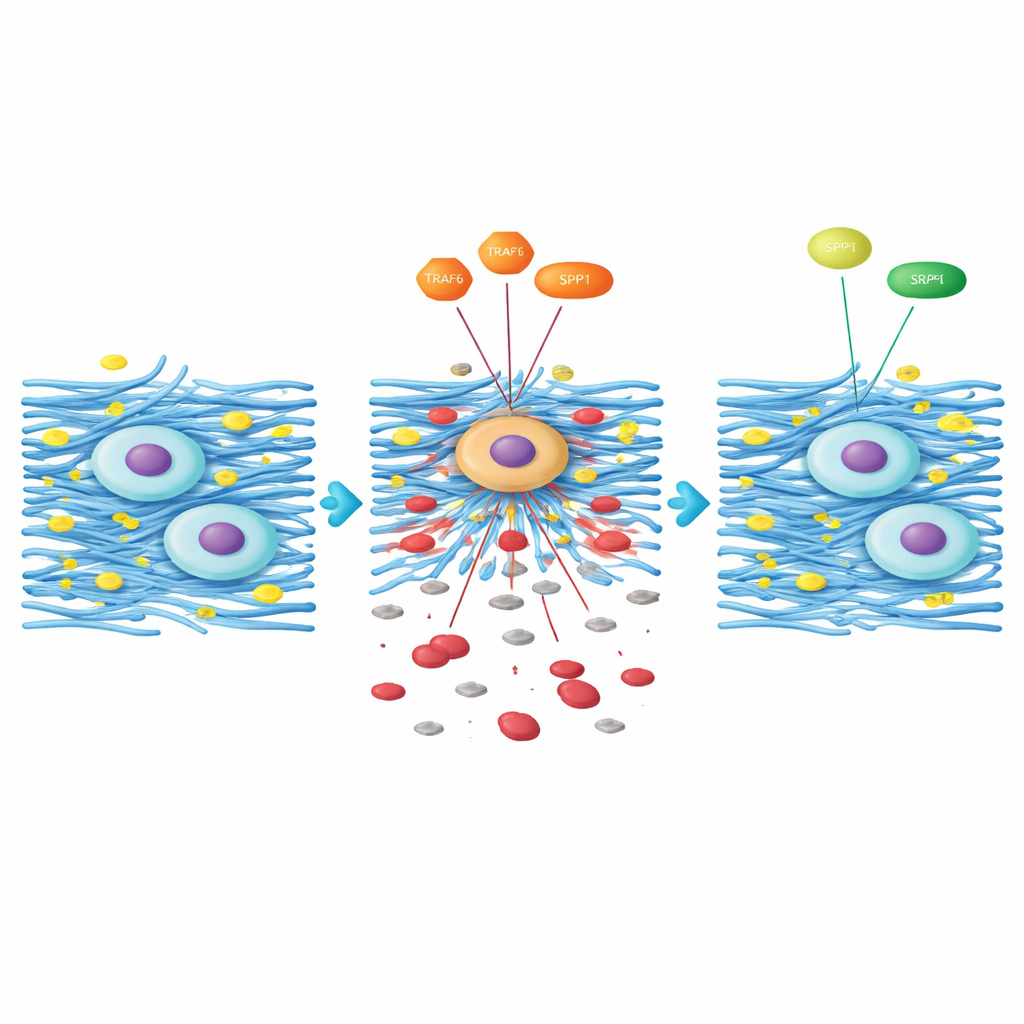
Putting the pathway to the test in living joints
The group then moved from dishes to animals, creating osteoarthritis in rats by surgically destabilizing the knee. Compared with healthy joints, arthritic knees showed rough cartilage surfaces, fewer chondrocytes, and high levels of TRAF6 and MMP13, along with reduced amounts of TIMP1, a natural inhibitor that helps restrain matrix‑destroying enzymes. When the researchers injected SPP1 directly into the joint space, cartilage damage lessened. The tissue surface appeared smoother, more cells were preserved, and the molecular profile shifted: TRAF6 and MMP13 decreased, while TIMP1 and another matrix‑related protein, HAS1, increased. These changes are consistent with slowing breakdown and supporting repair.
What this could mean for sore knees and hips
Taken together, the work paints TRAF6 and SPP1 as central traffic controllers for cartilage turnover in osteoarthritis. TRAF6 boosts SPP1, and SPP1 in turn can both curb harmful enzymes and encourage the rebuilding of matrix components, especially when paired with other growth‑promoting signals. In animals, supplying extra SPP1 helped protect cartilage from further erosion. While this research is still at the preclinical stage and much remains to be tested in human joints, it suggests that carefully targeting the TRAF6/SPP1 axis might rebalance the internal life of cartilage—slowing the slide toward joint replacement and offering a more hopeful outlook for people living with osteoarthritis.
Citation: Yao, J., Huang, J., Li, C. et al. The TRAF6/SPP1 axis participates in osteoarthritis progression through regulating the catabolism and anabolism of cartilage matrix. Sci Rep 16, 12117 (2026). https://doi.org/10.1038/s41598-026-42559-z
Keywords: osteoarthritis, cartilage, TRAF6, SPP1, joint degeneration