Clear Sky Science · en
Urine microscopy can identify cholemic nephropathy as a distinct form of kidney dysfunction in patients with acute on chronic liver failure
Why this matters for people with liver disease
People with advanced liver disease often suddenly develop kidney problems, and this combination can be life-threatening. Doctors usually blame either poor blood flow to the kidneys or direct kidney damage, but a third type of injury has been hiding in plain sight. This study shows that a simple urine test under the microscope can uncover a specific kind of kidney damage caused by extreme jaundice, called cholemic nephropathy. Recognizing it early could change treatment decisions and improve outcomes.
A hidden kidney problem linked to jaundice
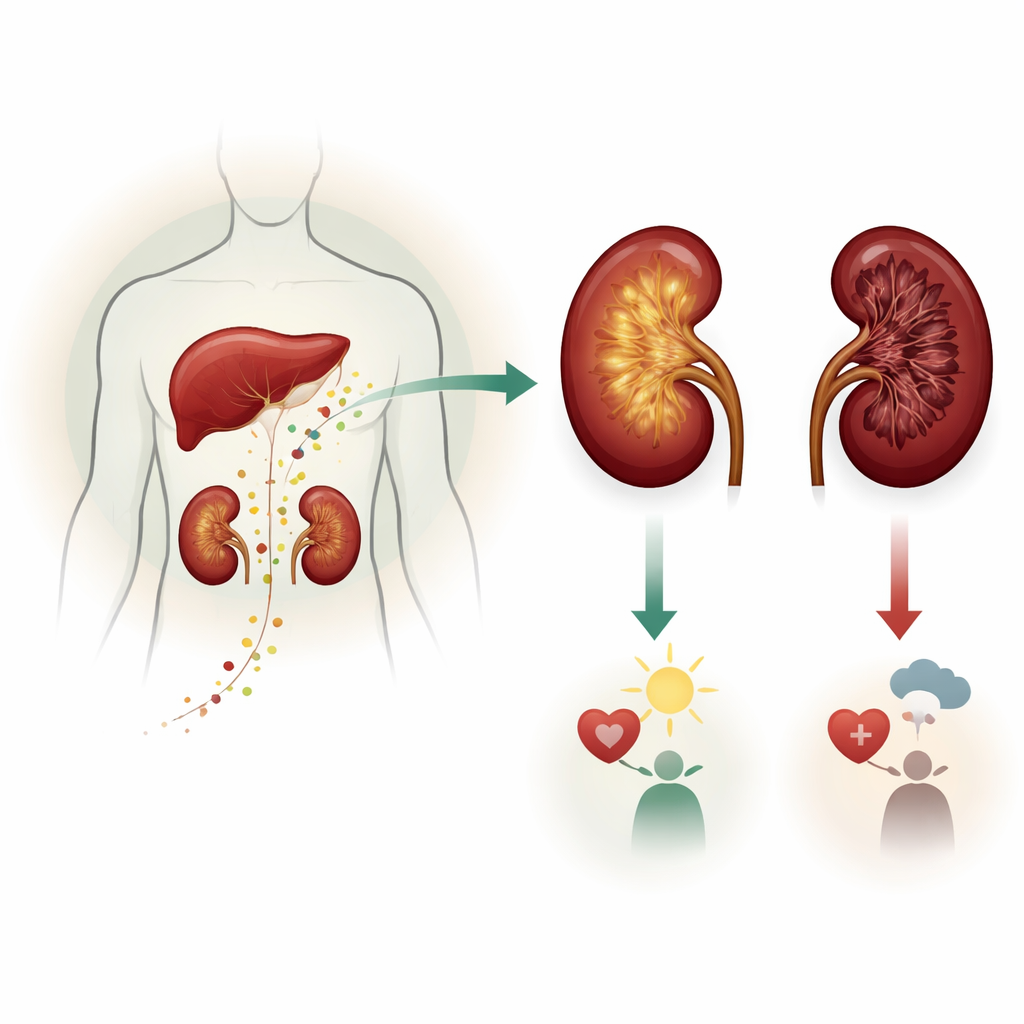
When the liver fails, bile pigments and bile acids build up in the blood, turning the eyes and skin yellow. In some patients with acute-on-chronic liver failure, these substances spill into the kidneys and form bile-containing plugs inside the tiny tubes that filter and process urine. This condition, cholemic nephropathy, has mostly been diagnosed after death because it requires a kidney biopsy. The authors asked whether it could be spotted much earlier using standard urine microscopy, simply by looking for crystals and casts made of bile pigments in the urine of hospitalized patients.
Reading the kidney’s story in a drop of urine
The researchers followed 60 people with acute-on-chronic liver failure. They divided them into four groups based on what was seen in the urine: no kidney injury; hepatorenal syndrome, where the sediment looked nearly normal; cholemic nephropathy, marked by bilirubin crystals and bile casts; and acute tubular necrosis, with dark, muddy granular casts indicating heavy structural damage. Patients with cholemic nephropathy had the highest levels of bilirubin and bile acids in their blood and showed strong signs of whole-body inflammation, with many inflammatory molecules circulating at very high levels.
Less damage but more repair inside the kidney
Although patients with cholemic nephropathy were highly inflamed, their kidneys looked surprisingly better preserved than in classic acute tubular necrosis. Urine tests showed that markers of fresh injury were much higher in acute tubular necrosis, whereas markers linked to repair and regeneration were higher in cholemic nephropathy and hepatorenal syndrome. In a subset of patients who died and underwent kidney examination, those with cholemic nephropathy had bile deposits in the kidney tubules but less cell death, more of the protective protein SIRT-1, and better water-channel staining, all pointing to kidneys that were injured but still actively trying to heal.
Energy factories in the kidney still working
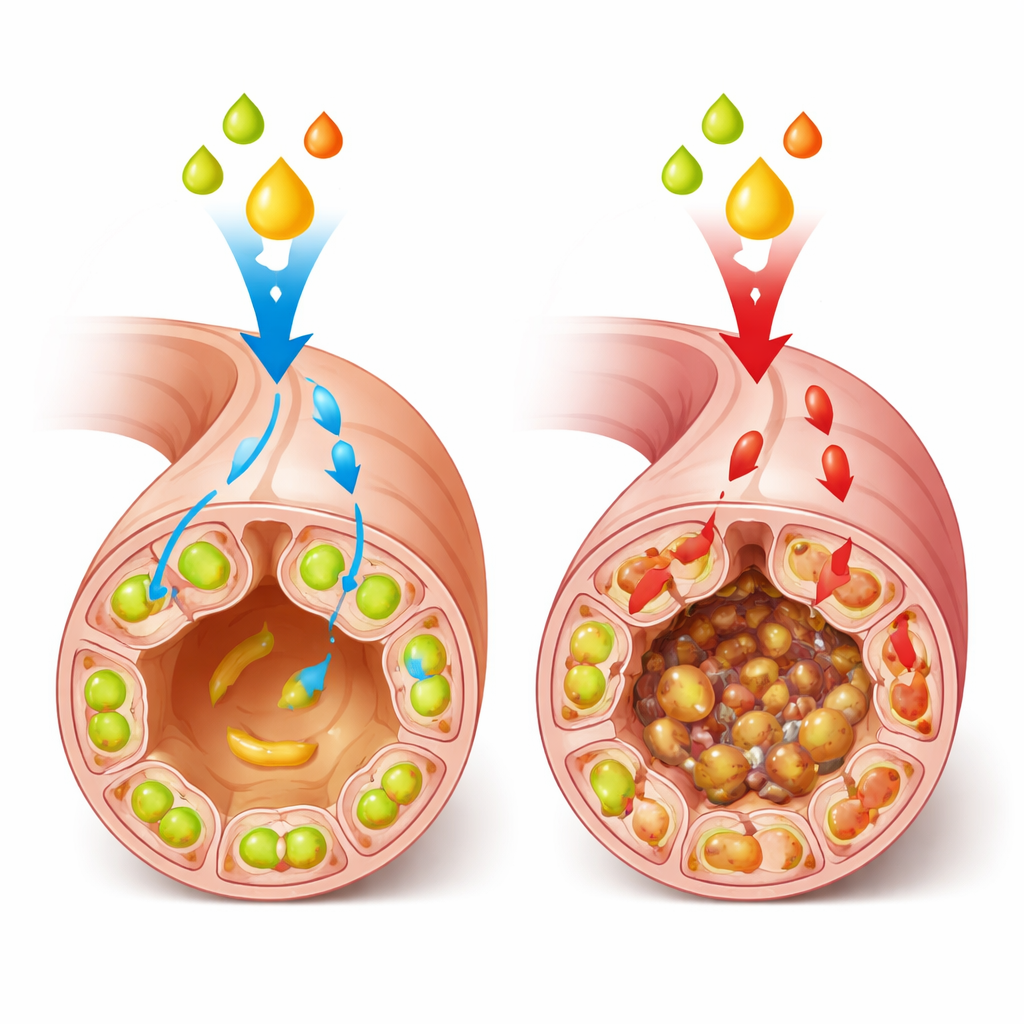
The team also looked at metabolism, the way cells handle fuel and energy. Using advanced chemical profiling, they found that kidney cells from cholemic nephropathy patients had a distinct metabolic signature compared to those from acute tubular necrosis. Pathways that support energy production in mitochondria—the cell’s “power plants”—were more active, and genes involved in building new mitochondria were turned up. Blood immune cells from these patients also showed stronger energy generation and resilience. Together, these patterns suggest that, despite toxic bile acids and strong inflammation, the kidneys in cholemic nephropathy maintain a more adaptive, energy-efficient state than in severe necrotic injury.
Guiding treatment and building a simple score
Clinically, patients with hepatorenal syndrome responded best to standard drug therapy that improves circulation to the kidneys, while those with cholemic nephropathy improved less with this approach and often needed additional blood-cleansing procedures such as plasma exchange. These procedures lowered many inflammatory molecules and bile acids, particularly in cholemic nephropathy. By combining a few blood tests—especially GST-alpha, IL-15, total bilirubin, and a liver failure severity score—the authors built simple models that identified cholemic nephropathy with over 95% accuracy, offering a practical tool when urine microscopy or biopsy is not easily available.
What this means for patients and doctors
This work shows that cholemic nephropathy is not just a rare curiosity but a common, distinct type of kidney injury in people with severe chronic liver disease who suddenly worsen. It can be detected non-invasively by spotting bile crystals and casts in urine and confirmed using a small panel of blood markers. Importantly, these kidneys are injured but still metabolically active and capable of repair, and they may benefit from treatments that clear toxic bile acids and calm inflammation, alongside standard care. For patients, that means a routine urine test could help doctors choose more tailored therapies and potentially improve survival when liver and kidney failure strike together.
Citation: Maiwall, R., Hidam, A.K., Tripathi, G. et al. Urine microscopy can identify cholemic nephropathy as a distinct form of kidney dysfunction in patients with acute on chronic liver failure. Sci Rep 16, 14449 (2026). https://doi.org/10.1038/s41598-026-42552-6
Keywords: cholemic nephropathy, acute-on-chronic liver failure, kidney injury, bile acids, urine microscopy