Clear Sky Science · en
The network pharmacology prediction and experiment validation of Astragalus membranaceus for alleviating silicosis fibrosis via decreasing MMP9 and EGFR expression
Ancient Herb Meets a Modern Lung Disease
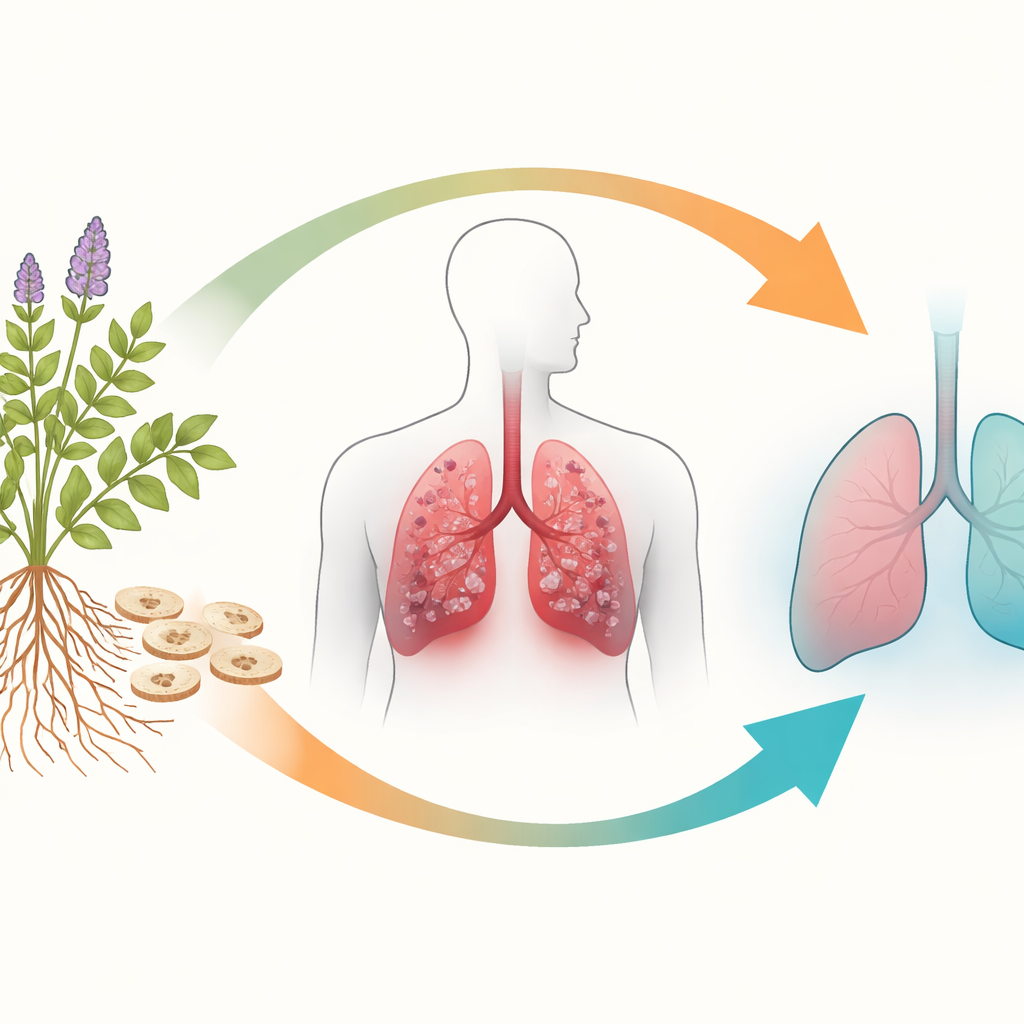
Silicosis is a serious lung disease that strikes people who breathe tiny crystals of silica dust at work, such as miners, sandblasters, and construction workers. Once the damage builds up, there is currently no reliable medicine that can reverse the scarring in the lungs. This study explores whether Astragalus membranaceus—an age‑old medicinal root used in Traditional Chinese Medicine—might help slow or soften that scarring, and how one of its natural compounds, quercetin, actually works on lung cells.
Dust in the Lungs and the Need for New Options
Silicosis develops when inhaled silica particles lodge deep in the lungs, sparking long‑lasting inflammation and thickening of lung tissue. Over time, this scarring stiffens the lungs, making it harder to breathe and leaving patients vulnerable to infections and other complications. Lung transplantation can help some people, but it is expensive, rare, and risky. Because standard drugs have limited benefit, researchers are turning to time‑tested medicinal plants, looking for ingredients that can calm inflammation and prevent the buildup of scar tissue without causing serious side effects.
The Healing Potential of a Traditional Root
Astragalus membranaceus, a root used for more than two thousand years, is known for boosting the immune system and reducing inflammation. The team first used computer‑based methods to comb through large databases and identify which chemicals in Astragalus are most likely to be absorbed by the body and behave like useful drugs. They narrowed the list to eight main compounds and then crossed their predicted targets with thousands of human genes linked to silicosis. This overlap pointed to a set of 113 shared targets and highlighted three plant ingredients—quercetin, isorhamnetin, and kaempferol—as the most important candidates.
Finding the Lung’s “Control Knobs”
Next, the researchers mapped how these shared targets interact in the body, revealing a tight network of proteins that steer inflammation, cell survival, and tissue remodeling. Among these, seven stood out as central hubs, including two molecules called MMP9 and EGFR, which are known to drive the overgrowth and migration of lung scar‑forming cells. Pathway analysis showed that many of the targets cluster in major signaling routes inside cells, especially one called the PI3K–AKT pathway, which controls cell growth and response to injury, along with other inflammation‑linked routes. When the team used molecular docking—essentially a 3D puzzle game at the atomic scale—they found that quercetin fit particularly snugly into MMP9 and EGFR, suggesting it could strongly influence these “control knobs” of fibrosis.
Putting Quercetin to the Test in Lung Cells
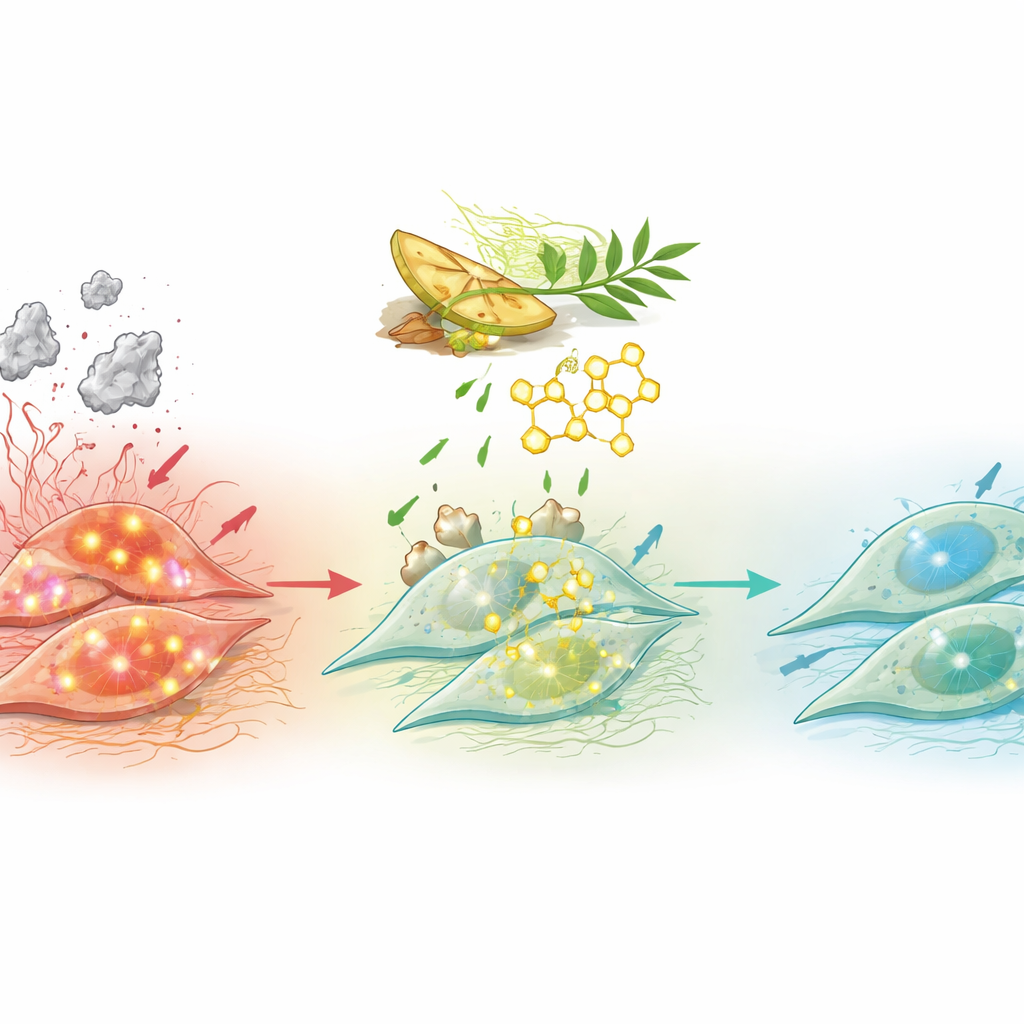
To move beyond computer predictions, the scientists exposed human lung fibroblasts—cells that help build and repair lung tissue—to silica particles in the lab, mimicking silicosis. These cells became more active and produced higher levels of proteins linked to scarring, including α‑SMA, MMP9, EGFR, and components of the PI3K–AKT pathway. When quercetin was added at carefully chosen doses, it reduced the silica‑induced cell overgrowth and lowered the levels of these key fibrosis‑related molecules. When the researchers artificially reactivated the PI3K–AKT pathway with a separate chemical, it largely undid quercetin’s protective effects, confirming that this signaling route is a crucial part of how quercetin works.
Why This Matters for Future Treatments
By combining big‑data analysis, protein‑binding simulations, and cell experiments, the study paints a coherent picture: quercetin, a natural ingredient of Astragalus membranaceus, can dial down several major drivers of silica‑induced lung scarring at once. It appears to work by blocking EGFR and MMP9 and by quieting the PI3K–AKT signaling pathway inside fibroblasts, leading to less cell overgrowth and less fibrous buildup. While these findings still need to be confirmed in animal models and, eventually, in patients, they offer a promising scientific basis for developing quercetin‑rich Astragalus preparations as safer, multi‑target helpers in the fight against silicosis.
Citation: Yang, A., Luo, X., Guo, Y. et al. The network pharmacology prediction and experiment validation of Astragalus membranaceus for alleviating silicosis fibrosis via decreasing MMP9 and EGFR expression. Sci Rep 16, 12255 (2026). https://doi.org/10.1038/s41598-026-42544-6
Keywords: silicosis, lung fibrosis, Astragalus membranaceus, quercetin, network pharmacology