Clear Sky Science · en
Optimal deep neural network based road traffic management system for Internet of Things based smart city environment
Why Smarter Traffic Matters to City Life
Rush-hour gridlock is more than an annoyance: it wastes fuel, pollutes the air, slows emergency vehicles, and eats into people’s time with their families. As cities grow and more cars hit the road, old-fashioned fixed traffic lights and manual control centers struggle to keep up. This study explores how networks of sensors and an advanced kind of artificial intelligence can work together in real time to spot jams, predict trouble, and adjust signals before traffic grinds to a halt.
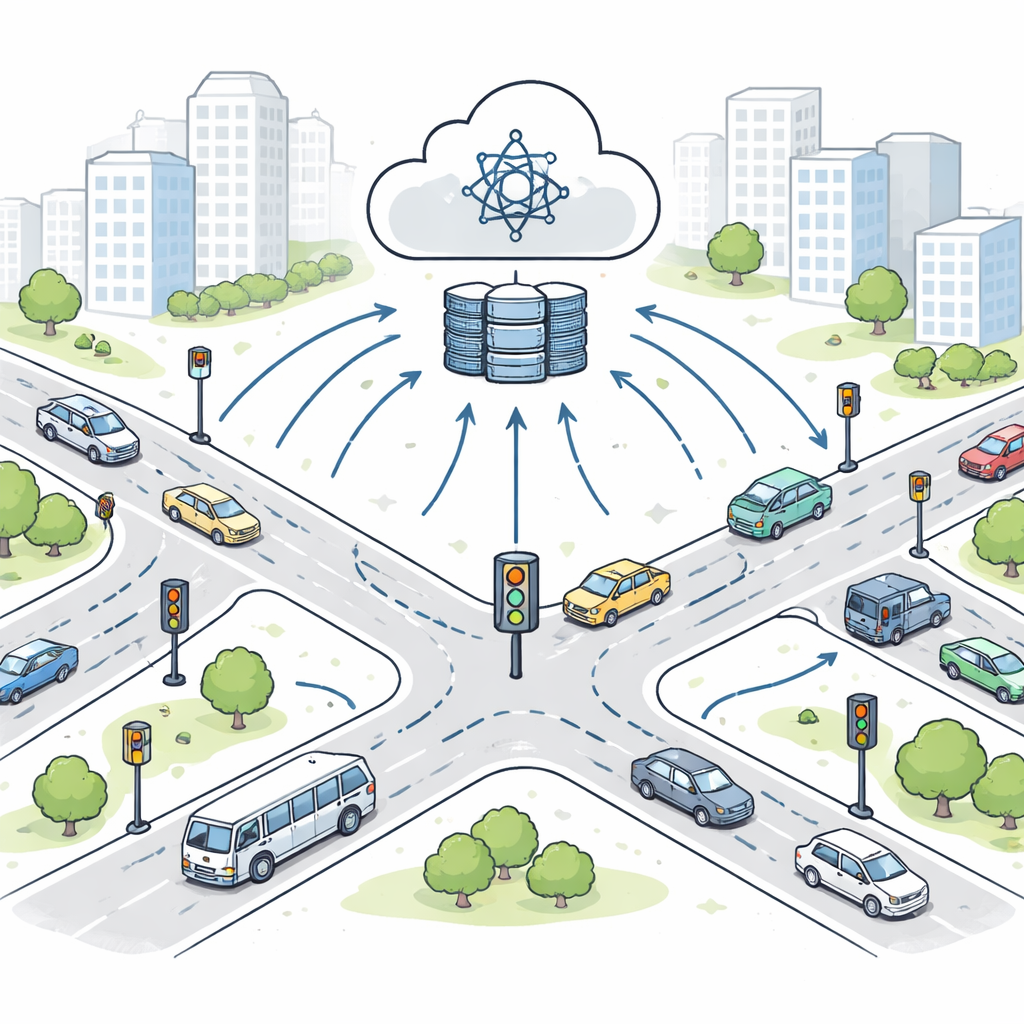
From Connected Streets to a Brain for Traffic
The paper looks at cities where roads, traffic lights, and vehicles are tied together through the “Internet of Things,” meaning they constantly send digital updates about what is happening on the streets. Sensors and cameras track how many vehicles pass through a junction, how fast they are moving, what kind of vehicles they are, and even the weather, accidents, and current signal status. Instead of human operators sifting through all this information, the authors propose an automated decision support system that can understand these patterns and suggest how to manage signals and routes more intelligently.
Cleaning and Choosing the Right Clues
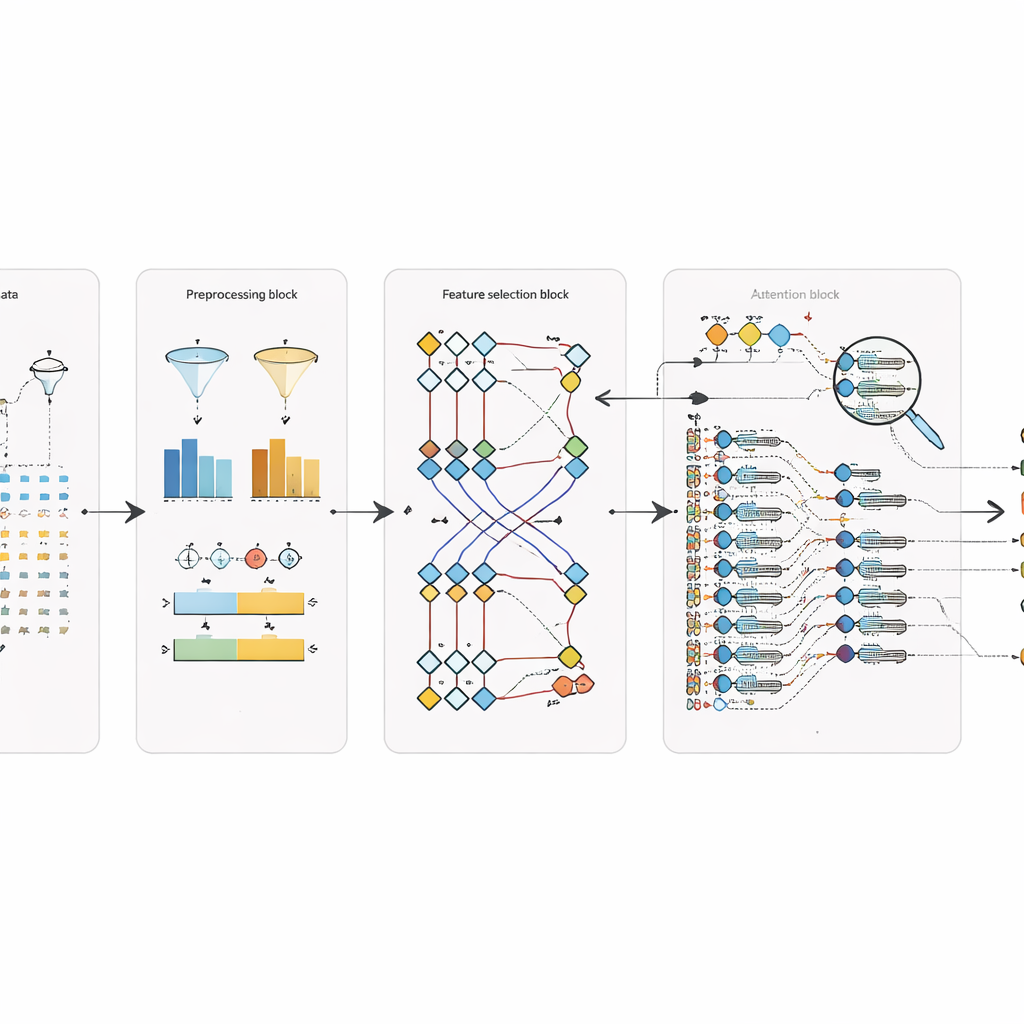
Real-world traffic data is messy: sensors fail, values go missing, and different measurements can be on wildly different scales. The system therefore begins with a careful cleaning phase, filling in rare missing readings and rescaling all measurements so they can be compared fairly. Next comes a crucial step: deciding which pieces of information actually help tell different traffic situations apart. The model combines three families of selection techniques, each looking at the data in a slightly different way. Together, they filter out unhelpful or redundant details and keep only the features that truly signal whether congestion is critical, heavy, moderate, or low, which also speeds up later processing.
How the Model Learns Traffic Patterns Over Time
Traffic is not just about what is happening at a single instant; it changes over minutes and hours as lights cycle and driver behavior shifts. To capture these evolving patterns, the authors use a deep neural network designed for time-based data. This network slides over sequences of traffic readings, using stacked convolutional layers to sense both short bursts and longer-term build-ups of congestion. An attention mechanism then selectively focuses on the most telling moments in each sequence, allowing the system to weigh recent spikes or drops more heavily when deciding how congested a road really is. The outcome is a clear assignment of each situation to one of four congestion levels, linked in the study to specific actions such as extending green time or activating alternative routes.
Putting the System to the Test
The researchers trained and evaluated their approach on an open traffic dataset that represents a smart urban network. Each record includes vehicle counts, speeds, weather conditions, time stamps, locations, and signal strategies. To avoid bias from the fact that severe congestion is much more common than light traffic in the data, they used balancing techniques and careful validation. Across several train–test splits, their system correctly classified traffic states almost 99 percent of the time, outperforming a range of other modern methods. It managed this while also being relatively light in computation and memory demands, a practical advantage for real-time city operations.
What This Means for Everyday Commuters
In practical terms, the study shows that a carefully designed AI system can act as a fast, data-driven advisor for city traffic centers, turning raw sensor feeds into concrete, timely control actions. While the current work relies on a single dataset and does not yet fully account for disruptions such as road works or big events, it points toward a future where traffic lights and routing suggestions adapt continuously to changing conditions. For the average commuter, that could translate into shorter trips, smoother flows, and safer streets as cities become better at listening to—and acting on—the digital heartbeat of their roads.
Citation: Almejalli, K.A. Optimal deep neural network based road traffic management system for Internet of Things based smart city environment. Sci Rep 16, 12136 (2026). https://doi.org/10.1038/s41598-026-42542-8
Keywords: smart traffic management, Internet of Things, deep learning, smart cities, congestion prediction