Clear Sky Science · en
Evaluation method for engineering supervisory action quality based on dual-code activity network
Why smarter oversight of big projects matters
When railways, dams, and other large projects are built or protected during emergencies like floods, even small mistakes in timing or coordination can lead to major accidents, delays, or cost overruns. Today many sites use sensors and smart software, but managers still struggle to know, in real time, whether every patrol, repair crew, and support team is really doing its job well. This paper introduces a new way to track and score the quality of those on-the-ground actions so that problems can be spotted and fixed before they grow into disasters.
Turning complex field work into a clear map of actions
The authors focus on what they call regulatory actions: routine patrols to find hazards, emergency repairs when trouble is detected, and support tasks like getting workers, trains, and materials to the right place. In big operations, these actions form tangled chains: one team’s work must finish before another can begin, while some activities happen in parallel. To make sense of this complexity, the paper builds a dual-code activity network. In simple terms, each task is drawn as an arrow with two key pieces of information: what it is and how long it is expected to take. Linking these arrows into a network creates a visual and mathematical map of how an emergency response or construction job should unfold from start to finish. 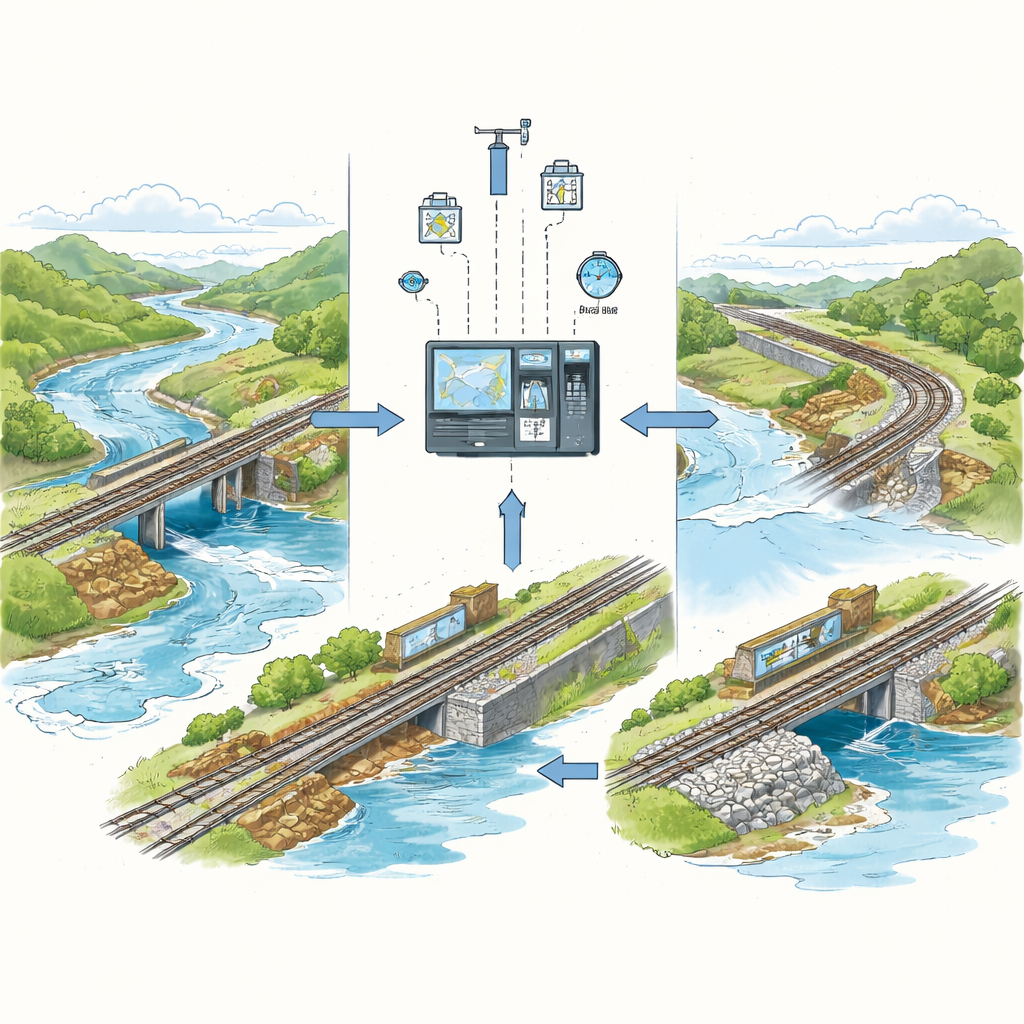
Measuring time, place, and real-world results
Most progress tracking systems mainly ask, “Was this task done on time?” The new method goes further by judging each task from three angles: time, space, and efficiency. The time dimension checks whether work actually started and ended when planned, or whether crews responded quickly enough to a new hazard. The space dimension looks at whether patrols and material shipments followed the intended routes and reached the correct positions, using location data such as GPS coordinates. The efficiency dimension asks whether patrol teams missed any danger spots, whether repairs covered the full damaged area and passed inspection, and whether supplies arrived in sufficient quantity. For each task type—patrol, repair, and support—the authors design specific formulas that combine these three aspects into a single completion score between poor and excellent.
Weighing who does the work, not just what gets done
Not all tasks contribute equally to safety, and not all teams are equally capable. The paper introduces a way to estimate how much each task, and its performing unit, really matters to the overall outcome. Experts rate the executing teams on five traits: how well they assess risks, how effectively they handle them, how skilled and numerous their staff are, and how much relevant experience they have. These ratings are compared with the ideal levels needed for the specific hazards at hand. A variable weight scheme then penalizes weaknesses more strongly than strengths, so that a unit with a critical gap—say, too little experience for a dangerous repair—gets a lower contribution score. This avoids the common problem where traditional fixed-weight methods make all important tasks look equally well covered, even when some are handled by underprepared teams. 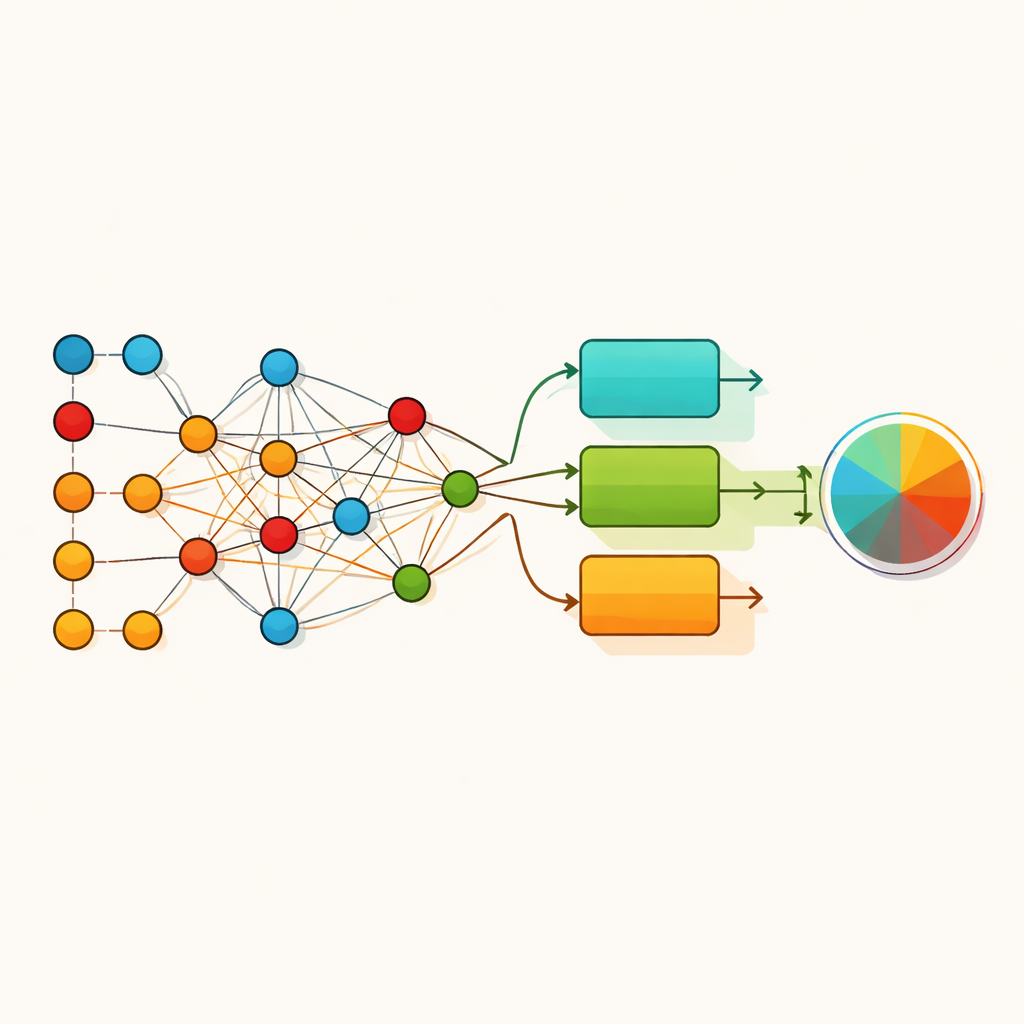
Combining task chains into an overall picture
The dual-code network also distinguishes between tasks that must follow one another and tasks that run side by side. For a chain of dependent actions—such as inspecting a bridge, then setting up safety barriers, then carrying out repairs—the method multiplies their scores, reflecting the idea that a weak link drags down everything that comes after it. For actions that run in parallel—like several types of repair carried out at once—the scores are averaged using their contribution weights. This produces an overall completion index for each hazard point and for the entire operation, capturing both the quality of individual tasks and the way they connect across the network.
Putting the method to the test in flood-season railways
To show how the approach works in practice, the authors apply it to a real case: supervising railway safety during flood season along a section with two hazard points. They map out all patrols, repairs, and support tasks, feed in real timing, location, and outcome data, and compute completion degrees for each task and node in the network. Compared with a conventional schedule-based method, their system reveals subtle issues: some patrols met time targets but strayed from planned routes, and some repairs finished on schedule but showed lower effectiveness or acceptance rates. At the same time, tasks that were slightly late but strong on coverage and quality received fairer, higher overall scores. The final network-wide index summarizes how well the entire emergency response performed, not just whether it stayed on schedule.
What this means for safer, smarter projects
In everyday terms, this work offers managers a more honest report card for complex engineering operations. By tracking when tasks happen, where they happen, how well they are done, and who is doing them—then tying all of this into a single networked model—the method helps identify weak links, allocate better teams to critical jobs, and adjust plans on the fly. Although demonstrated on railway flood protection, the authors argue that the same framework could guide assembly lines, security patrols, and emergency responses in many fields, leading to more reliable infrastructure and more efficient use of people and resources.
Citation: Wang, X., Xi, J., Wei, H. et al. Evaluation method for engineering supervisory action quality based on dual-code activity network. Sci Rep 16, 13318 (2026). https://doi.org/10.1038/s41598-026-42529-5
Keywords: intelligent engineering supervision, railway flood safety, task performance evaluation, activity network modeling, emergency response management