Clear Sky Science · en
The first high-throughput sequencing of bacterioplankton sheds light on bacterial and cyanobacterial diversity in high-altitude Lake Sevan, Armenia
A Hidden World in a Mountain Lake
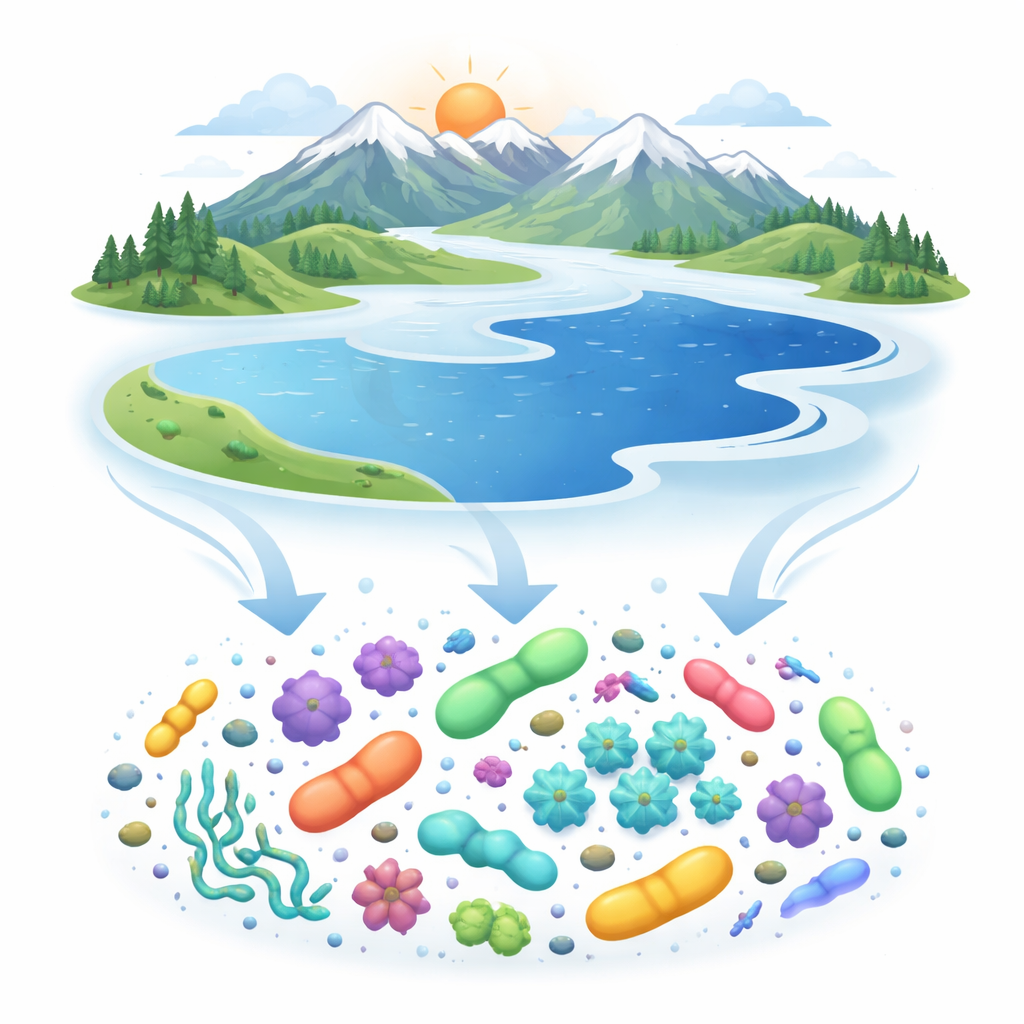
High in the Armenian Highlands, Lake Sevan is a vast, cold freshwater lake that provides drinking water, fish, recreation, and cultural value. At first glance its blue surface looks pristine, but beneath the waves lives an invisible community of microbes that quietly powers the lake’s food web and helps recycle nutrients. This study offers the first detailed, year‑round genetic portrait of those microscopic residents—bacteria and cyanobacteria—and shows how their community shifts with the seasons, with important implications for water quality and the risk of harmful algal blooms.
Looking Closely at an Alpine Giant
Lake Sevan is unusually large and high: almost 1900 meters above sea level, split into a shallow “Big Sevan” basin and a deeper “Small Sevan.” Although its algae and zooplankton have been studied for nearly a century, the bacteria in its open waters had remained largely unknown. In 2018, researchers sampled water from multiple depths in both basins once per season—spring, summer, autumn, and early winter. They filtered out the microbes, extracted their DNA, and used high‑throughput sequencing of a marker gene to identify thousands of distinct bacterial types, from common freshwater residents to rare specialists.
A Surprisingly Rich and Even Microbial Community
The team found that Lake Sevan’s microbial community is both diverse and well balanced. Most of the bacteria belong to a few major groups that are typical of clean freshwater lakes worldwide. These include organisms that feed on simple organic molecules, others that break down complex plant and algal material, and still others that can use light in special ways to supplement their energy. Statistical measures of diversity showed that no single group dominates for most of the year; instead, many different microbes share the habitat, with similar patterns in both basins and across depths. Compared with other lakes studied using similar methods, Sevan’s diversity is higher than that of Lake Baikal and Antarctic waters, comparable to other high‑mountain lakes, and somewhat lower than in small tropical lakes.
Summer Blooms and Tiny Winter Helpers
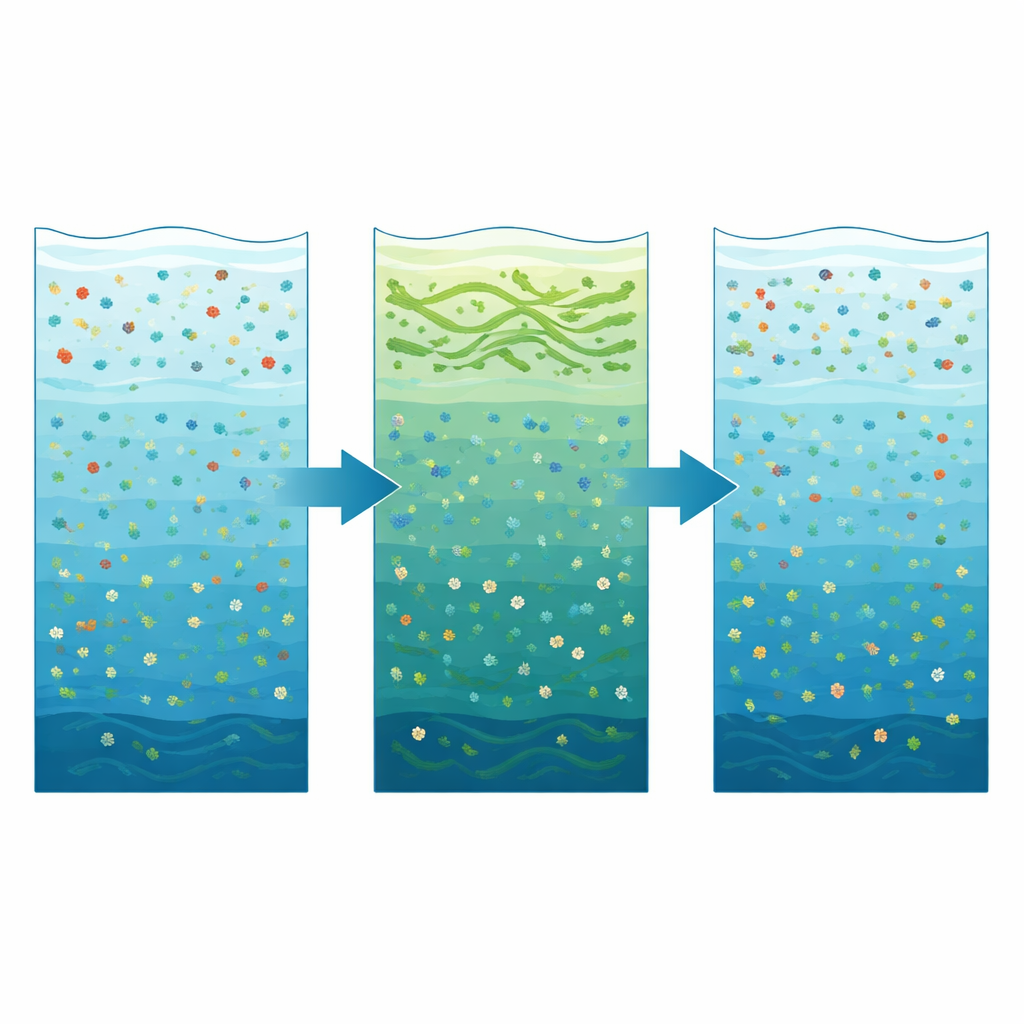
One of the most striking seasonal patterns involved cyanobacteria—the photosynthetic microbes sometimes called blue‑green algae. The researchers identified two main lifestyles. For much of the year, the cyanobacterial community is dominated by tiny, free‑floating cells (picocyanobacteria) related to Synechococcus and Cyanobium. These small forms thrive in relatively clear, nutrient‑poor conditions and quietly contribute to the lake’s primary production. In hot summer months, however, large filamentous cyanobacteria of the Dolichospermum–Anabaena–Aphanizomenon group surge and form blooms, especially in the shallower basin. These filaments can produce toxins and shade out other organisms. During these blooms, overall microbial richness drops and many of the tiny cyanobacteria temporarily retreat, only to rebound in autumn and winter when conditions cool and stabilize.
Microbial Workforces and Unwelcome Guests
The genetic data also reveal how different bacterial groups help run the lake’s internal “recycling plant.” Members of one major group break down dissolved organic carbon from algae and plants; others specialize in degrading tough polysaccharides and chitin from zooplankton remains; still others take part in nitrogen and sulfur transformations, including processes linked to eutrophication and the formation of a sulfur‑rich deep layer. Many of these bacteria are ultramicrobes finely tuned to low‑nutrient conditions and may even harvest light to boost their metabolism. Alongside this beneficial workforce, the researchers detected microbes associated with disease: bacteria that can infect fish, opportunistic human pathogens, and intracellular parasites that live inside protozoa. Their presence points to ongoing human influence, such as runoff from recreation areas and surrounding settlements.
One Lake, Many Seasons, Shared Fate
By combining genetic surveys with ecological analysis, the study shows that Lake Sevan hosts a characteristic “freshwater‑type” microbiome that stays broadly similar between the two basins and from surface waters down into the depths. What changes most strongly is time: the month of the year explains more than half of the variation in community structure. In essence, the lake behaves as a single, integrated system whose microbes cycle through distinct seasonal states—from spring growth, to summer bloom and stress, to autumn adjustment, and finally to a diverse, cold‑season community rich in tiny cyanobacteria and specialized bacteria. For non‑specialists, the key message is that the health of this iconic mountain lake depends not only on visible algae and fish, but also on an intricate, seasonally shifting microbial world. Understanding that hidden community can help managers anticipate harmful blooms, track pollution, and better protect Lake Sevan’s fragile high‑altitude ecosystem.
Citation: Gevorgyan, G., Khachikyan, T., Mamyan, A. et al. The first high-throughput sequencing of bacterioplankton sheds light on bacterial and cyanobacterial diversity in high-altitude Lake Sevan, Armenia. Sci Rep 16, 12480 (2026). https://doi.org/10.1038/s41598-026-42528-6
Keywords: Lake Sevan, freshwater microbiome, cyanobacterial blooms, bacterioplankton diversity, eutrophication