Clear Sky Science · en
A novel non-invasive nomogram for predicting advanced liver fibrosis in autoimmune hepatitis
Why this research matters
Autoimmune hepatitis is a long lasting liver disease that often goes unnoticed until serious damage has already occurred. Today, the only sure way to judge how badly the liver is scarred is to take a tissue sample with a needle, which can be painful, risky, and difficult to repeat. This study introduces a simple tool that uses routine tests to estimate severe liver scarring without a biopsy, offering patients a safer and more convenient way to track their disease.
Hidden damage in a vital organ
The liver quietly filters blood, processes nutrients, and handles toxins, so damage can build up for years before symptoms appear. In autoimmune hepatitis, the immune system mistakenly attacks liver cells, and many people already have serious scarring, known as advanced fibrosis, by the time they are diagnosed. If this scarring progresses to cirrhosis, the risk of liver failure, liver cancer, and death rises sharply. Doctors therefore need reliable ways to measure how much scarring is present and how it changes over time.
Limits of current testing
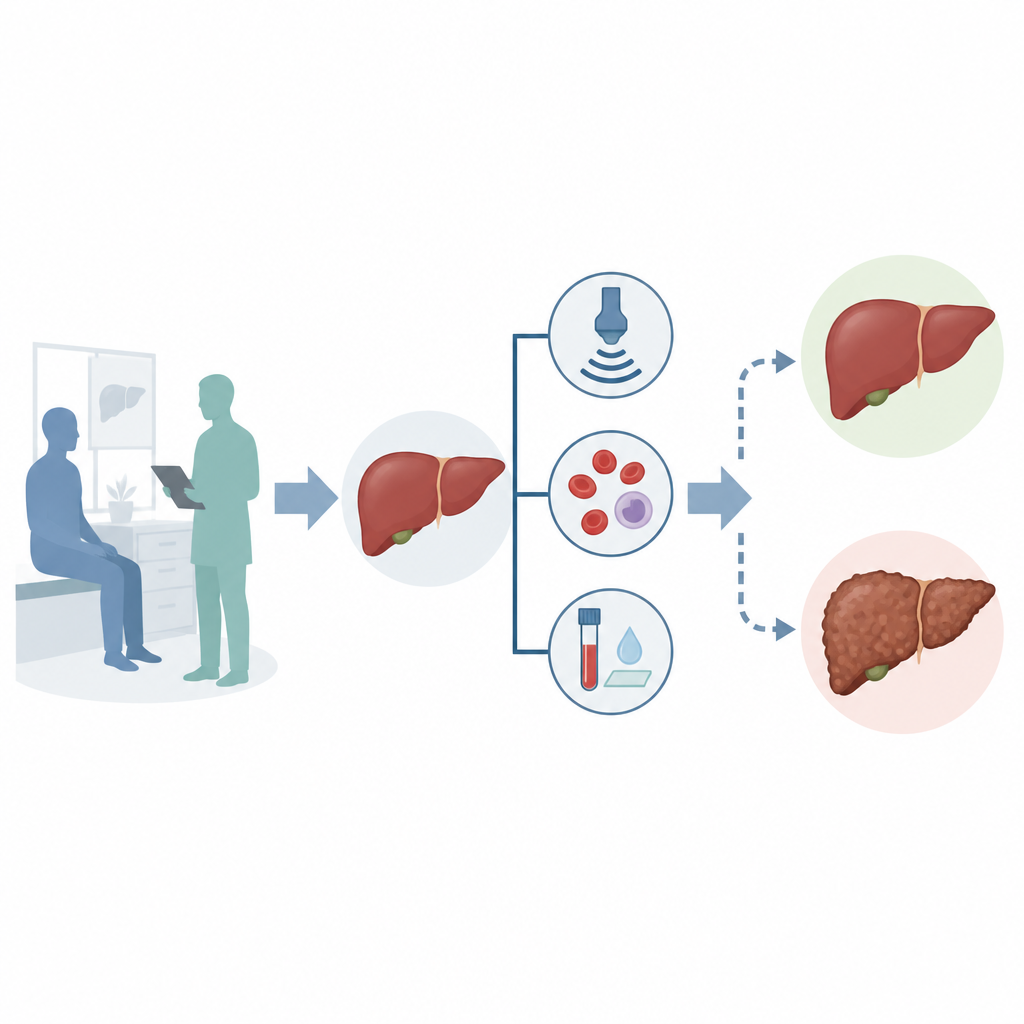
Liver biopsy has long been the reference test for judging scarring, but it samples only a tiny part of the organ and can cause bleeding or pain. That makes it hard to repeat regularly, especially in smaller hospitals. Blood based scores developed for viral hepatitis and a scan that measures how stiff the liver feels through the skin have helped, but they are not as accurate in autoimmune hepatitis as doctors would like. The stiffness scan can also be thrown off by inflammation, fluid in the abdomen, or obesity, which means that doctors still often fall back on biopsy.
Building a simple prediction tool
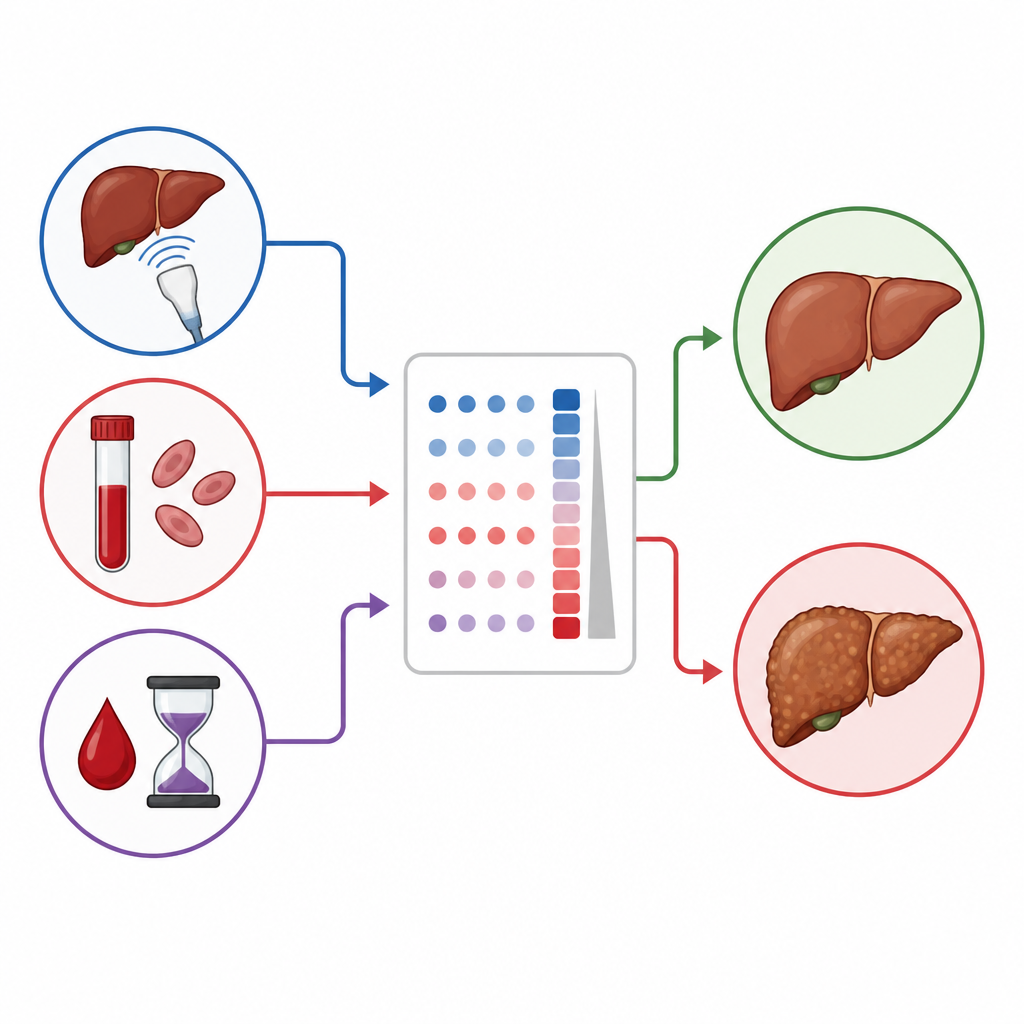
The researchers reviewed records from 141 adults with autoimmune hepatitis who had biopsies at a single hospital in China between 2016 and 2025. They looked at common blood tests and the noninvasive stiffness scan taken before treatment. Using modern statistical methods, they first narrowed a long list of measurements down to the ones most closely tied to severe scarring. Then they built a “nomogram,” a type of chart that turns a few test results into an easy to read risk estimate for advanced fibrosis.
Three everyday tests working together
The final chart combined three pieces of information: how stiff the liver was on the scan, how many platelets were in the blood, and how long the blood took to clot. Each of these reflects different aspects of liver health. Stiffer livers and longer clotting times suggest more serious damage, while lower platelet counts often signal pressure problems in the veins around a scarred liver. When these three measures were used together, the tool distinguished between patients with and without advanced scarring more accurately than the stiffness scan or any single blood score alone, in both the main group of patients and a separate group held back for testing.
What this could mean for patients
For doctors, the new chart offers a quick way to turn information they already collect into a clear estimate of whether a patient is likely to have advanced liver scarring. This could help decide who most needs a biopsy, who can be monitored noninvasively, and how closely to follow patients over time. For people living with autoimmune hepatitis, it points toward a future in which careful tracking of liver damage may rely less on needles and more on simple scans and blood tests. Larger studies in other hospitals will be needed, but this work suggests that smarter use of routine tests can make liver care safer and more personal.
Citation: Zhang, Y., Wang, M., He, J. et al. A novel non-invasive nomogram for predicting advanced liver fibrosis in autoimmune hepatitis. Sci Rep 16, 15090 (2026). https://doi.org/10.1038/s41598-026-42523-x
Keywords: autoimmune hepatitis, liver fibrosis, noninvasive testing, liver stiffness, risk prediction