Clear Sky Science · en
Prognostic value of the fibrosis-4 index for predicting in-hospital mortality in sepsis patients: evidence from MIMIC-IV and eICU databases
Why this matters for patients with severe infections
When someone develops sepsis, a life‑threatening reaction to infection, doctors must quickly judge who is at greatest risk of dying in the hospital. Today’s scoring systems can be accurate but require dozens of measurements and complex calculations. This study asks a simple but important question: can a straightforward blood‑test‑based number, originally designed for liver disease, help doctors rapidly flag high‑risk sepsis patients—even when those patients never had liver problems before?
A simple score born in liver clinics
The research centers on the Fibrosis‑4 (FIB‑4) index, a calculation that uses only age and three standard blood test results: two liver enzymes and the platelet count. Clinicians have long used FIB‑4 to estimate scarring in chronic liver disease because it is cheap, non‑invasive, and available almost everywhere. In recent years, however, scientists noticed that higher FIB‑4 values also show up in people with heart disease, kidney disease, and other serious conditions, hinting that the index may capture broader stress on the body rather than just long‑standing liver damage.
Connecting sepsis, the liver, and blood clotting
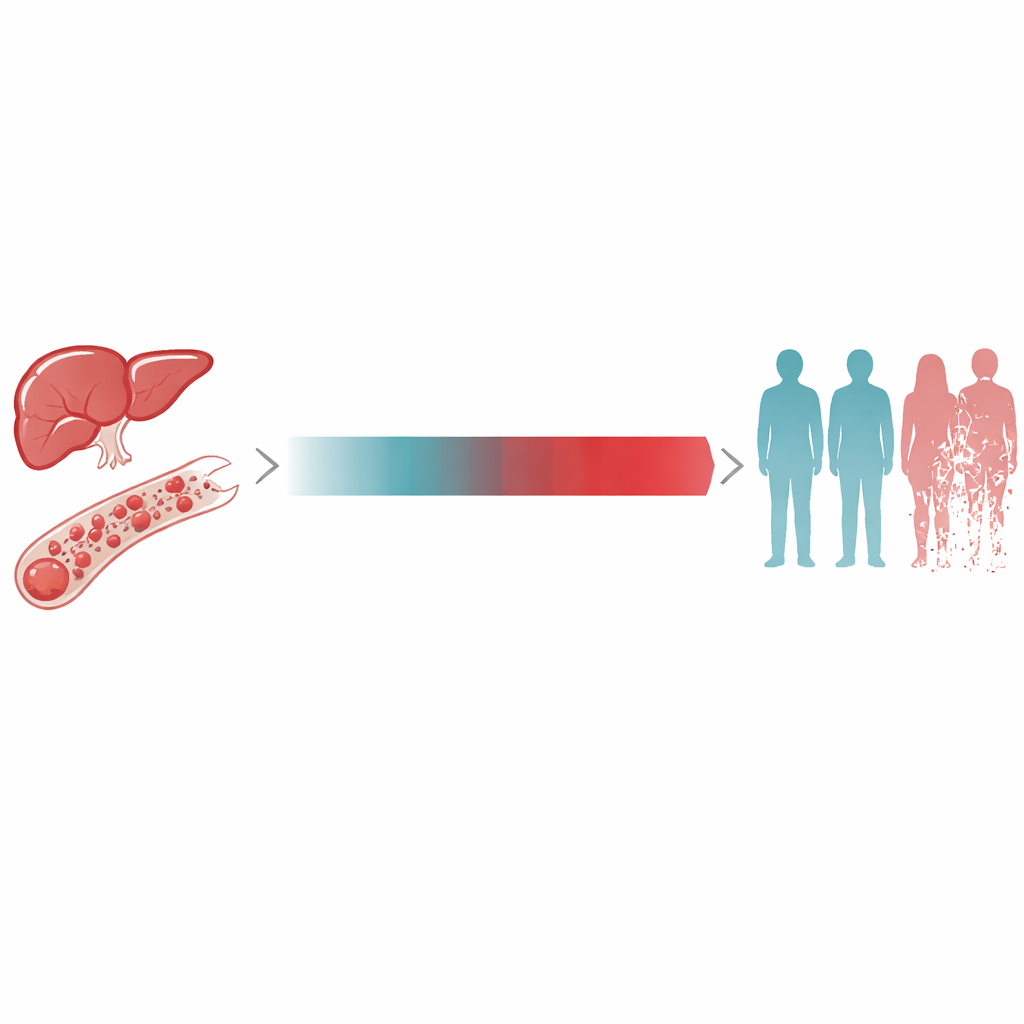
Sepsis unleashes a powerful inflammatory storm that can injure many organs at once. The liver, which filters toxins, manages energy use, and helps control blood clotting, is especially vulnerable. Traditional sepsis scores mainly look at jaundice—a yellowing linked to a single liver pigment—to flag liver trouble. FIB‑4, by contrast, blends signs of liver cell injury (the enzymes) and clotting system strain (platelets). In sepsis, these ingredients reflect acute “shock liver” and widespread clotting disturbances, not just old scars. The authors suspected that this broader picture might make FIB‑4 a more sensitive early warning sign of danger in septic patients.
Mining real‑world ICU data
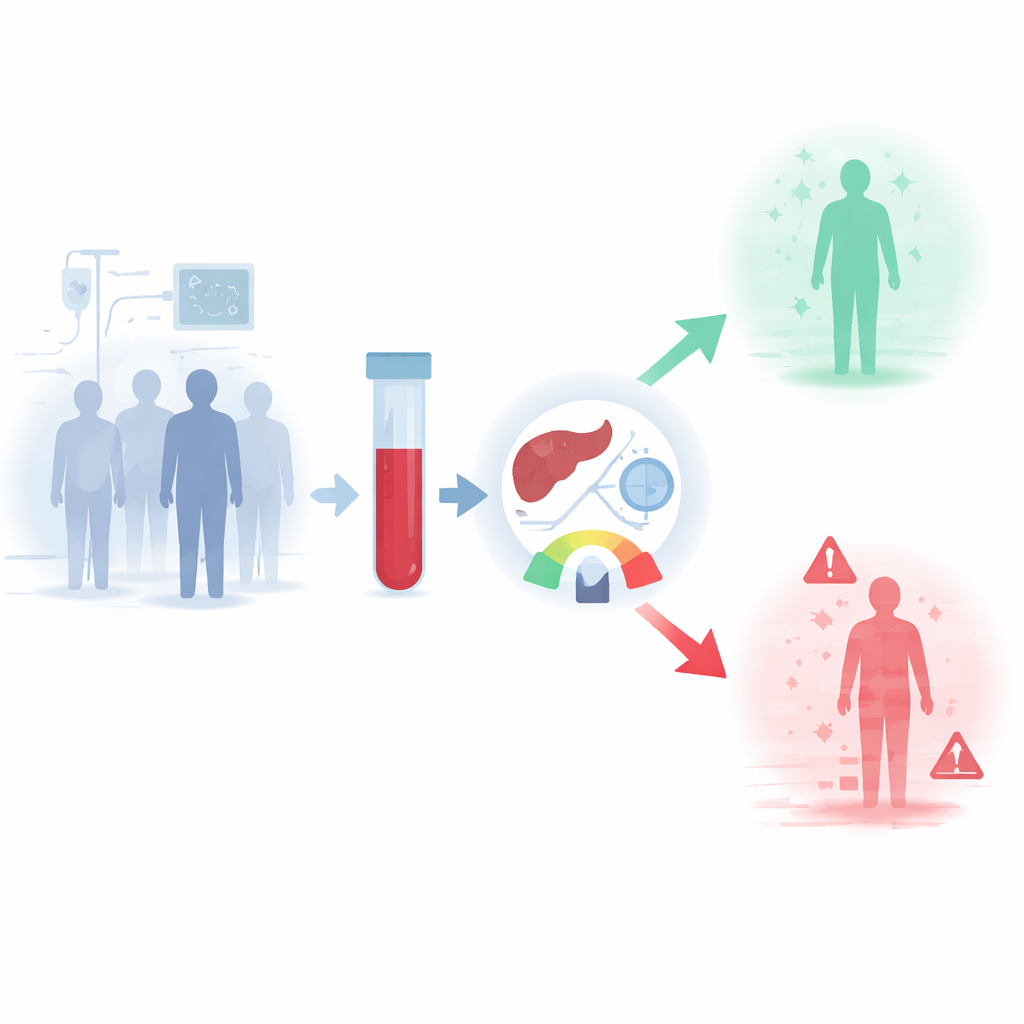
To test this idea, the team analyzed electronic health records from two massive critical‑care databases. One, called MIMIC‑IV, contains detailed data from a Boston hospital; the other, eICU, pools information from many hospitals across the United States. Together they included nearly 24,000 adults with sepsis or septic shock. For each patient, the researchers calculated FIB‑4 using lab results from the first 24 hours in the intensive care unit, then tracked who survived to hospital discharge and who did not. They used modern statistical tools to account for age, kidney function, infection severity, and other factors that might cloud the picture.
A clear threshold for higher death risk
The analyses uncovered a consistent pattern: patients with higher FIB‑4 levels were much more likely to die during their hospital stay. A value above about 1.25 emerged as a practical dividing line in both databases. People above this cut‑off had roughly 40–70% higher risk of in‑hospital death, even after adjusting for many other lab values and chronic illnesses. When the researchers compared FIB‑4 with widely used ICU scores such as SOFA and APACHE, FIB‑4 actually did a better job on its own at distinguishing survivors from non‑survivors. Survival‑curve analyses showed that high‑FIB‑4 patients began falling behind within days, emphasizing its potential as an early warning tool.
Beyond pre‑existing liver disease
A key concern was whether FIB‑4 simply labeled people who already had liver problems. To address this, the team repeated their analyses after systematically removing patients with known liver disease, cirrhosis, or likely fatty liver related to obesity and metabolism. They also removed patients whose livers might be strained by heart failure–related congestion. Even after these strict exclusions, high FIB‑4 remained strongly linked to death in sepsis. Additional work suggested that part of this link travels through other markers of poor circulation and clotting, such as lactate levels and prolonged bleeding times, underscoring that the index captures whole‑body stress during severe infection.
What this means for care at the bedside
For non‑specialists, the message is that a simple number derived from routine blood tests may help doctors quickly spot septic patients who are in deeper trouble than they first appear. Because FIB‑4 needs no special equipment and is already calculated in many hospitals for liver disease, it could be readily folded into sepsis care to complement, or in some settings even stand in for, more cumbersome scoring systems. While the study is observational and cannot prove cause and effect, its large, multi‑hospital data and repeated sensitivity checks make the findings hard to ignore. In practical terms, a raised FIB‑4 in a patient with sepsis may be an early red flag that the liver and clotting system are under severe strain—and that the patient may need closer monitoring and more aggressive treatment.
Citation: Kong, X., Jiang, B., Xu, C. et al. Prognostic value of the fibrosis-4 index for predicting in-hospital mortality in sepsis patients: evidence from MIMIC-IV and eICU databases. Sci Rep 16, 12510 (2026). https://doi.org/10.1038/s41598-026-42522-y
Keywords: sepsis, intensive care, liver function, risk prediction, prognostic biomarker