Clear Sky Science · en
Ant colony optimization approach for sustainable end-milling with minimum quantity nano-green lubrication
Making Metal Cutting Kinder to the Planet
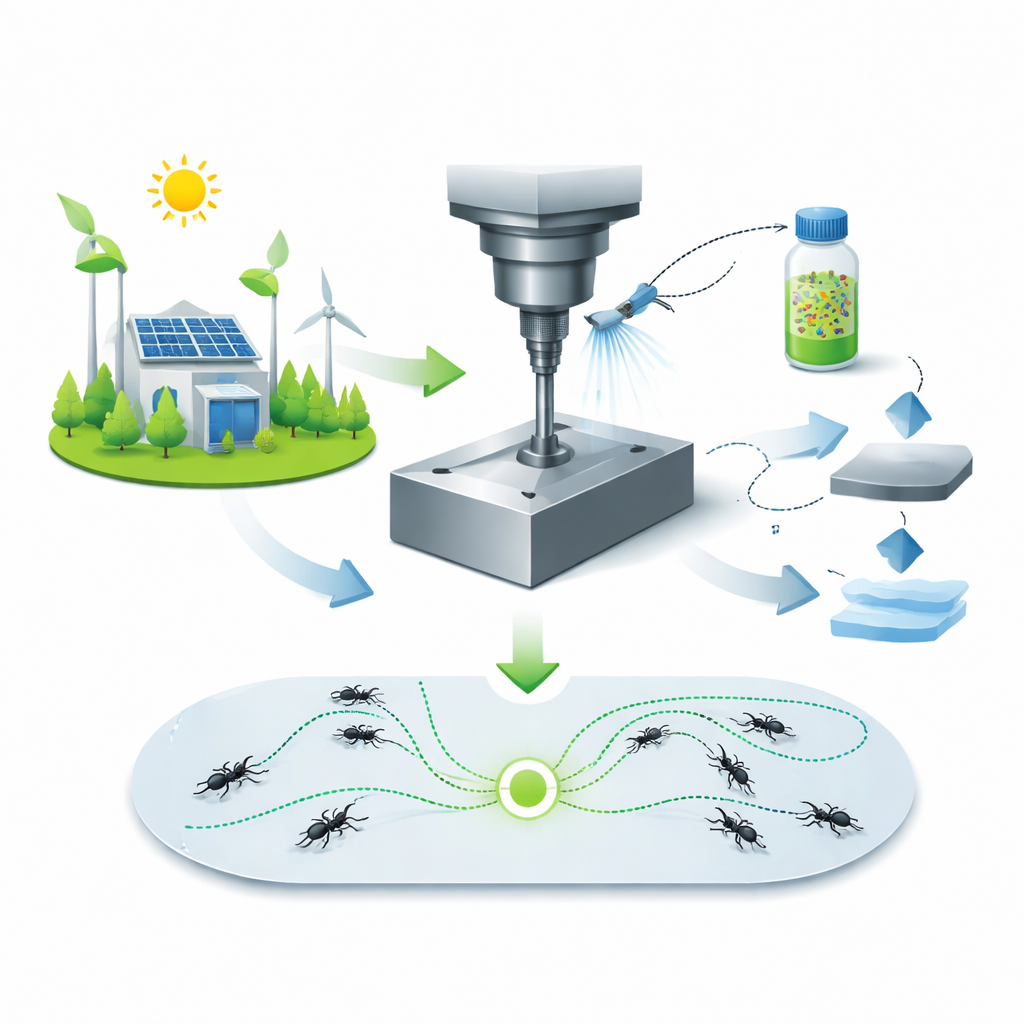
Modern airplanes, power plants, and ships rely on tough nickel-based alloys that are notoriously difficult to machine. Shaping these metals usually demands large amounts of cutting fluid to keep tools cool and surfaces smooth, which raises costs and creates environmental burdens. This study explores a different way: using a tiny mist of a plant‑based oil enhanced with microscopic ceramic particles, then tuning the cutting conditions with a nature‑inspired computer algorithm so manufacturers can cut these hard metals efficiently while using far less lubricant.
Why Cutting Super-Strong Metals Is So Hard
Nickel alloys like Inconel 690 are built to survive in the blazing hot interiors of turbines and reactors. Their resistance to heat, wear, and corrosion makes them perfect for extreme environments—but those same strengths turn them into a nightmare for machine tools. During milling, the tool rubs against a stubborn surface, generating intense heat, high cutting forces, and rapid tool wear. The traditional answer is to flood the cutting zone with large volumes of fluid to cool and lubricate it. While effective, this approach consumes thousands of liters of oil over time, poses health and disposal problems, and clashes with industry’s growing push toward greener manufacturing.
A Tiny Mist with a Big Job
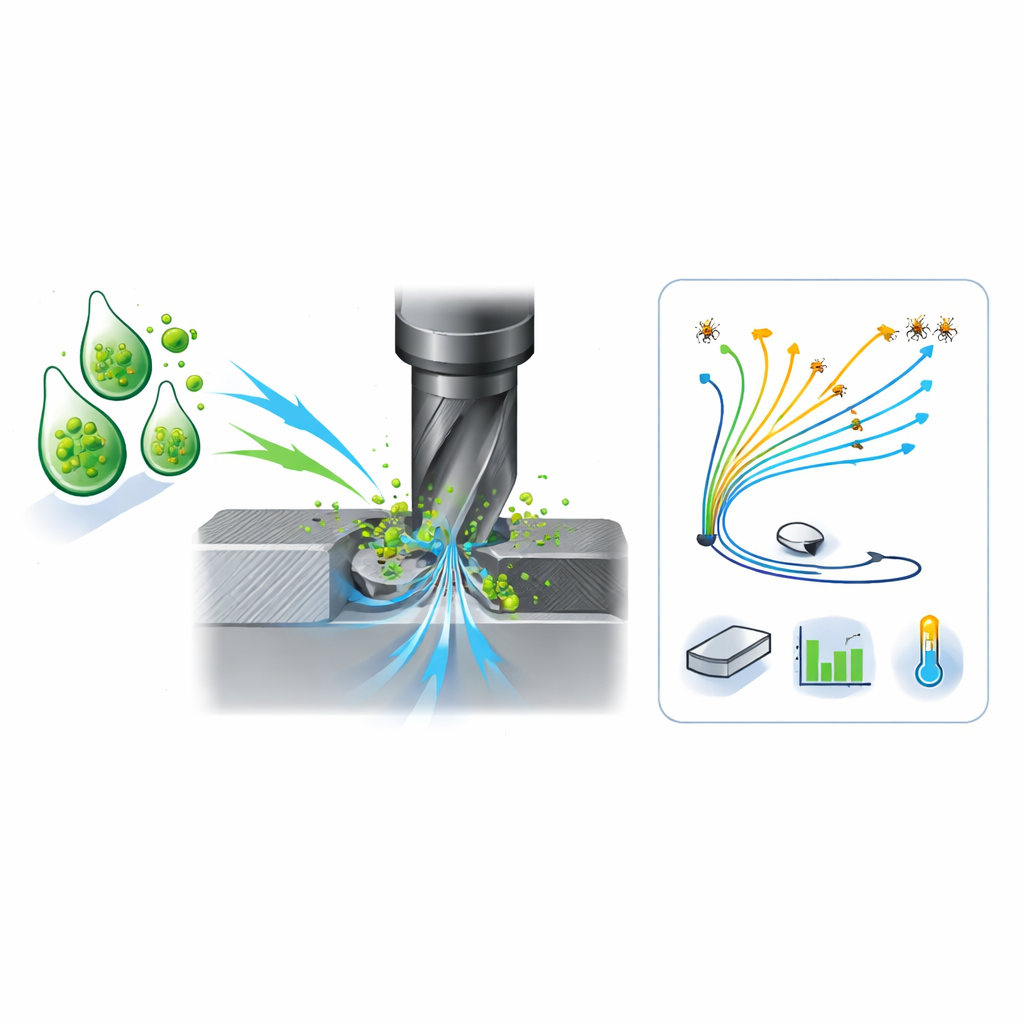
The researchers focused on a strategy called minimum quantity lubrication, where only a fine mist of oil is sprayed directly where the tool meets the workpiece. To make this tiny amount of fluid work harder, they blended palm oil with ultra-small alumina particles—ceramic grains about 40 billionths of a meter across. Through controlled mixing and ultrasonic shaking, they created a stable “nano‑green” lubricant and carefully measured how its ability to carry heat and flow changed with particle content. They found that adding 0.8% alumina struck the best balance: thermal conductivity rose by about 16%, viscosity by about 21%, and the fluid remained well dispersed, meaning it could both carry away heat and form a robust, slippery film between tool and metal.
Testing the New Fluid on a Tough Alloy
Armed with this optimized nano‑lubricant, the team ran a series of milling experiments on Inconel 690 plates. They compared three conditions: completely dry cutting, a mist of plain palm oil, and the nano‑enhanced palm oil. Sensitive instruments recorded how rough the machined surface became, how much force the tool experienced, and how hot the cutting zone grew. Microscopic images of the finished surfaces revealed stark contrasts. Dry cutting produced torn regions, pits, and stuck debris; plain palm‑oil mist smoothed things somewhat but still left damage. With the nano‑green fluid, the surface became more uniform and glossy, with minimal defects. The tiny particles acted like rolling spacers and polishing agents while the improved heat removal kept the metal from overheating. Across the board, surface roughness dropped, cutting forces fell, and temperatures declined—often by 20–30% compared with dry cutting.
Letting Digital Ants Search for the Sweet Spot
Finding the single best combination of cutting speed, feed rate, and depth of cut is like exploring a hilly landscape in the dark: change one setting and all three outcomes—roughness, force, and temperature—shift together. To navigate this terrain, the team first built mathematical “maps” that describe how each outcome responds to changes in settings, using a statistical tool known as response surface methodology. Then they unleashed a computer algorithm inspired by ant colonies. Just as real ants lay down and follow pheromone trails toward rich food sources, the virtual ants sampled many combinations of machining parameters, reinforcing promising regions of the map. Over hundreds of iterations, the colony converged on a combination that minimized all three machining problems at once, recommending a specific speed, feed, and cutting depth that were later verified in real experiments with less than 3% error between prediction and reality.
What This Means for Greener Manufacturing
For non‑specialists, the key message is straightforward: by replacing flood cooling with a carefully engineered plant‑based nano‑mist and using a smart search algorithm modeled on ant behavior, manufacturers can machine very tough metals more cleanly and efficiently. The optimized nano‑lubricant cuts down heat, wear, and energy use while dramatically reducing the amount of oil needed. The ant‑guided optimization ensures that the machine runs at conditions that get the most benefit from this fluid without tedious trial and error. Together, these advances point toward future workshops where critical aerospace and energy components are produced with less waste, lower environmental impact, and more intelligent control.
Citation: Abdullah, M., Rao, A.C.U., Ramachandran, T. et al. Ant colony optimization approach for sustainable end-milling with minimum quantity nano-green lubrication. Sci Rep 16, 11539 (2026). https://doi.org/10.1038/s41598-026-42508-w
Keywords: nano-green lubrication, minimum quantity lubrication, nickel superalloy machining, ant colony optimization, sustainable manufacturing