Clear Sky Science · en
Study on the strength properties of coir fiber reinforced concrete containing waste brick powder dust as sand replacement
Turning Building Waste into a Useful Resource
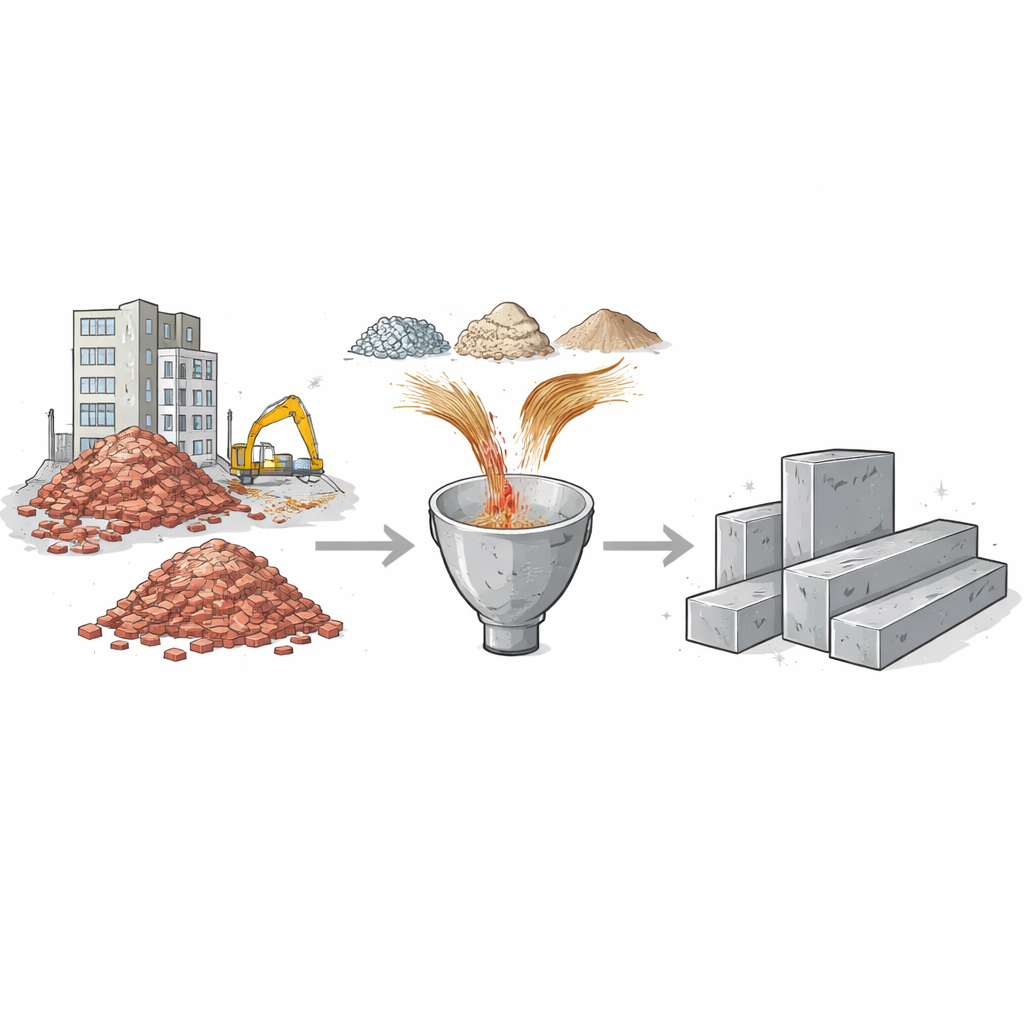
As cities grow, so does the mountain of rubble left behind by construction and demolition. Discarded bricks and sand pulled from rivers are part of a hidden cost of modern building: damaged landscapes, crowded landfills, and high carbon emissions. This study explores a simple idea with big implications—can we grind up waste bricks and combine them with coconut fibers to make everyday concrete that is both sturdy and kinder to the environment?
Why Rethinking Concrete Matters
Concrete is the backbone of our roads, homes, and bridges, and it uses huge amounts of natural river sand and energy-intensive cement. At the same time, broken bricks from old buildings often end up dumped or buried. The researchers set out to link these two problems. They asked whether finely ground waste brick powder could replace part of the sand in a standard concrete mix, and whether adding coir fibers—thin strands cut from coconut husks—could help the concrete better resist cracking and harsh chemicals. If successful, this approach would save natural sand, give new life to demolition waste, and use a renewable plant fiber that is common in tropical regions.
How the New Mix Was Put to the Test
The team started with a common grade of concrete used in many buildings. They replaced up to 40% of the natural sand with brick powder, made by crushing and grinding discarded bricks into fine particles. They also mixed in coir fibers at different volumes, from 0.5% to 2%, using short strands to act like tiny reinforcing ties inside the concrete. Dozens of test pieces were cast and cured in water, then measured for how easily the fresh mix flowed, how strong it became in compression, bending, and tension, and how well it survived long baths in strong acid solutions meant to mimic aggressive environments. This allowed the researchers to pinpoint not just whether the new ingredients worked, but which combination gave the best balance of strength, workability, and durability.
Finding the Sweet Spot for Strength and Durability
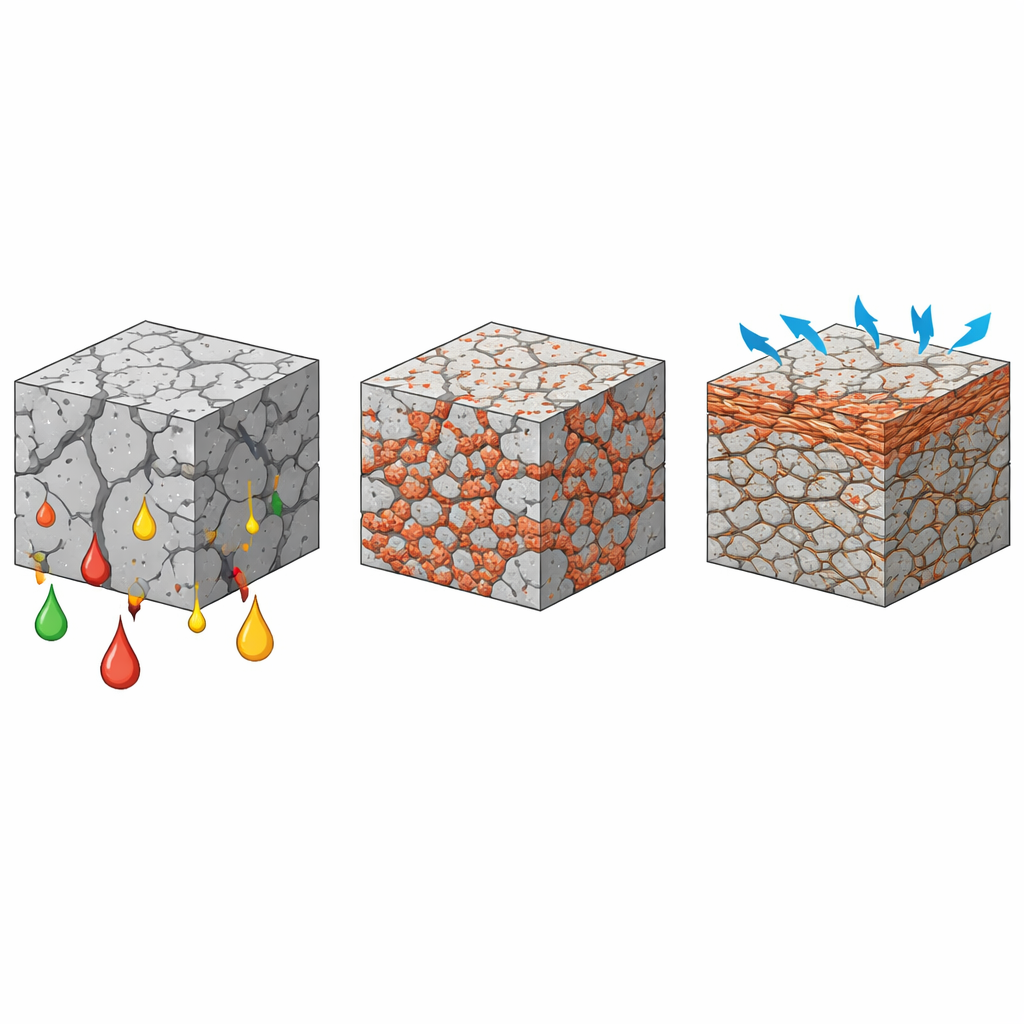
The results showed that a modest amount of brick powder and fiber went a long way. Replacing 10% of the sand with brick powder alone slightly increased the strength compared to ordinary concrete, likely because the fine particles filled tiny voids and took part in slow chemical reactions that tightened the internal structure. When this 10% brick powder was paired with 1% coir fiber, the improvements became striking. The concrete’s crushing strength rose above the standard requirement, but the biggest gains appeared in how it handled bending and pulling forces. Flexural strength increased by about two-fifths and splitting tensile strength by about one‑third, signaling that the fibers were effectively stitching together small cracks as they formed. Higher levels of brick powder or fiber, however, made the mix harder to work with and slightly reduced strength, showing that more is not always better.
Standing Up to Harsh Chemical Attack
Beyond raw strength, the study probed how well the concrete would fare in acidic environments, such as industrial or polluted settings where structures can slowly be eaten away. Samples were soaked for 60 days in strong hydrochloric and sulfuric acid solutions. Ordinary concrete lost the most weight and strength, revealing extensive internal damage. In contrast, the mix with 10% brick powder and 1% coir fiber suffered the least loss in both mass and strength. The denser network created by the fine brick particles made it harder for acid to seep in deeply, while the coconut fibers helped hold the material together and limit crack growth. Even after prolonged exposure, this optimized mix kept strength levels above what is typically required for the concrete grade studied.
What This Means for Future Buildings
For non-specialists, the bottom line is clear: carefully chosen amounts of ground waste brick and coconut fibers can produce a standard concrete that is at least as strong as conventional mixes, better at resisting cracking and acid damage, and less demanding of natural sand. Rather than treating broken bricks as useless debris, this approach turns them into a valuable ingredient, while coir fibers add toughness using a low-cost, plant-based material. Although more work is needed to confirm long-term performance in real buildings and with different sources of brick waste, this study points toward a more circular future for construction, where yesterday’s rubble helps build tomorrow’s resilient and more sustainable structures.
Citation: Palaniappan, M., Anandaraj, S., Murugesan, T. et al. Study on the strength properties of coir fiber reinforced concrete containing waste brick powder dust as sand replacement. Sci Rep 16, 11932 (2026). https://doi.org/10.1038/s41598-026-42480-5
Keywords: sustainable concrete, waste brick powder, coir fiber, construction waste recycling, durable building materials