Clear Sky Science · en
Phytochemical composition and bioactivities of Saudi endemic Reseda pentagyna essential oils
Why a Desert Plant Matters for Human Health
In the mountains of Saudi Arabia grows a little-known herb called Reseda pentagyna. Local ecosystems depend on such hardy plants, but scientists are now asking a different question: could they also help fight modern health problems like infections, diabetes, and cancer? This study focuses on the plant’s fragrant leaf oils and explores whether the natural chemicals they contain might one day inspire new medicines.
From Wild Leaves to Concentrated Oil
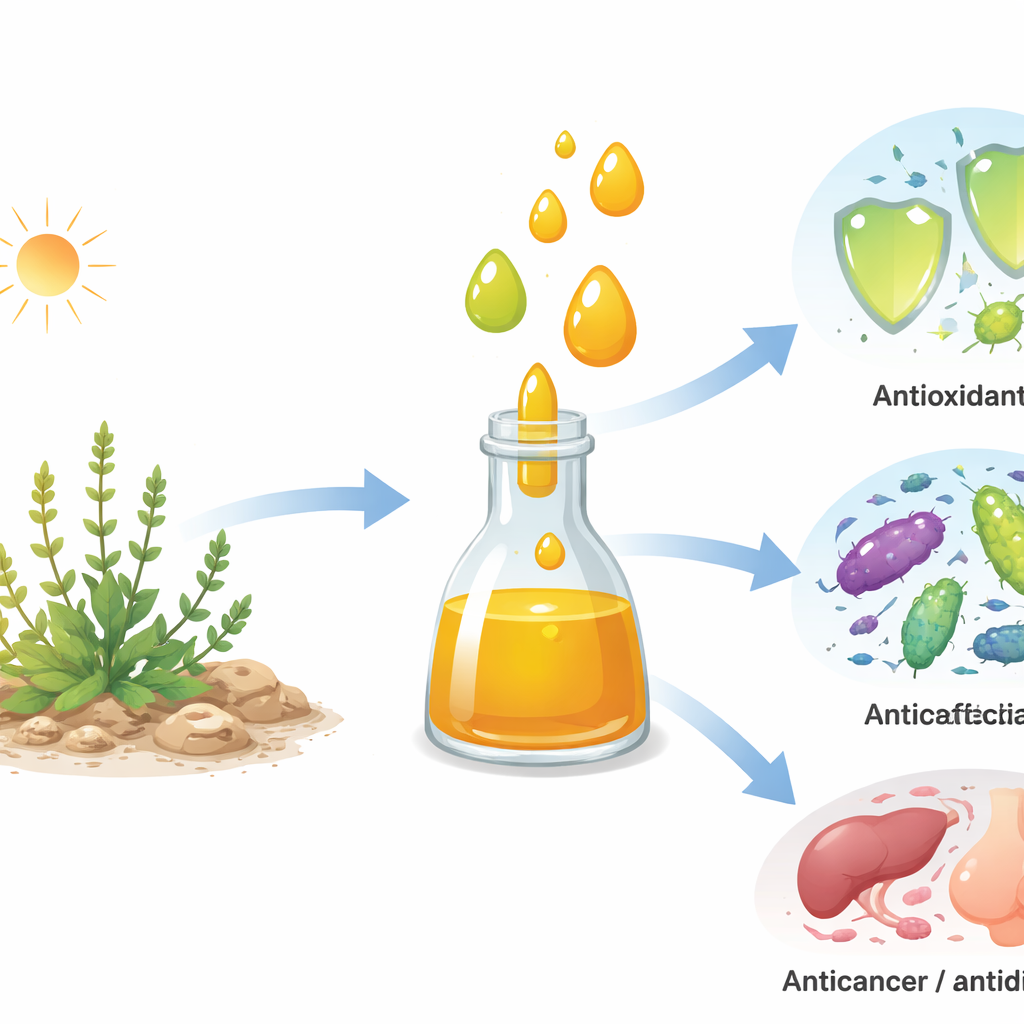
The researchers collected Reseda pentagyna from the Abha region in southwestern Saudi Arabia, carefully dried the leaves, and used steam-based distillation to pull out the essential oil. Remarkably, the plant yielded a relatively high amount of oil compared with close relatives, making it more practical as a potential resource. They then used a sophisticated chemical "fingerprinting" technique to identify 53 different components in the oil. The mix turned out to be rich in small, aromatic molecules known for strong biological activity, especially a compound called carvacrol, along with thymol and several other phenolic substances that often act as natural defenders in plants.
Natural Defenses Against Oxidative Stress and Germs
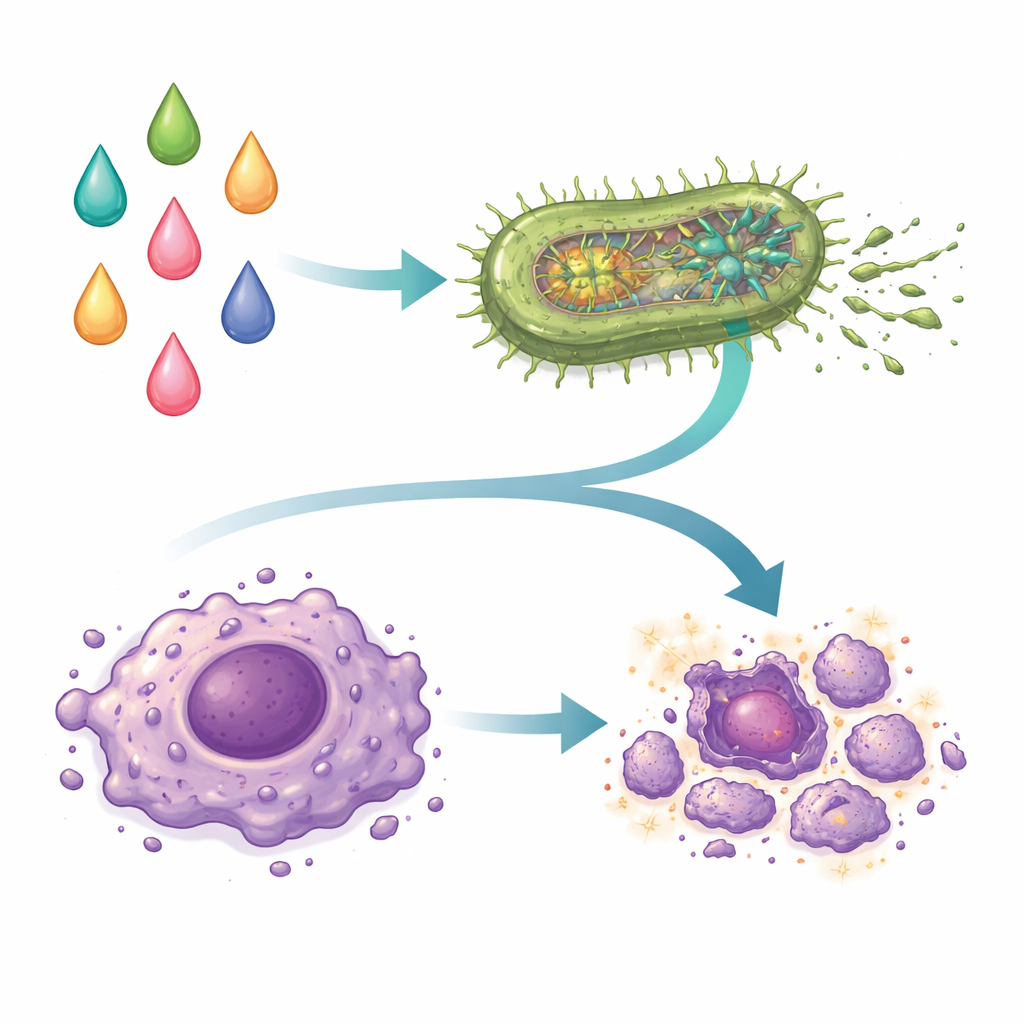
One major focus of the study was antioxidant power—the ability to neutralize unstable molecules called free radicals that can damage cells and contribute to aging and disease. In lab tests, the oil showed strong radical-scavenging activity, consistent with its high levels of phenolic and flavonoid compounds, which are plant-based chemicals known for soaking up these reactive species. The team also tested the oil against several common bacteria. It inhibited the growth of both Gram-positive and Gram-negative strains, with especially strong effects on problem-causing Gram-negative species such as Escherichia coli and Pseudomonas aeruginosa. The results suggest that the oil may disrupt bacterial cell membranes, an action often linked to carvacrol and related molecules.
Possible Help for Blood Sugar Control
Beyond fighting germs and free radicals, the researchers asked whether the oil might help with blood sugar management, a central issue in diabetes. They examined its ability to block two digestive enzymes, α-amylase and α-glucosidase, which break down starches and release glucose into the bloodstream. In controlled experiments, the essential oil slowed both enzymes in a dose-dependent fashion, meaning higher amounts produced stronger inhibition. Although it was less powerful than a standard diabetes drug used as a comparison, the dual action on both enzymes signals that this desert plant could become a useful natural partner to existing treatments or inspire new drug designs.
Targeting Cancer Cells in the Lab
The team also tested the oil on human liver (HepG2) and breast (MCF-7) cancer cell lines. When exposed to increasing concentrations of the oil, cancer cell survival dropped, indicating a clear toxic effect on these cells in vitro. To understand how this happens, the researchers looked at gene activity related to programmed cell death, or apoptosis. They found that markers that promote cell self-destruction became more active, while protective, anti-death markers went down. This pattern matches a controlled shutdown of cancer cells rather than random damage, echoing previous work on carvacrol and thymol in other tumor types.
What This Means for Future Medicine
Taken together, the findings portray Reseda pentagyna leaf oil as a compact natural toolkit: it can neutralize harmful oxidants, weaken troublesome bacteria, slow sugar-releasing enzymes, and push cancer cells toward self-destruction in the lab. The work does not yet prove that the oil is safe or effective as a treatment in humans—those answers require careful animal studies, clinical trials, and detailed analysis of individual compounds. But this first comprehensive look at the plant’s essential oil shows that a modest desert herb, previously overlooked, may hold multiple clues for future therapies and broaden the catalogue of promising molecules from the plant world.
Citation: Aziz, I.M., Alshalan, R.M., Alghamdi, A.K. et al. Phytochemical composition and bioactivities of Saudi endemic Reseda pentagyna essential oils. Sci Rep 16, 12143 (2026). https://doi.org/10.1038/s41598-026-42479-y
Keywords: essential oils, medicinal plants, antioxidant activity, antibacterial agents, antidiabetic potential