Clear Sky Science · en
AI-powered Chatbot integration for enhanced accessibility of electronic health records in a pediatric hospital
Why this matters for everyday care
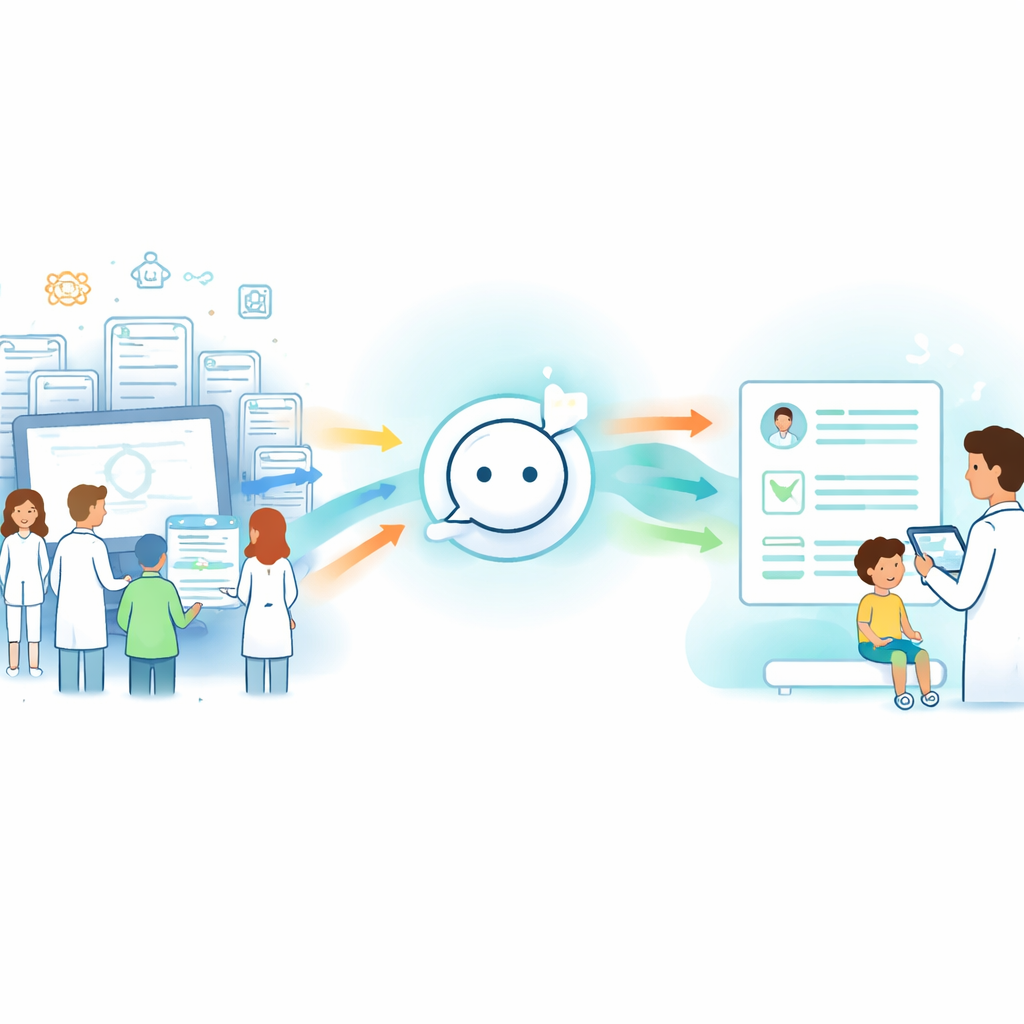
Behind every doctor’s visit lies a growing mountain of digital paperwork. In children’s hospitals, doctors often spend precious minutes hunting through electronic health records instead of talking to families or making decisions. This study shows how a simple chat window, powered by artificial intelligence, can turn those complex records into fast, clear answers—especially in busy, low-resource hospitals where every second counts.
The problem with finding answers in digital charts
Electronic health records were meant to make medicine more efficient, but many systems have become cluttered and hard to search. Doctors must click through many screens and fields just to find basics like a child’s oxygen level or how many similar cases were admitted last week. Earlier research has found that physicians can spend over a quarter of an hour per visit inside these systems, with much of that time spent searching rather than thinking or talking with patients. These struggles are particularly serious in smaller or rural hospitals, where software is often basic and staff are stretched thin.
A chatbot that talks to spreadsheets
The researchers worked with a district hospital in Tumkur, India, where pediatric patient data are stored in simple spreadsheet-style files rather than in expensive database systems. They built a lightweight electronic health record system using common web tools and connected it to a conversational chatbot based on LangChain and OpenAI’s GPT-3.5 model. Instead of sending full patient records to the AI, a separate Python “helper” translates the doctor’s typed question into safe, focused commands that pull only the needed information from anonymized data. This protects privacy while letting the chatbot understand natural questions like “How many dengue cases were admitted on this date?” or “What is this child’s latest oxygen level?”
How the system works behind the scenes
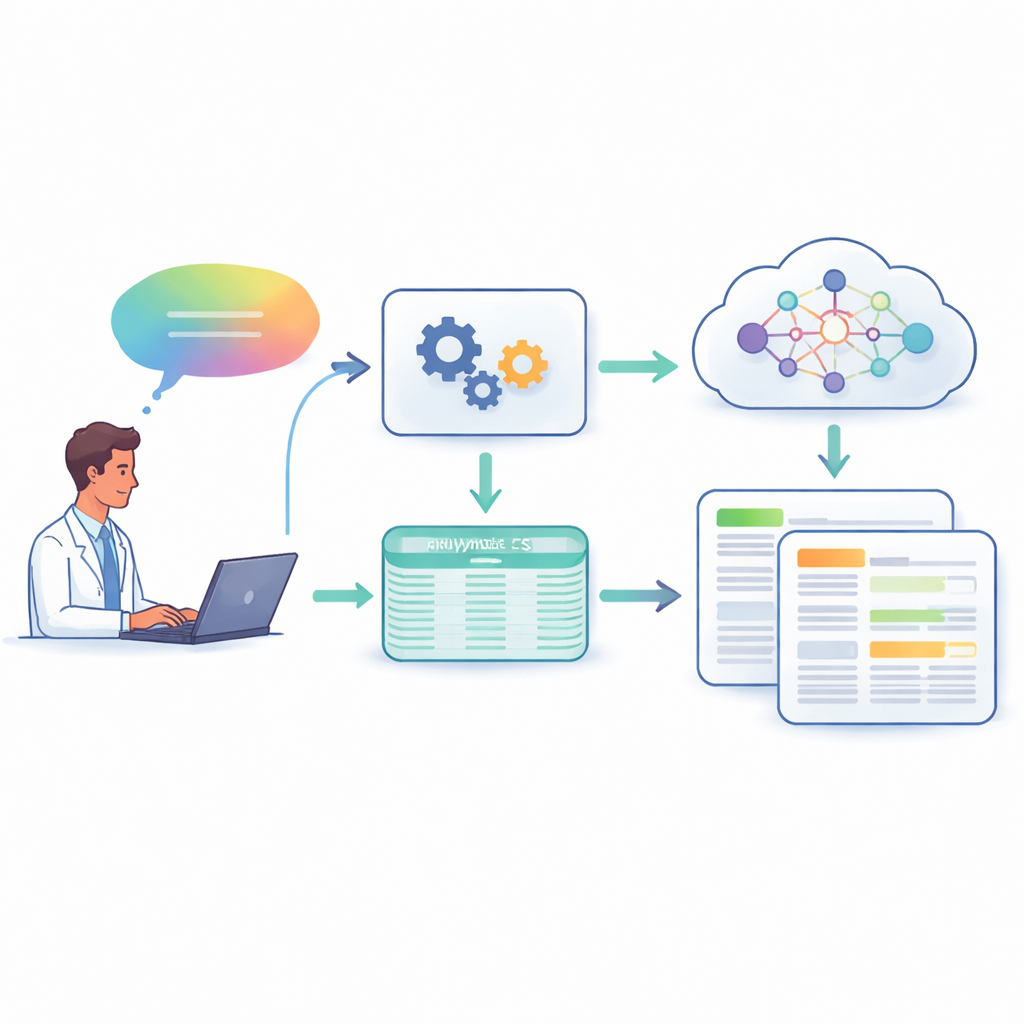
When a doctor types a question into the chatbot, the system first retrieves the relevant, de-identified data from a secure Firestore storage area and converts it into a structured format. The LangChain CSV agent then turns the question into small pieces of computer code that can search those spreadsheet-style files. That code is run on the local data, and the results are passed back to the language model, which turns them into a clear, conversational answer for the clinician. Arrows of data flow only in one safe direction: the chatbot sees query results, not entire patient charts, helping the system respect privacy rules while still feeling flexible and human to use.
Putting the chatbot to the test with real clinicians
To see if this tool actually helped, the team collected a dataset of 1,200 pediatric encounters, each with about 160 different data points. Forty clinicians were asked to complete 240 realistic search tasks, such as checking a specific vital sign or counting patients with a certain diagnosis, both with and without the chatbot. The hospital’s older electronic record search, which relied on simple keyword matching, served as the comparison. With the chatbot, the median search time dropped from just over one minute to a little more than half a minute—about a 40% improvement. The accuracy of the information retrieved also rose noticeably, with a combined score of precision and completeness increasing from 0.71 to 0.89. Clinicians rated the tool highly for usability and appreciated getting neatly structured answers instead of raw tables.
What this could mean for future care
The authors conclude that a modest, affordable chatbot can make it much easier and faster for doctors to tap into children’s medical histories, without requiring sophisticated infrastructure or risking unnecessary data exposure. By letting clinicians “talk” to records in plain language and by carefully limiting what the AI can see, the system points to a practical path for hospitals that rely on spreadsheets and have tight budgets. While the chatbot still struggles with very complex or ambiguous questions and does not yet handle free-text notes, the study suggests that similar tools could one day help clinicians in many fields spend less time wrestling with software and more time caring for patients.
Citation: Gowramma, P.B., Kumar, K., Prema, M.S. et al. AI-powered Chatbot integration for enhanced accessibility of electronic health records in a pediatric hospital. Sci Rep 16, 13287 (2026). https://doi.org/10.1038/s41598-026-42475-2
Keywords: pediatric electronic health records, medical AI chatbot, clinical data retrieval, healthcare privacy, low-resource hospitals