Clear Sky Science · en
Harnessing machine learning to explore influencing mechanism in the dual pro-environmental intention-behavior gap
Why Good Green Intentions Often Fall Short
Many of us say we care about the climate, yet still forget to sort our trash, leave lights on, or drive when we could walk. This mismatch between what people intend to do for the environment and what they actually do is at the heart of this study. The researchers set out to understand not only why strong intentions sometimes fail to become action, but also why, in some cases, people act in eco-friendly ways even when they report little conscious intent to do so.
Everyday Choices That Shape the Climate
The paper focuses on ordinary pro-environmental behaviors such as turning off appliances, recycling, using public transport, and encouraging friends or family to be more eco-conscious. These small actions, when multiplied across millions of people, can significantly reduce carbon emissions and help societies move toward low-carbon development. Yet past research has mainly looked at what drives intentions, not the often-surprising gap between what people say and what they do. This study goes further by looking at both sides of that gap in detail, using data from 2,216 urban residents across China.
Four Types of Green Behavior Patterns
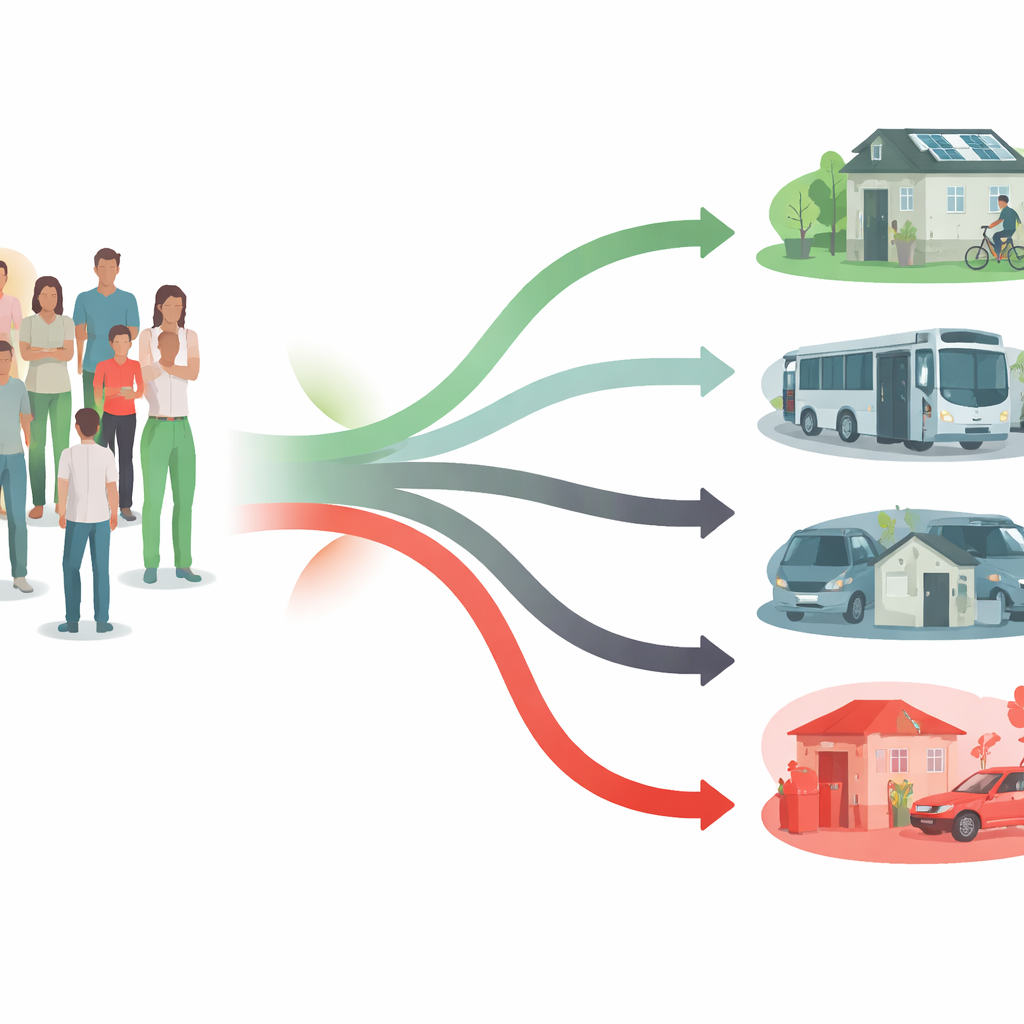
To make sense of these intention–action mismatches, the authors sort people into four groups using a simple color-coded model. “Green” individuals have both high intentions and frequent pro-environmental actions. “Red” individuals show low intentions and rarely act in eco-friendly ways. More intriguingly, there are two “grey” groups that reveal the dual gap: one where people often perform green actions despite reporting low intent (a positive gap), and another where people express strong intent but rarely follow through (a negative gap). Roughly one in five respondents fell into one of these gap groups, underscoring how common such mismatches are in real life.
What Minds and Surroundings Have to Do with It
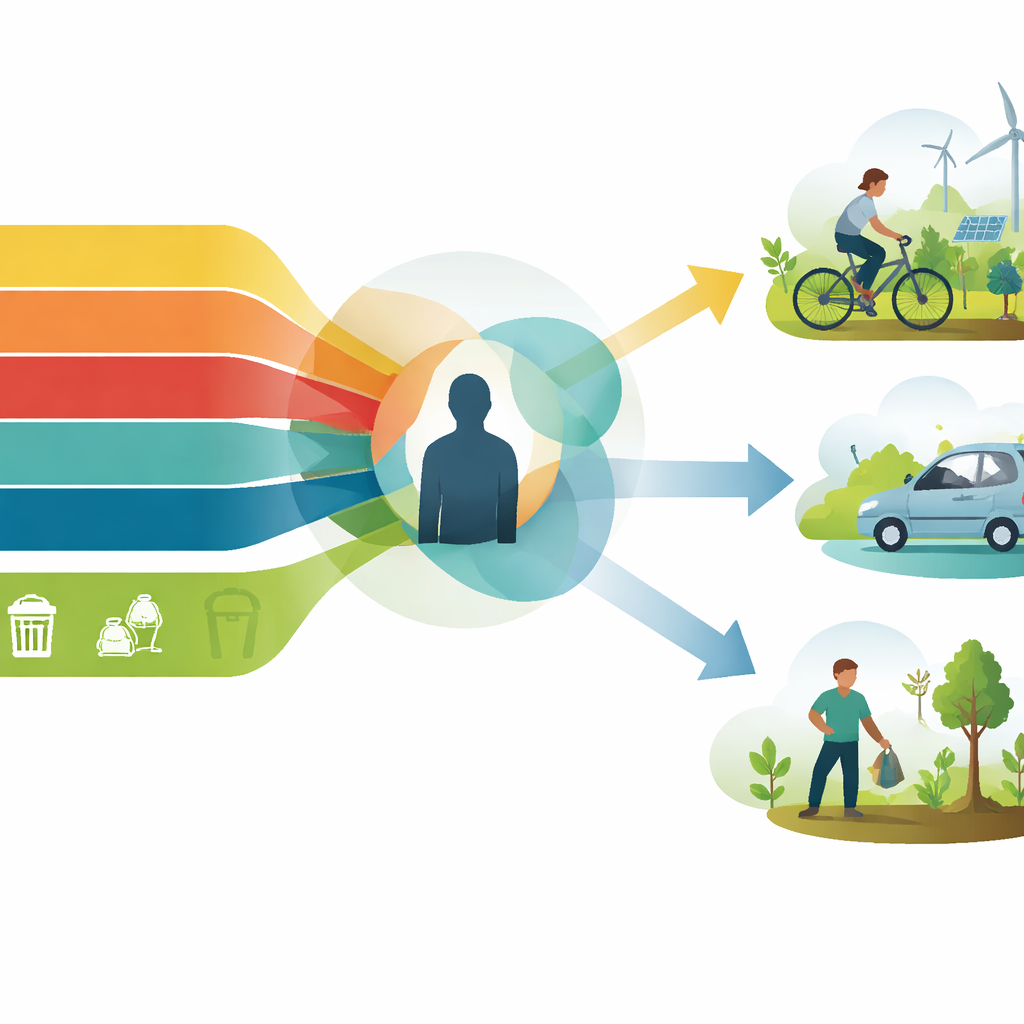
The researchers then examine which personal traits and external conditions help explain these four patterns. They look at people’s environmental knowledge, feelings about acting green, sense of personal responsibility, belief in their own ability to make a difference, and perceptions of social pressure. They also consider situational factors such as how visible and convenient green infrastructure—like recycling points or public transport—appears to be. Instead of traditional statistics that assume simple, straight-line relationships, they use modern machine learning methods and identify LightGBM, a powerful algorithm, as the best at detecting complex, nonlinear patterns in the data.
Hidden Turning Points and a Surprising Role for Infrastructure
The machine learning results show that attitude toward pro-environmental behavior consistently matters most, but not in a simple “more is always better” way. For people in the positive gap group—those who act green despite low intentions—attitude and sense of responsibility follow an inverted U-shape: up to a point they support green behavior, but beyond a certain threshold, their influence reverses. For the negative gap group—high intentions but low action—having a very strong pro-environmental attitude initially seems linked to a wider gap, until attitudes become so strong that behavior finally starts to catch up. A high sense of responsibility and strong self-belief help reduce the negative gap, while highly visible infrastructure can actually enlarge it, possibly because people feel that “the system” is taking care of things and their own efforts matter less.
What This Means for Climate Action
For non-specialists, the takeaway is that getting people to live more sustainably requires more than raising awareness or building better infrastructure. The study suggests that there are psychological tipping points: attitudes, responsibility, and self-confidence need to be nurtured carefully so that they push behavior forward rather than creating frustration or a sense that “someone else will handle it.” Tailored strategies may work best: supporting and amplifying the already-green group, lowering practical barriers for those who struggle to act, using roles at home and work to encourage quiet doers, and designing public systems that invite personal engagement instead of diluting it. By revealing these nuanced patterns, the paper offers a more realistic roadmap for turning climate concern into lasting everyday action.
Citation: Dong, Z., Zhang, Y., Mao, Y. et al. Harnessing machine learning to explore influencing mechanism in the dual pro-environmental intention-behavior gap. Sci Rep 16, 12082 (2026). https://doi.org/10.1038/s41598-026-42468-1
Keywords: pro-environmental behavior, intention–behavior gap, machine learning, environmental psychology, low-carbon lifestyle