Clear Sky Science · en
A Caputo fractional-order SEIHRD model for Ebola: theoretical analysis, sensitivity, bifurcation, and numerical simulations
Why this study matters
Ebola outbreaks are terrifying not just because the virus is deadly, but because it can smolder in communities in ways that are hard to predict and control. This paper introduces a new kind of mathematical model that treats an Ebola epidemic a bit like a system with a long memory, where past infections and unsafe burials continue to shape the future course of the outbreak. By doing this, the authors aim to better understand when Ebola dies out, when it becomes entrenched, and which control measures matter most.
Following people through stages of illness
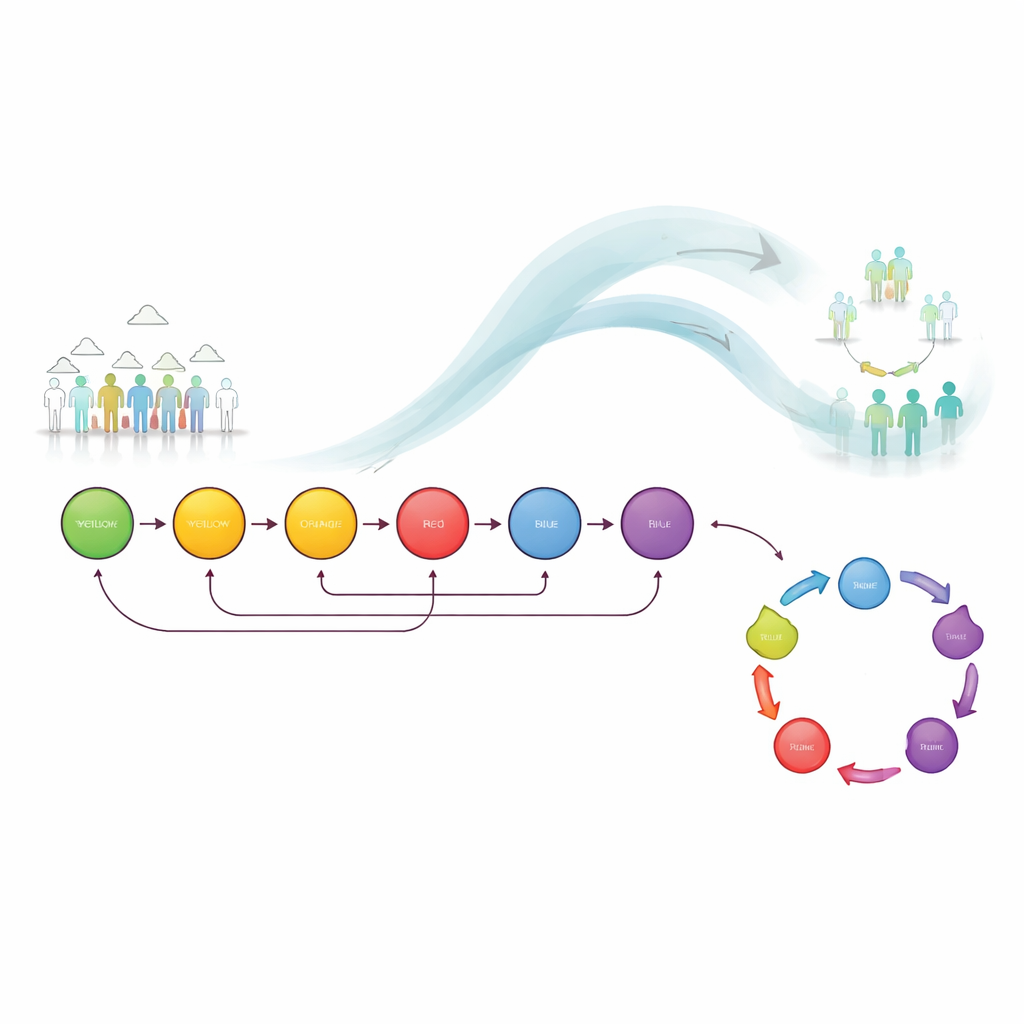
The researchers track the population by splitting it into six groups: people who are still vulnerable, those who have been exposed but are not yet contagious, those spreading the virus in the community, patients in hospital, people who have recovered, and people who have died but are not yet safely buried. Unlike simpler models, this framework pays special attention to the deceased group, because bodies can remain infectious and funerals are a well-known driver of Ebola transmission. The model links these groups through flows that represent infection, illness progression, hospitalization, recovery, death and burial, using real or realistic estimates for how fast each step happens.
Adding the idea of epidemic "memory"
A key innovation is the use of so‑called fractional calculus, a mathematical technique that allows the system to remember its past instead of reacting only to its present state. In practical terms, this means that how fast infection rises or falls today depends on the entire history of the outbreak, not just today’s numbers. For Ebola, this is important: incubation periods, lingering infectiousness, and extended contact with the deceased all introduce delays and long tails. The authors show that their fractional version of the model behaves well mathematically: solutions exist, stay non‑negative, and remain within biologically reasonable bounds for all future times.
When Ebola dies out and when it persists
To understand whether Ebola will spread, the authors calculate the basic reproduction number, a threshold that measures how many new infections a typical case generates. Their expression breaks this number into three pieces: infection from sick people in the community, from hospitalized patients, and from the unburied dead. For a set of plausible parameter values, the threshold comes out slightly above one, meaning the virus can persist. They prove that when this number is below one, the only long‑term outcome is a healthy population with no Ebola; when it is above one, the system admits a persistent "endemic" state in which infection keeps circulating at a steady level.

Thresholds, tipping points, and control levers
The model reveals a smooth tipping point: as transmission increases, a stable disease‑free state gives way to a stable endemic state through a transcritical bifurcation, a standard pattern in epidemic dynamics. Using this structure, the authors derive explicit formulas for the long‑term infection levels and explore how changes in key parameters shift the outcome. Small improvements in hospital care (which increase recovery), faster safe burials, or reductions in community contact all push the system toward elimination. Conversely, even modest increases in contact rates or delays in burial can sharply raise both the reproduction number and the long‑term number of infectious individuals.
Testing numerical tools and the impact of memory
Because fractional models are harder to solve exactly, the team compares two advanced computational methods for simulating outbreaks over time. Both approaches reproduce the expected patterns: when the threshold is below one, infections fade; above it, they settle into a persistent level. As the "memory" effect becomes stronger, the epidemic tends to evolve more slowly and can linger longer, reflecting real‑world persistence. Among the two methods, a fractional Runge–Kutta scheme proves more accurate and reliable than the alternative technique, making it a promising tool for practical epidemic forecasting.
What this means for Ebola control
In plain language, the study shows that a memory‑aware model can better capture how Ebola hangs on in communities, especially through unsafe burials and delayed responses. It confirms that completely stopping Ebola requires driving the reproduction number strictly below one, not just close to it. The analysis points to three especially powerful levers: reducing contact with infectious people, improving treatment so patients recover faster, and ensuring rapid, safe burials. The authors suggest that future work should blend this fractional framework with ways to handle uncertainty in data, eventually giving public health teams more robust tools to plan interventions before an outbreak spirals out of control.
Citation: Malathy, R., Krishnan, G.S.S. & Loganathan, K. A Caputo fractional-order SEIHRD model for Ebola: theoretical analysis, sensitivity, bifurcation, and numerical simulations. Sci Rep 16, 13661 (2026). https://doi.org/10.1038/s41598-026-42467-2
Keywords: Ebola modeling, fractional calculus, epidemic thresholds, unsafe burials, disease control strategies