Clear Sky Science · en
Association of surgical resection with survival in retroperitoneal leiomyosarcoma based on SEER propensity score matching and machine-learning models
Why This Rare Cancer Study Matters
Deep in the back of the abdomen lies a hidden space where rare but dangerous cancers can grow silently until they are quite large. One of these, retroperitoneal leiomyosarcoma, starts in smooth muscle tissue and often goes unnoticed until it is hard to treat. Because it is so uncommon, doctors have had little solid evidence to guide whether major surgery really helps people live longer. This study used a large U.S. cancer registry and modern statistical and machine‑learning tools to explore how surgery is linked to survival for people with this rare tumor.
Looking Across a Nation’s Cancer Records
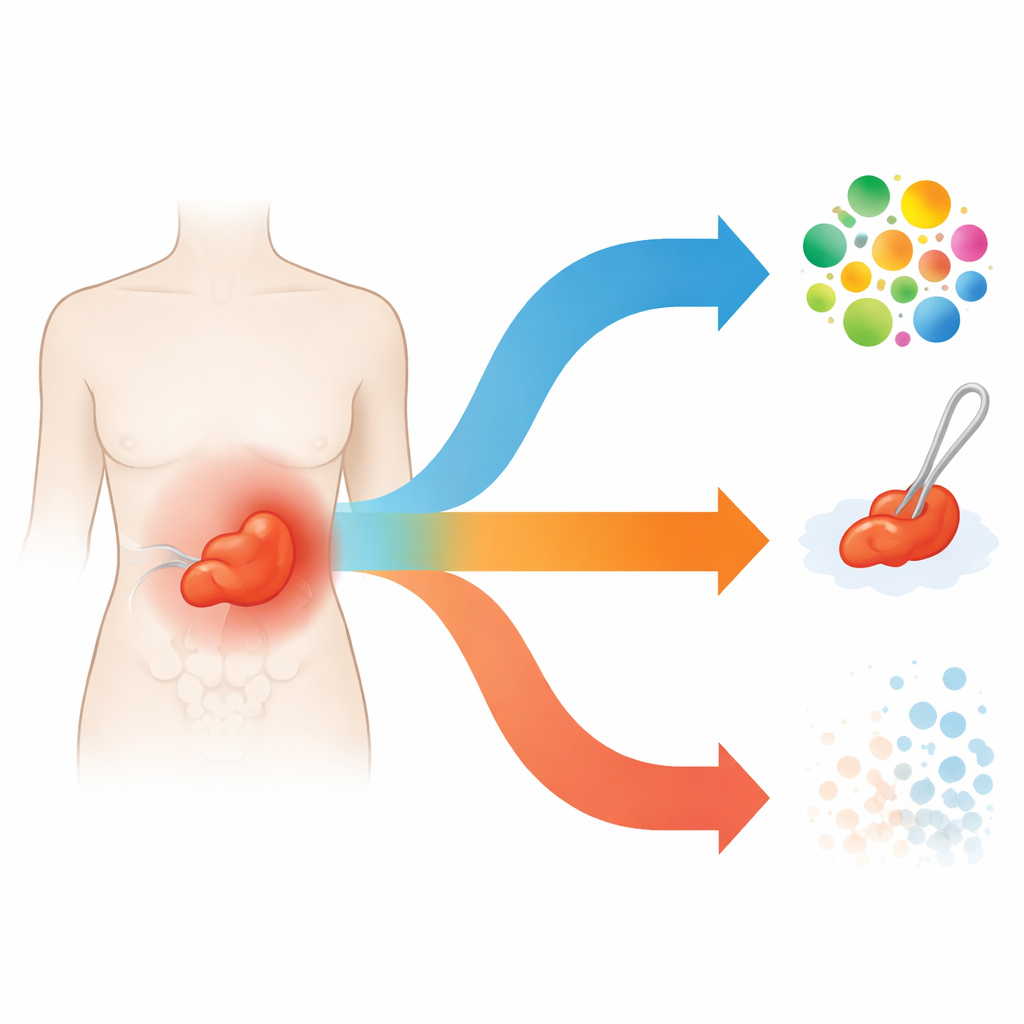
The researchers drew on nearly two decades of data from the U.S. Surveillance, Epidemiology, and End Results (SEER) program, which tracks cancers in diverse communities. They focused on 1,041 people diagnosed with retroperitoneal leiomyosarcoma between 2000 and 2019. For each person, they examined age, sex, race, how advanced the cancer was, how aggressive the tumor cells looked under the microscope, and which treatments—surgery, radiation, chemotherapy—were given soon after diagnosis. The goal was to see how these factors related to two key outcomes: overall survival (death from any cause) and cancer‑specific survival (death due to this cancer in particular).
Making Fair Comparisons Between Patients
People who are offered surgery are usually different from those who are not—they may be younger, fitter, or have tumors that are easier to remove. To make the comparison fairer, the team used a method called propensity score matching. This technique pairs each patient who had surgery with a similar patient who did not, based on all the measurable features in the registry, such as age, stage, and tumor grade. After this matching process, 318 patients (159 with surgery and 159 without) formed a more balanced group where the two sides looked alike on paper, except for whether surgery was done.
What the Numbers Say About Survival
In this matched group, people who underwent surgery lived markedly longer than those who did not. One year after diagnosis, about four out of five patients who had surgery were still alive, compared with about half of those who did not. When the researchers used time‑to‑event models that account for follow‑up over many years, surgery was linked to roughly a two‑thirds reduction in the risk of death, both from any cause and from the cancer itself. High‑grade tumors and cancers that had already spread far from the original site were tied to worse outcomes, regardless of treatment. Radiation therapy showed a modest positive association with survival, while chemotherapy did not clearly improve outcomes in this population‑level snapshot.
Using Machine Learning to Rank What Matters Most
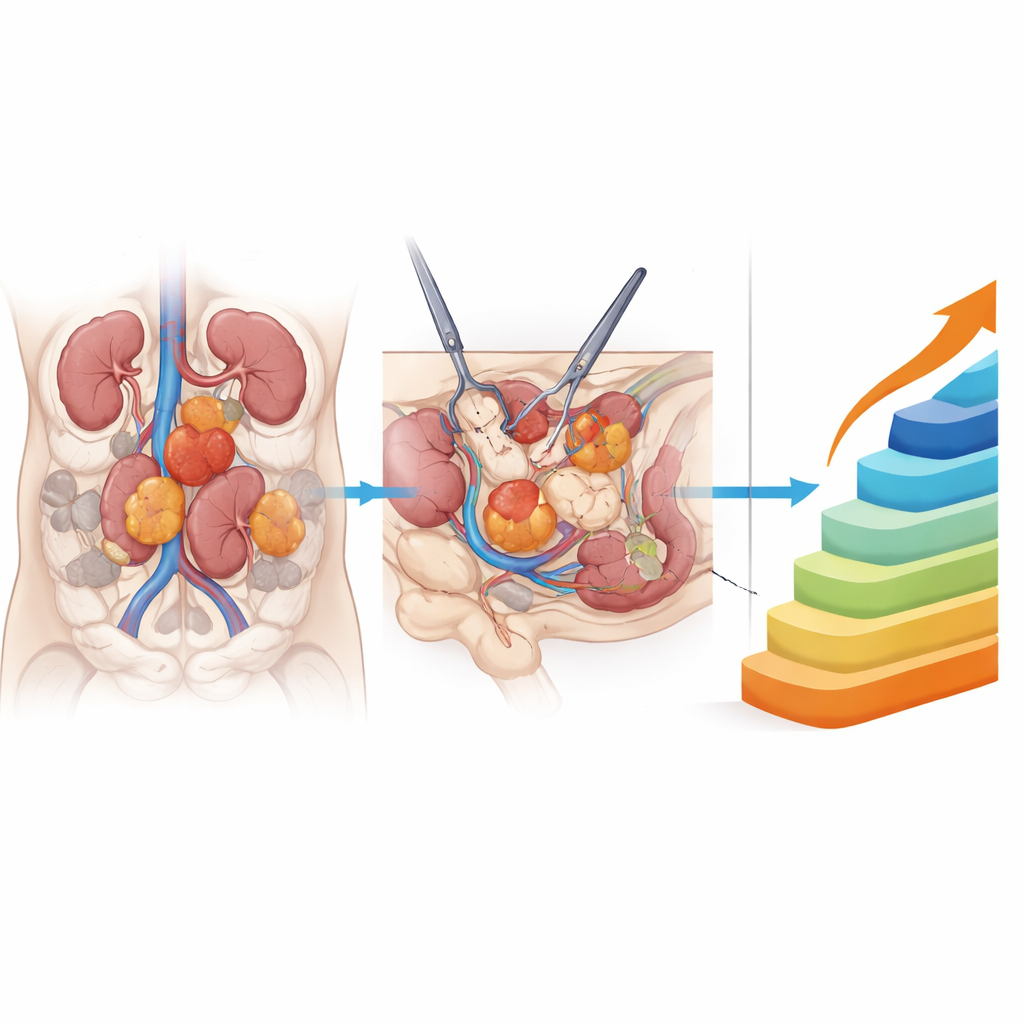
To cross‑check these findings and see which factors mattered most, the team applied a machine‑learning approach called random survival forests. Instead of assuming simple, straight‑line relationships, this method lets the data speak by building many branching decision trees. Across these models, three features stood out again and again: whether surgery was performed, how far the cancer had spread, and how aggressive the tumor cells appeared. This agreement between traditional statistics and machine learning strengthens confidence that these are the main drivers of survival in the registry data.
Why These Results Need Careful Interpretation
Despite the strong link between surgery and longer survival, the authors stress that the study cannot prove that surgery itself is always the reason for better outcomes. The registry does not record crucial details that surgeons use when deciding whether to operate, such as how tightly the tumor wraps around major blood vessels, whether a clean removal seems possible, how frail the patient is, or the expertise of the hospital team. Many people who did not have surgery were probably those with tumors that were simply too risky or impossible to remove. Because these hidden factors are missing, they may partly explain why non‑surgical patients fared worse.
What This Means for Patients and Doctors
For patients facing this rare and frightening diagnosis, the study offers both reassurance and caution. It supports the idea that, when a complete removal is technically possible and the patient is fit enough, surgery is closely tied to better chances of long‑term survival. At the same time, it underscores that the decision to operate must be individualized. The authors conclude that people with retroperitoneal leiomyosarcoma should be referred promptly to high‑volume sarcoma centers, where teams of surgeons, medical oncologists, radiation specialists, and radiologists can weigh the risks and potential benefits of surgery and other treatments in a coordinated way.
Citation: Huang, K., Huang, Z., He, Y. et al. Association of surgical resection with survival in retroperitoneal leiomyosarcoma based on SEER propensity score matching and machine-learning models. Sci Rep 16, 12256 (2026). https://doi.org/10.1038/s41598-026-42442-x
Keywords: retroperitoneal leiomyosarcoma, sarcoma surgery, cancer survival, SEER registry, rare tumors