Clear Sky Science · en
Associations between early-life adversity, coping strategies, and adult mental health, brain, and cognition
Why early experiences still matter in adulthood
Many people sense that difficult experiences in childhood can leave long shadows, but it is less clear how those early hardships connect to our moods, thinking skills, and even our brains decades later. This study used data from hundreds of thousands of adults to untangle those links. It looked not only at early adversity, but also at the ways people try to cope and at personality traits that make some individuals more emotionally sensitive than others. The goal was to see which pathways really seem to matter for adult mental health and thinking, and which do not.
Different kinds of hardship, different adult outcomes
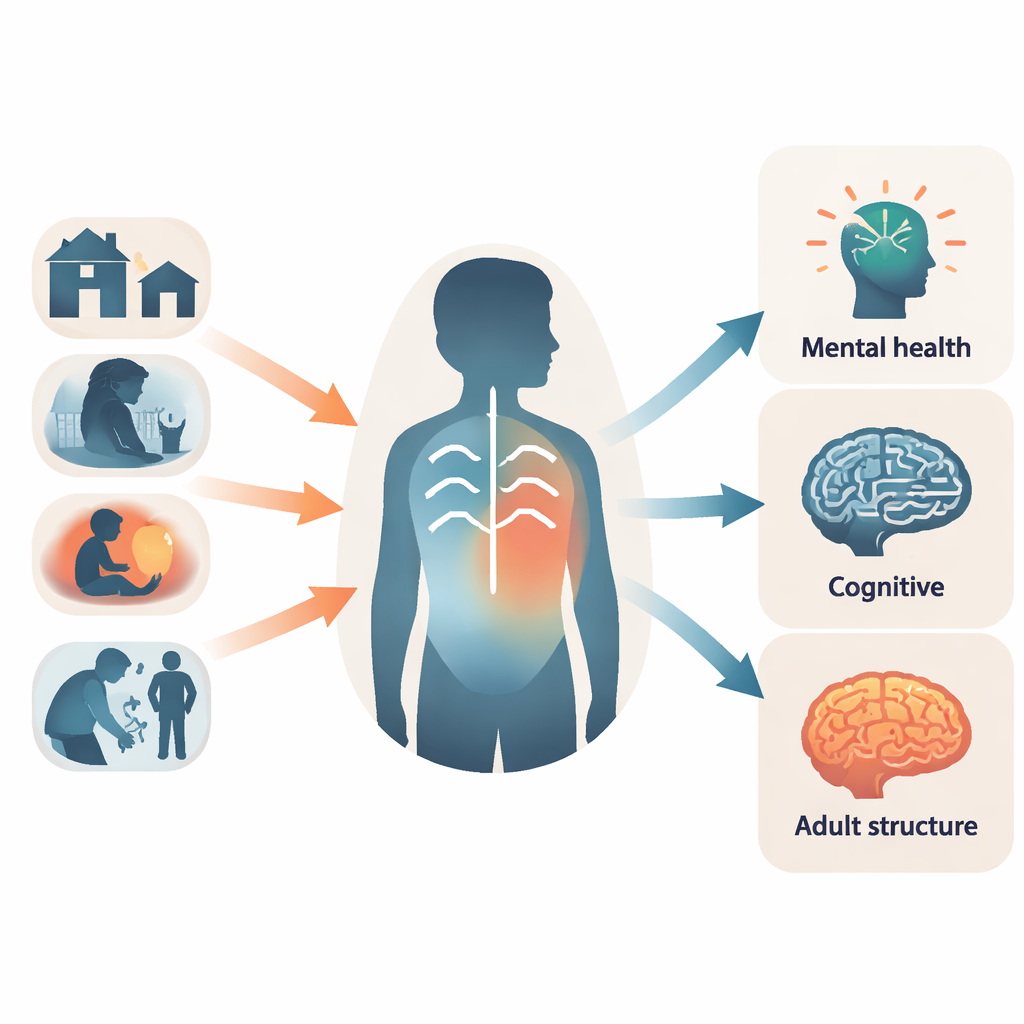
The researchers focused on several types of early adversity: emotional and physical abuse, emotional and physical neglect, and sexual abuse. Using responses from the UK Biobank, a large health study in the United Kingdom, they examined how these experiences related to symptoms of anxiety and depression, performance on thinking tests, and broad measures of brain volume in later life. They found that every type of early adversity was linked to higher anxiety in adulthood. Most were also linked to more depressive symptoms, with one key exception: physical neglect did not show a direct tie to depression, even though it was clearly an adverse experience.
How social life and habits fit into the picture
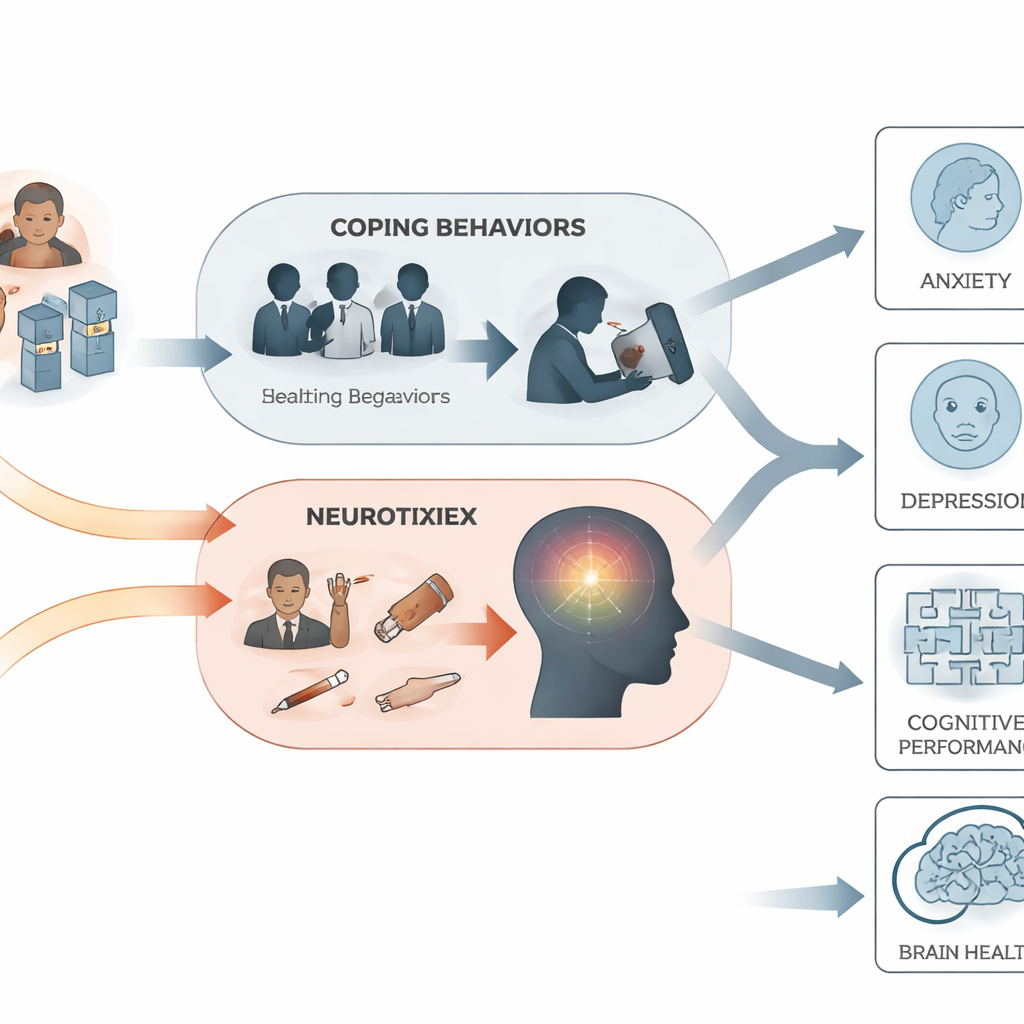
The team then looked at everyday behaviours that might either cushion or worsen the impact of early hardship. These included engaging in regular social activities, having ever struggled with an addiction, having ever thought about self-harm, and having been in a close, confiding relationship as an adult. Risky coping behaviours, such as addiction and self-harm thoughts, were more common among people who had faced most types of adversity, and these behaviours were in turn linked to higher anxiety and depression. In contrast, taking part in social activities was associated with fewer depressive symptoms, suggesting that staying socially engaged can offer some protection, even for those with difficult childhoods. Being in a confiding relationship was tied to better performance on thinking tests, hinting that supportive close relationships may help preserve cognitive functioning.
Personality as a hidden bridge from past to present
A central player in this study was neuroticism, a personality trait associated with being more sensitive to stress and prone to worry and negative emotions. All forms of adversity except physical abuse were related to higher levels of this trait. People higher in neuroticism, in turn, tended to report more anxiety and depression and to perform slightly worse on thinking tasks. When the researchers traced the pathways statistically, neuroticism often acted as a bridge between early adversity and adult outcomes. In other words, childhood hardship appeared to leave a lasting mark partly by shaping emotional vulnerability, which then coloured how people experienced stress and mood later on.
Thinking skills and the surprising role of neglect
The study revealed that not all adversities affect thinking in the same way. Physical neglect stood out as the only type directly tied to poorer cognitive performance, as shown by lower scores on a reasoning test and slower completion of a complex attention task. Other adversities were not directly linked to thinking skills once coping behaviours, relationships, and neuroticism were taken into account. Instead, their connections to cognition ran through these intermediate factors. Neglect, especially when it meant a lack of care or stimulation, also related to weaker social ties in adulthood, such as being less likely to have a confiding relationship or to take part in social activities, underlining how early deprivation can echo in later social life.
Brain structure: less change than expected
Given earlier reports that childhood hardship can alter the brain, the researchers also examined global measures of grey matter, white matter, and cerebrospinal fluid. Surprisingly, they found no strong direct links between early adversity and these broad brain volumes. One maladaptive coping pattern, addiction, showed a modest association with greater cerebrospinal fluid volume, and emotional abuse was only weakly related to this measure. The absence of clear effects at the whole-brain level suggests that, in this large middle‑aged sample, everyday mental health and thinking difficulties after early adversity are driven more by psychological and social pathways than by large-scale changes in brain size.
What this means for prevention and support
For non-specialists, the key message is that early adversity does increase the likelihood of anxiety and other challenges in adulthood, but the story does not end there. The ways people cope with stress, the quality of their relationships, and enduring personality traits like emotional sensitivity all help explain why some individuals fare worse than others. Because this study was cross-sectional, it cannot prove cause and effect, and many of the links it uncovered were small in size. Still, the findings point toward practical targets: strengthening healthy coping skills, fostering supportive social ties, and addressing high emotional reactivity may help reduce some of the long-term burdens carried by those who faced hardship early in life.
Citation: Künzi, M., Gheorghe, D.A., Lian, J. et al. Associations between early-life adversity, coping strategies, and adult mental health, brain, and cognition. Sci Rep 16, 12147 (2026). https://doi.org/10.1038/s41598-026-42435-w
Keywords: childhood adversity, coping strategies, anxiety and depression, personality traits, cognitive health