Clear Sky Science · en
KNEESENSE: a low-cost wearable system with hydraulic filament sensing for real-time knee rehabilitation monitoring
Why Watching Your Knee at Home Matters
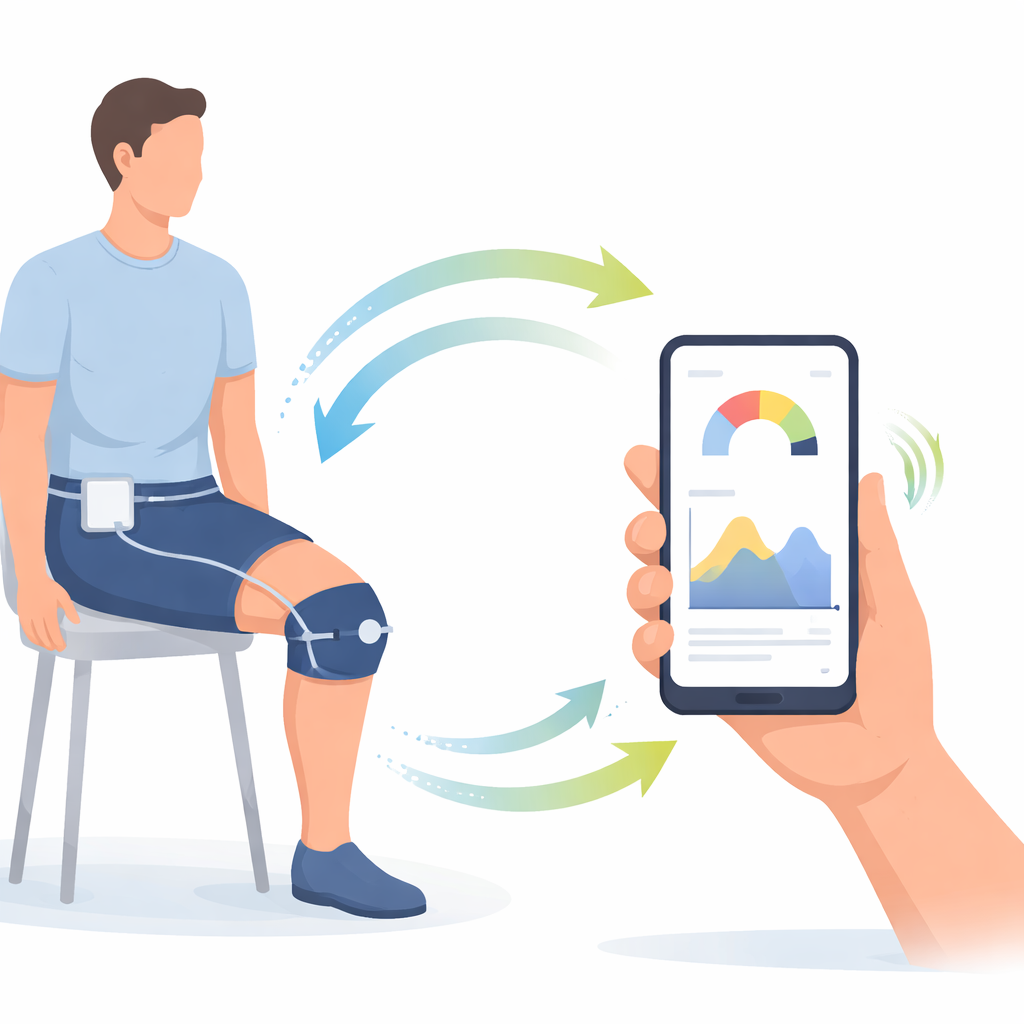
Knee injuries are among the most common problems for athletes, workers, and older adults alike. Recovering fully usually requires weeks of guided exercises, but in many places there are too few clinics, long travel times, or high costs. This paper presents a simple, low-cost wearable system that turns a regular kneepad into a smart monitor, letting people track how well they bend and straighten their knee during rehab exercises at home—potentially improving recovery while reducing dependence on clinic visits.
A Simple Idea for a Big Global Need
Billions of people worldwide could benefit from rehabilitation, yet in many low- and middle-income countries more than half never receive it. Knee problems, from sports injuries to work-related strain and traffic accidents, are especially widespread. Traditional rehab requires frequent in-person sessions, and even when patients are sent home with exercises, it can be hard to know if they are moving correctly or progressing well. Existing home-monitoring gadgets either cost too much, are uncomfortable, or require rigid electronics that do not move naturally with the body. The authors set out to build something different: a soft, affordable, and portable tool that could reliably track knee movement in everyday settings.
Turning Water and a Spring into a Smart Sensor
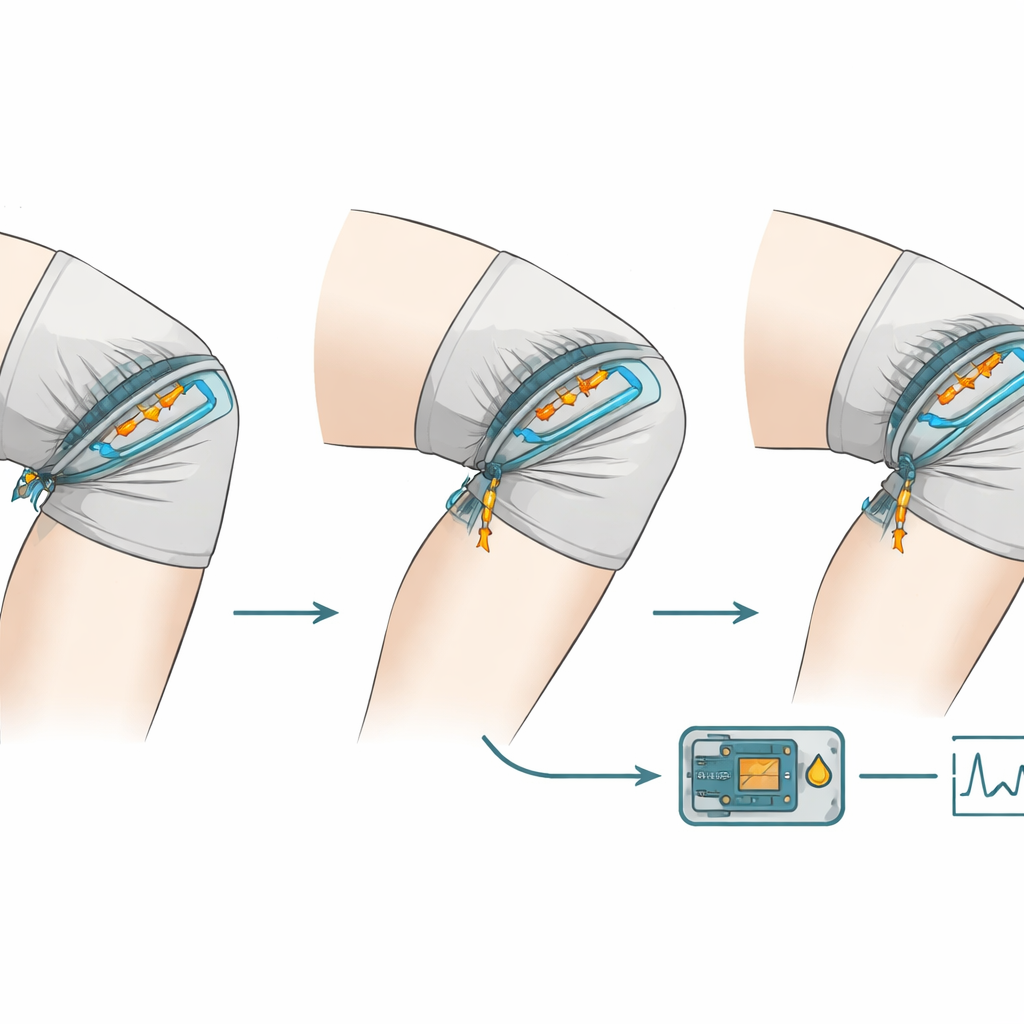
At the heart of the system is a tiny device called a wearable hydraulic filament sensor, or WHFS, built from a soft silicone tube filled with liquid and wrapped inside a metal spring. When the knee bends, the kneepad stretches the tube, changing the pressure of the liquid inside. That pressure is picked up by a small sensor in a separate box clipped to the user’s waist. Because the outer spring limits how the tube can expand, most of the liquid’s movement turns into a clean pressure change rather than random deformation. The researchers carefully studied how the tube and spring interact—how much they stretch, how pressure rises and falls, and how this behavior changes over repeated cycles—to find the best dimensions and materials.
Fine-Tuning for Accuracy, Comfort, and Durability
The team tested four different versions of the tube-and-spring combination, varying factors like spring stiffness and tube thickness. They measured how much the sensor “remembers” past movements (hysteresis), how sensitive it is to small stretches, and how stable the readings stay after 100 bending cycles. One configuration stood out, combining low error, moderate sensitivity, and very little performance loss over time. It could detect movements as small as 0.2 millimeters, which is fine enough to resolve changes in knee angle with clinical relevance. The researchers then modeled how pressure relates to stretch and, in turn, to knee angle, using a mathematical curve that let them convert raw pressure into a straightforward bending angle.
From Raw Pressure to an App You Can Use
To turn this sensor into a practical rehab tool, the authors built a complete system around it. The kneepad with the WHFS connects via a thin tube to a box containing a pressure sensor, battery, Bluetooth radio, and a tiny valve that automatically manages the water inside the tube. A smartphone app receives the pressure data, converts it into knee angles in real time, and shows a simple moving graph of the user’s motion. Because everyone’s leg shape is different, the app guides the user through a short calibration routine using four fixed knee positions. It then uses those reference points to customize the pressure-to-angle relationship for that person. In laboratory tests with a 3D-printed leg model, the system estimated knee angles with only about 4 degrees of error across a wide range of motion, comparing favorably with many more expensive devices.
What This Could Mean for Everyday Recovery
To an injured patient or busy therapist, the most important outcome is whether such a device can make rehab more accessible and more effective. The proposed system costs only a few tens of dollars, is soft and lightweight, and can stream knee-angle information wirelessly to a phone in real time. Although it has so far been demonstrated on a healthy volunteer and lab models rather than large groups of patients, the results show that a simple water-filled filament and spring can rival more complex electronics in tracking knee motion. With further refinement and clinical testing, this approach could help bring guided, data-driven knee rehabilitation into people’s homes, especially in regions where access to specialized care is limited.
Citation: Phan, N.A., Ngo, S.T., Phan, M.T. et al. KNEESENSE: a low-cost wearable system with hydraulic filament sensing for real-time knee rehabilitation monitoring. Sci Rep 16, 12572 (2026). https://doi.org/10.1038/s41598-026-42424-z
Keywords: knee rehabilitation, wearable sensors, home-based therapy, soft robotics, hydraulic sensing