Clear Sky Science · en
Physiological responses and proteomic analysis of different barley varieties under alkaline stress
Why salty soils matter for our food
Around the world, vast stretches of farmland are slowly turning too salty and alkaline for crops to grow well. This salty soil problem threatens harvests and food security, especially in regions that already struggle with limited fertile land. Barley is naturally tougher than many cereals, and this study asks a simple but vital question: what makes some barley plants cope better with harsh alkaline soils than others, and how can that knowledge guide future crop breeding?
Two barley cousins in harsh ground
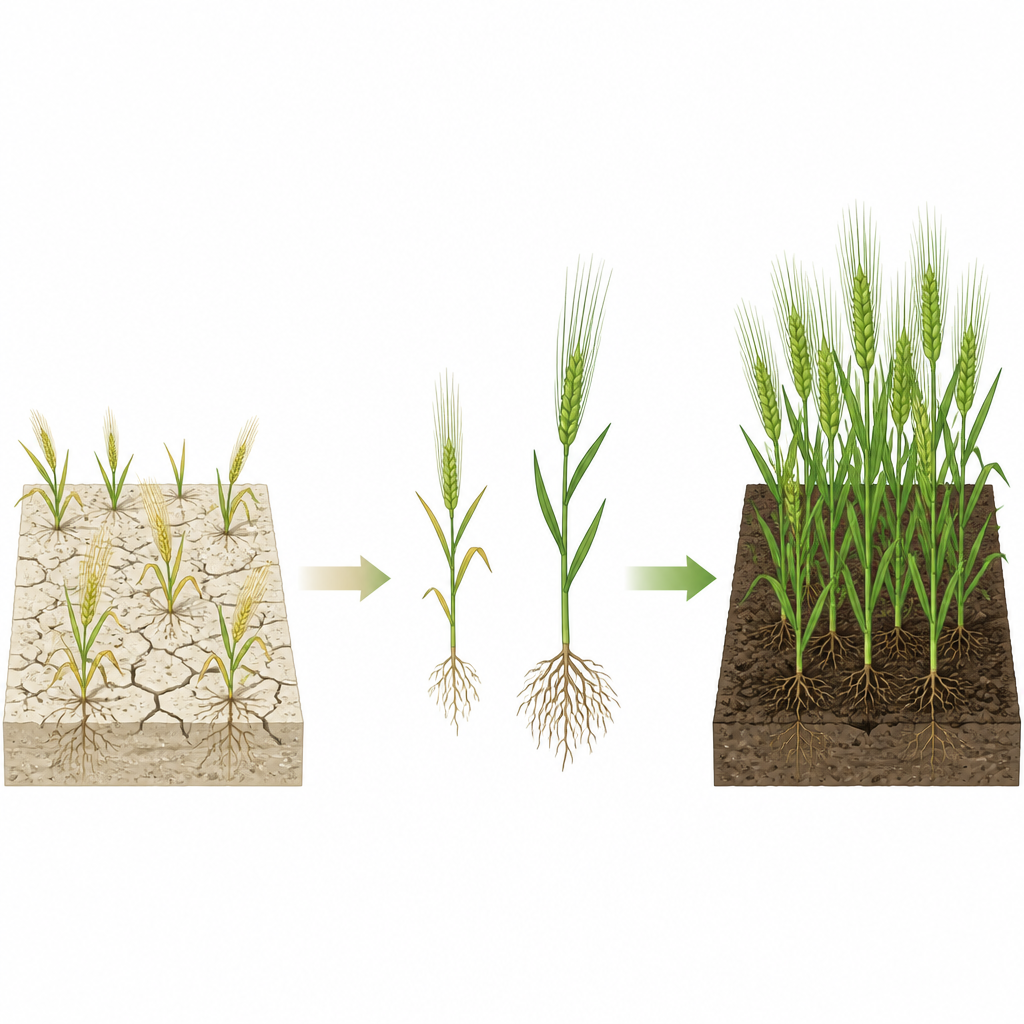
The researchers compared two barley varieties that behave very differently in alkaline soil. One, called Jia-HY460-6R, stays relatively healthy; the other, Noire Maroc, quickly declines. Young plants were grown in controlled conditions and then exposed to a solution that mimics strongly alkaline soil. The team tracked visible traits such as plant height, leaf area, and root activity. Under mild stress, the tough variety looked almost normal, while the sensitive one briefly grew well before faltering. Under stronger stress, the tolerant plants showed only moderate yellowing and kept roots working, but the sensitive plants wilted and even suffered root breakage. These simple measurements already pointed to a built-in advantage in the hardier line.
How the tough plants protect their cells
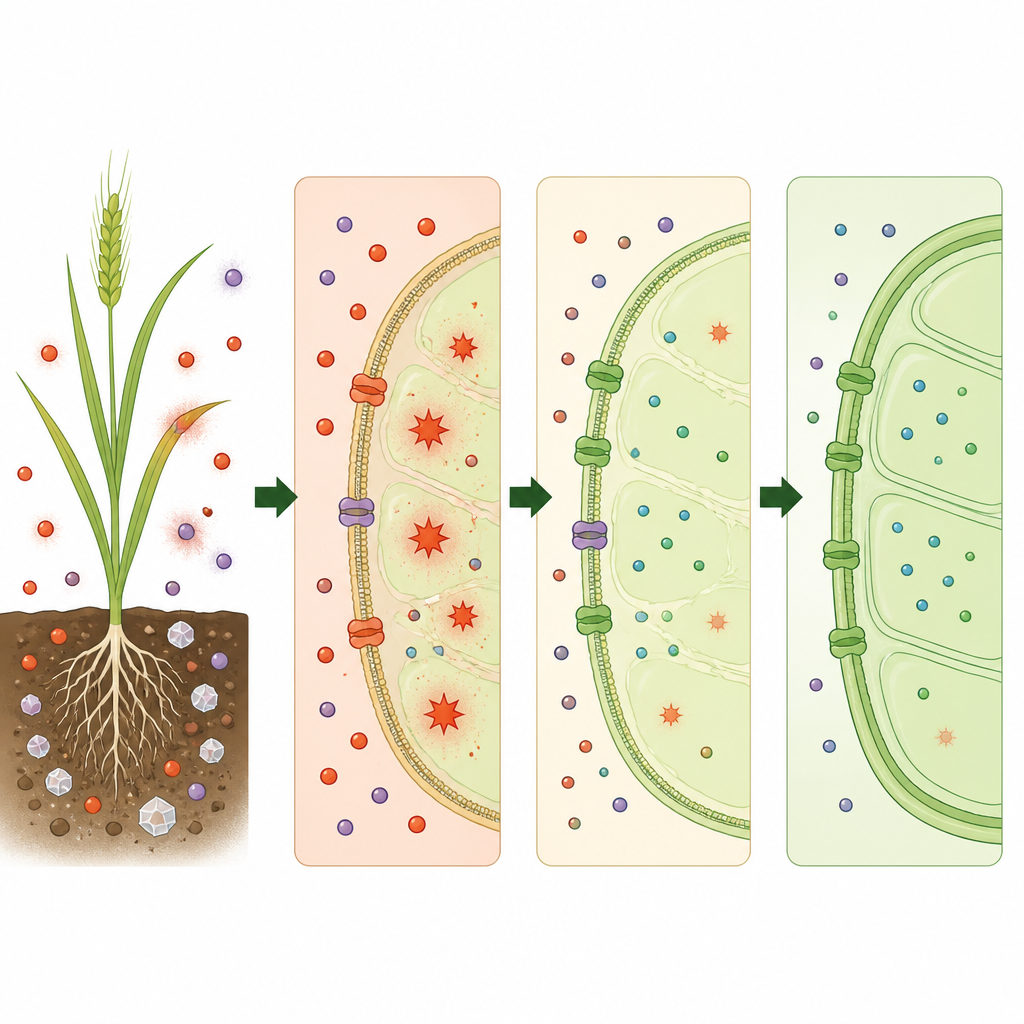
To understand what happens inside the plants, the team measured key chemical markers of damage and defense. Harsh alkaline conditions cause harmful oxygen by-products to build up in cells, which can tear at membranes much like rust corrodes metal. Both barley types showed rising levels of these molecules, but the tolerant plants kept them lower, suggesting sturdier cell membranes. This protection was linked to higher activity of several antioxidant enzymes that act as tiny clean-up crews. In the more resilient variety, enzymes that convert dangerous oxygen forms into harmless water and other products were stronger and stayed active longer. Together with a more efficient glutathione-based recycling cycle, these defenses helped limit cell damage when the soil turned caustic.
Balancing salts and keeping water flowing
Alkaline soils upset the delicate balance of mineral nutrients in plants. Too much sodium can crowd out potassium, which is crucial for maintaining electrical signals and water movement in cells, and it can also make it harder for roots to take up iron. In this study, both barleys saw their potassium-to-sodium ratio drop under stress, but the tough line always maintained a higher ratio. Its shoots and roots also held more iron. At the same time, the tolerant plants built up more soluble sugars and kept their protein levels from collapsing as sharply as in the sensitive plants. These sugars and proteins help cells retain water and adjust their internal pressure, acting like natural antifreeze or coolant. Together, better salt balance and stronger “osmotic” adjustment gave the hardy barley a clear edge in surviving in poor soil.
Peeking into the protein machinery
Beyond these broad traits, the scientists took a deep dive into the proteins that run the plants’ inner machinery. Using modern proteomics tools, they cataloged over a thousand proteins whose abundance changed under alkaline stress and then narrowed this list to 27 especially important ones. These proteins were linked to several major pathways: signal chains that help plants sense stress, chemical routes that make sulfur-containing compounds, systems that manage the cell’s main antioxidant, and parts of the photosynthesis and energy engines. Many of these proteins were more abundant in the tolerant variety, hinting that it is better wired at the molecular level to sense danger, adjust its metabolism, and reinforce its cell walls and membranes.
What this means for future crops
Taken together, the study paints a picture of alkali tolerance as a team effort inside the plant. The tough barley variety grows better because it combines stronger cell clean-up systems, sharper control of salts, smarter use of sugars and proteins to hold water, and a tuned-up network of stress-responsive proteins. For non-specialists, the key message is that plant survival in bad soil is not about a single “magic” gene, but about many connected pathways working in harmony. By identifying specific proteins and processes that differ between tolerant and sensitive barley, this research offers a roadmap for breeders and geneticists working to develop crops that can stay green and productive even as soils become more salty and alkaline.
Citation: Li, Z., Li, J., Jin, Y. et al. Physiological responses and proteomic analysis of different barley varieties under alkaline stress. Sci Rep 16, 15836 (2026). https://doi.org/10.1038/s41598-026-42420-3
Keywords: barley, alkaline stress, soil salinity, plant stress tolerance, proteomics