Clear Sky Science · en
A machine learning framework for personalized exercise prescription based on BMI and physical fitness assessment
Why Smarter Workouts Matter
Many young adults struggle with weight gain even when they try to stay active. Generic advice like “exercise 150 minutes a week” often feels vague and doesn’t reflect individual differences in fitness, body type, or progress. This study explores whether artificial intelligence can turn simple fitness test results into highly personalized workout plans that help young people move out of the overweight range more efficiently and safely than one-size-fits-all guidelines.
Turning Fitness Tests into a Personal Profile
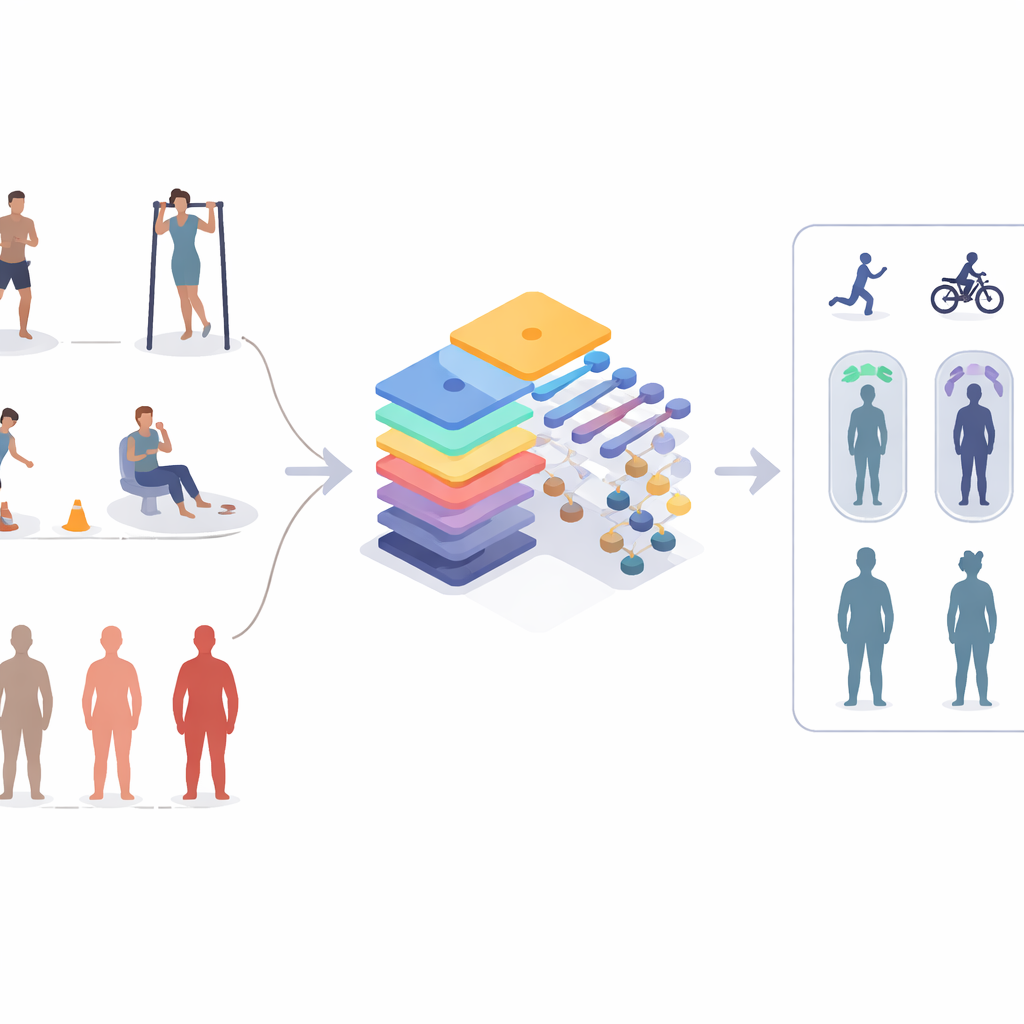
The researchers worked with data from 6,698 male university students aged 18 to 20. Each student had a body mass index (BMI) measurement and four standard fitness tests: a 3,000-meter run for endurance, pull-ups for upper-body strength, sit-ups for core endurance, and a shuttle run for speed and agility. Together, these measures paint a reasonably complete picture of how the heart, muscles, and movement systems are functioning. Instead of looking at each test in isolation, the team wanted to understand the complex pattern that links this fitness profile to a person’s BMI category—underweight, normal, overweight, or obese.
A Hybrid AI That Reads How You Move
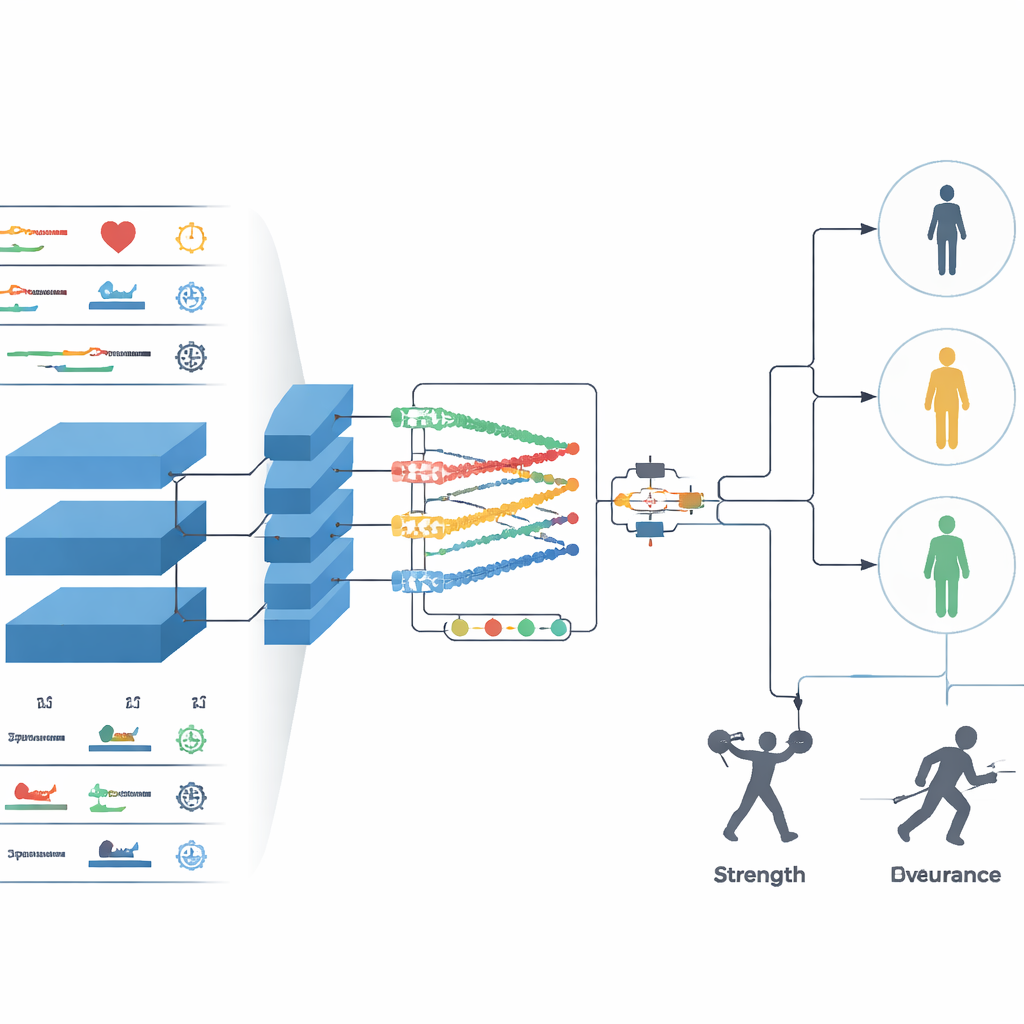
To make sense of these patterns, the team built a hybrid machine learning system that combines two different strengths. First, a one-dimensional convolutional neural network, assisted by an attention mechanism, scans the sequence of lap times in the 3,000-meter run while also considering the strength and sprint results. This allows the system to notice details such as whether someone fades badly in the final laps or maintains a steady pace. Second, the condensed information is passed to a gradient-boosting decision model, which is very good at drawing clean category boundaries—here, the four BMI groups. This combined approach classified BMI with 94.5% accuracy, clearly beating standard models like logistic regression, random forests, and XGBoost on the same data, while still making predictions in less than a millisecond per person.
From Predictions to Tailored Training Plans
The key step is translating these predictions into practical workouts. To keep the system understandable for coaches and clinicians, the researchers used a method called SHAP that shows how much each fitness test pushes a person’s BMI prediction toward a healthier or less healthy category. For each student, the model ranks which weak areas matter most—such as low pull-up numbers or slow run times. A rule-based engine then maps those priorities onto specific exercise types, like more upper-body strength sessions, extra aerobic training, or added speed and agility work. Every two weeks in the trial, new test results fed back into the system so it could dial training volume up or down and reduce load if signs of fatigue suggested a risk of overtraining.
Putting the System to the Test
To see whether this AI-guided approach actually improves health, the team ran a 12-week randomized controlled trial with 1,160 new students. Half received conventional exercise instructions; the other half followed the personalized prescriptions generated by the model, including structured high-intensity intervals, steady aerobic work, strength training, and basic nutrition guidance. The personalized group showed striking improvements: the overall proportion of overweight or obese students fell by 23.5%, nearly seven out of ten overweight participants moved into the normal range, and many obese participants shifted down to overweight. Fitness also improved substantially, with about 15% more pull-ups, nearly 10% faster 3,000-meter run times, and over 10% quicker shuttle runs than the control group, all without a rise in injuries.
What This Means for Everyday Health
For non-specialists, the takeaway is that simple, familiar tests—how far you can run, how many pull-ups and sit-ups you can do, and how quickly you can sprint back and forth—can feed into an AI system that designs workouts tuned to your body and current abilities. This study shows that such a system can not only predict who is at higher weight-related risk but also deliver exercise plans that help people safely move toward a healthier BMI while getting stronger and fitter. Although the work so far focuses on young men in one setting, it points toward a future in which smartphone apps or clinic tools could provide truly personalized, continuously updated exercise guidance for many different groups.
Citation: Mo, M., Li, B., Yang, Y. et al. A machine learning framework for personalized exercise prescription based on BMI and physical fitness assessment. Sci Rep 16, 13336 (2026). https://doi.org/10.1038/s41598-026-42405-2
Keywords: personalized exercise, machine learning in health, BMI and fitness, youth obesity prevention, AI workout planning