Clear Sky Science · en
Detection of mutated KRAS, TP53, CDKN2A, and SMAD4 in tumor cell-free DNA of Brazilian pancreatic adenocarcinoma patients using next-generation sequencing
Why a blood test for a deadly cancer matters
Pancreatic cancer is one of the deadliest cancers because it usually stays silent until it is too advanced for surgery or effective treatment. This study explores whether a simple blood draw could help doctors spot and track pancreatic tumors by looking for tiny pieces of tumor DNA floating in the bloodstream. If such a “liquid biopsy” can reliably reveal the genetic fingerprints of a tumor, it could open the door to earlier diagnosis, better predictions of outcome, and more tailored treatments, even in public health systems with limited resources.
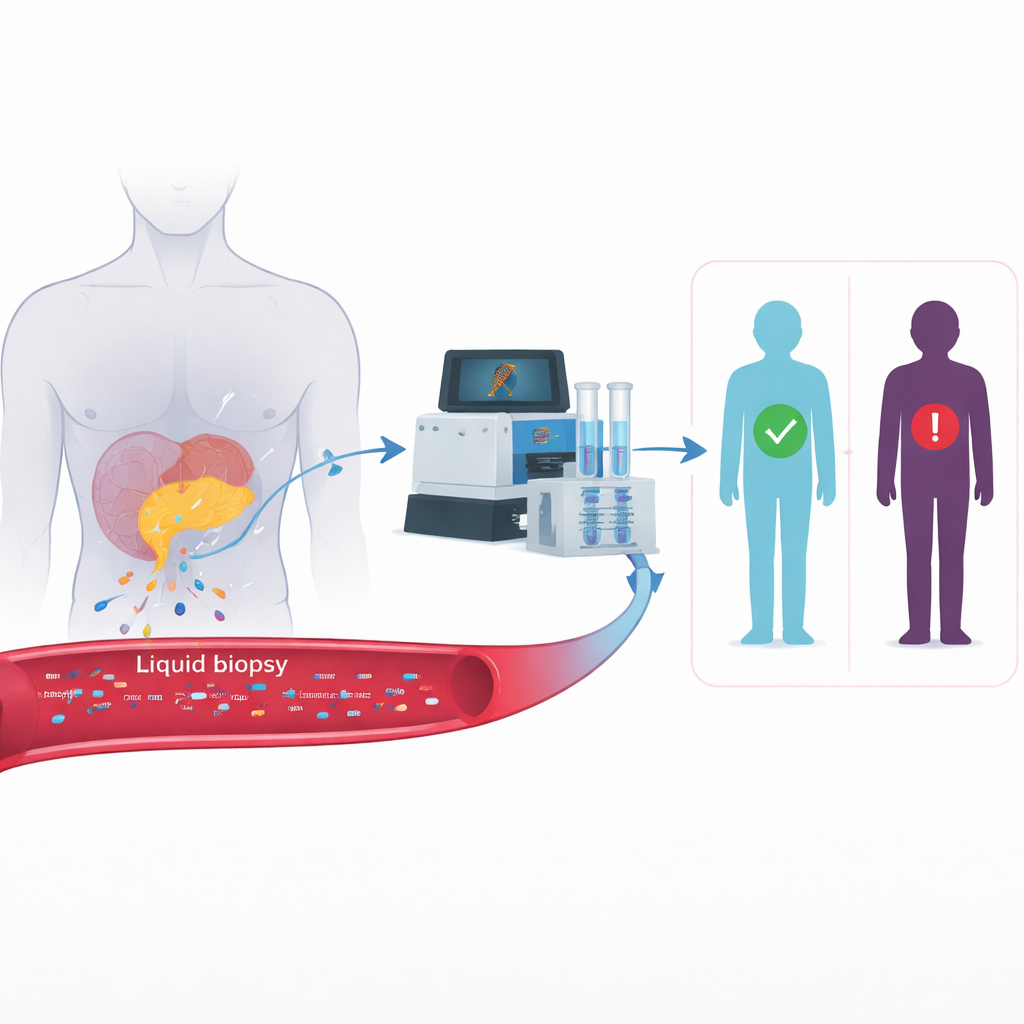
Following tiny DNA clues in the blood
When cells die, they release small fragments of DNA into the blood. Cancer cells do this too, shedding tumor DNA that carries their characteristic mutations. The researchers focused on pancreatic ductal adenocarcinoma, the most common form of pancreatic cancer, and on four genes that are frequently altered in this disease: KRAS, TP53, CDKN2A, and SMAD4. Instead of relying only on imaging scans and a traditional blood marker called CA19-9, they asked whether next-generation DNA sequencing and a highly sensitive counting method called digital PCR could detect these cancer-linked mutations in cell-free DNA collected from patients’ blood.
Building a real-world Brazilian patient cohort
The team followed 55 patients with pancreatic cancer treated at a major cancer center in São Paulo, Brazil, collecting 133 blood samples over time. Many patients contributed multiple samples as their disease progressed or they received surgery or chemotherapy. One of the first hurdles was purely practical: there is often very little cell-free DNA in a tube of blood. Only about one-third of samples yielded enough DNA for direct sequencing, and most of the rest had to be concentrated with additional steps. In the end, nearly 70% of all samples provided enough material for sequencing, and the researchers confirmed that two different types of blood collection tubes performed similarly when processed quickly and stored properly.
Spotting key tumor mutations and what they mean
Using targeted sequencing of the four genes, the investigators analyzed 58 samples from 28 of the patients in greatest detail. They uncovered 11 clearly harmful mutations spread across 13 samples from 11 people. Most of these occurred in KRAS, a gene that often acts as an on–off switch for growth signals and is known to be altered early in pancreatic cancer. Additional harmful changes showed up in TP53 and SMAD4, genes that normally help keep cell division under control and prevent tumors from spreading. Patients with these damaging mutations generally fared poorly: more than 80% of them died during follow-up, and some showed rising levels of a KRAS mutation in later blood samples as their disease worsened.
Comparing two high-tech detection tools
The researchers then asked whether digital PCR—an approach that can count rare mutated DNA fragments among many normal ones—would agree with the sequencing results for KRAS mutations. In most cases it did: digital PCR confirmed seven of eight KRAS-positive samples identified by sequencing, and it even picked up a few mutations that sequencing had missed at very low levels. Statistical tests showed good agreement between the two methods, suggesting that digital PCR can serve as a practical, confirmatory tool in the clinic, especially when only small amounts of tumor DNA are present.
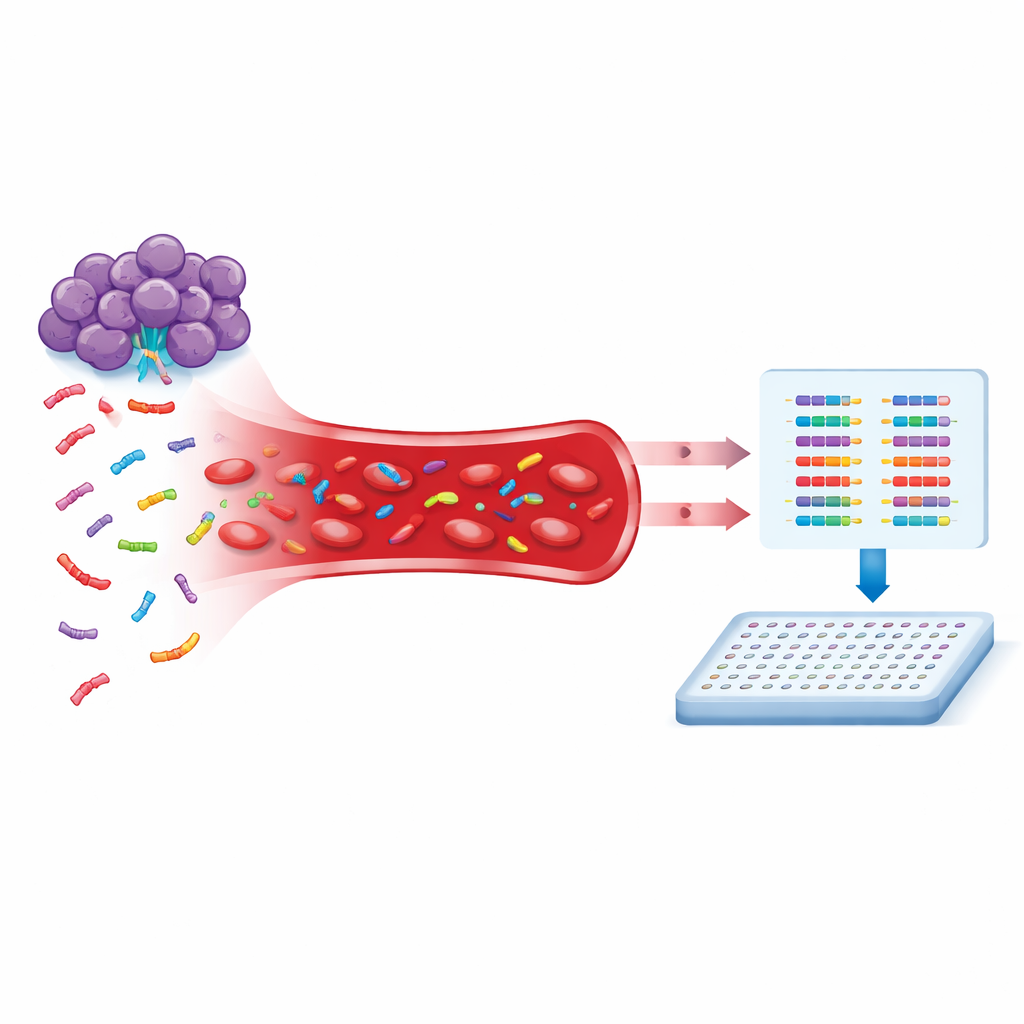
New genetic hints linked to survival
Beyond known high-risk mutations, the study also cataloged many previously uncharacterized DNA changes that appeared only at low levels, suggesting they came from tumors rather than normal tissues. Patients who died tended to carry more of these unknown variants than those who survived. One particular SMAD4-related change stood out: it appeared only in patients who died and was associated with a significantly shorter survival time. While this finding needs confirmation in larger groups, it illustrates how liquid biopsy can uncover new genetic markers of aggressive disease without requiring risky tissue biopsies.
What this work means for patients
To a non-specialist, the main message is that a blood test can capture genetic traces of pancreatic cancer that predict how aggressive the disease is and how patients will fare. This Brazilian study shows that, although technical challenges remain—especially the small amount of tumor DNA in early or smaller tumors—liquid biopsy using modern sequencing and digital PCR can reliably detect key mutations in many patients and link them to survival. With continued improvements and cost reductions, such tests could become part of routine care, helping doctors diagnose pancreatic cancer sooner, choose more precise treatments, and monitor whether therapy is working, all from a simple vial of blood.
Citation: Marin, A.M., Timoner, B.E., Araújo, D.D. et al. Detection of mutated KRAS, TP53, CDKN2A, and SMAD4 in tumor cell-free DNA of Brazilian pancreatic adenocarcinoma patients using next-generation sequencing. Sci Rep 16, 13103 (2026). https://doi.org/10.1038/s41598-026-42403-4
Keywords: pancreatic cancer, liquid biopsy, cell-free DNA, KRAS mutation, next-generation sequencing