Clear Sky Science · en
Thiolutin extends replicative lifespan by rewiring yeast transcription and metabolism
Why slowing down can sometimes mean living longer
We usually think of youth and vigor as going hand in hand with rapid growth and high energy use. This study in baker’s yeast turns that idea on its head. The researchers show that a natural compound called thiolutin makes cells grow more slowly and burn less energy, yet actually lets dividing cells reproduce for longer. At the same time, it harms the long‑term survival of non‑dividing cells. By tracing how thiolutin reshapes gene activity, energy production, and cell chemistry, the work reveals how tightly our "energy budget" is connected to different kinds of aging.
A small molecule that presses pause on cell activity
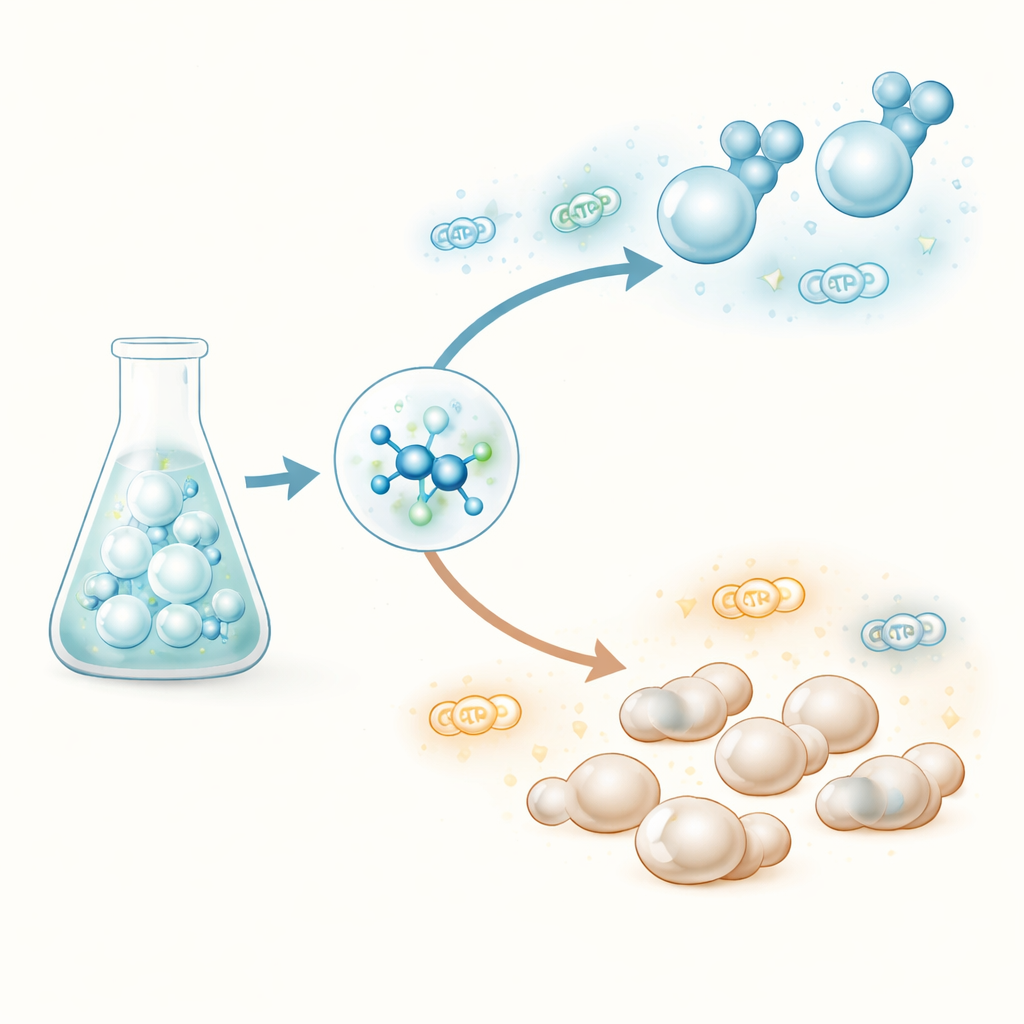
Thiolutin has long been used as a laboratory tool because it blocks the copying of DNA into RNA, the first step toward making proteins. Copying genes and building proteins are among the most energy‑hungry jobs in any cell. In this study, yeast cells treated with thiolutin grew more slowly and spent more time in a resting stage of the cell cycle before dividing again. Measurements showed that their internal energy stores, in the form of the molecule ATP, dropped sharply. At the same time, the cells produced more reactive oxygen by‑products and switched on internal defense systems that help handle mild oxidative stress.
Longer life for dividing cells, shorter life for resting cells
Aging in yeast can be viewed in two ways: how many daughter cells a single mother cell can produce (replicative lifespan), and how long non‑dividing cells can survive in a resting state (chronological lifespan. Thiolutin clearly boosted the replicative side: treated mother cells produced about a quarter more daughters and stayed in the dividing phase for many extra hours, even though each division took longer. After they stopped reproducing, however, they died more quickly than untreated cells. When the researchers looked at populations of resting, non‑dividing cells, they found that thiolutin caused them to lose viability earlier in life, especially during the first few days after growth stopped. Thus, the same compound extends the functional life of dividing cells but compromises the early survival of cells that have exited the cell cycle.
Rewiring genes, energy use, and waste handling
To understand how thiolutin produces these mixed outcomes, the team surveyed the activity of nearly all yeast genes using RNA sequencing. About two‑thirds of protein‑coding genes changed their activity, revealing a sweeping overhaul of the cell’s internal program. Genes that drive ribosome construction, protein production, and mitochondrial energy generation were broadly dialed down, matching the observed drop in ATP levels. In contrast, many stress‑response genes were turned up, including those that help fold damaged proteins and maintain redox balance. A key controller of the cell’s protein‑recycling machinery, RPN4, was strongly activated, suggesting that cells increase the breakdown of faulty proteins when transcription is suppressed. Meanwhile, genes linked to a major growth‑promoting pathway (TOR1) were reduced, reinforcing a shift away from rapid growth and toward maintenance.
Changing the cell’s chemical fingerprint
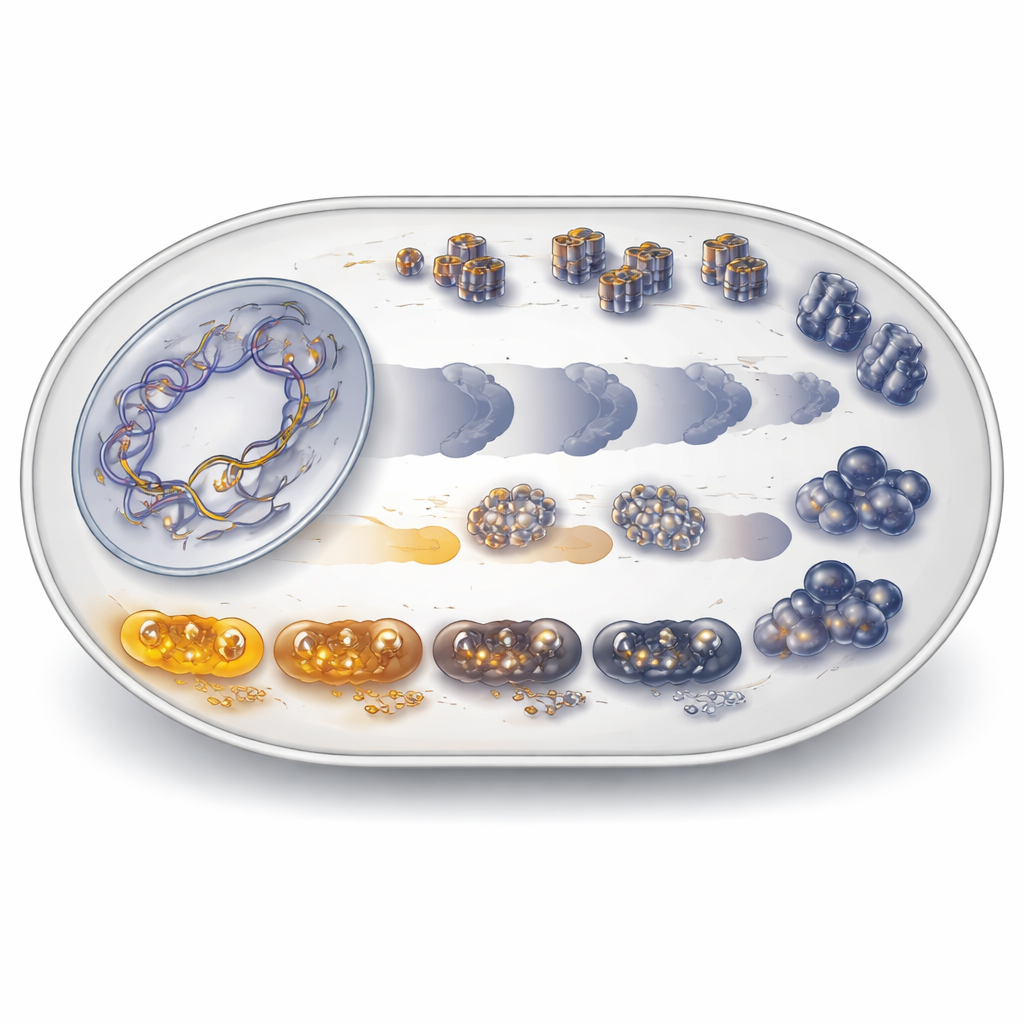
The researchers also used FT‑Raman spectroscopy, a light‑based technique that reads out the combined signature of many molecules at once. Comparing spectra from treated and untreated cells showed that signals linked to RNA, proteins, fats, and carbohydrates all declined in thiolutin‑exposed yeast. In other words, the cells carried less of every major class of large biomolecules, consistent with lower gene activity and slower building of new cell material. Signals tied to storage sugars such as glycogen and trehalose were weaker, and this matched targeted gene tests showing that thiolutin lowers expression of key enzymes that normally stockpile these reserves as cells enter a resting state. Without these energy and protection buffers, resting cells appear more vulnerable and age faster.
What this means for aging and beyond
Taken together, the findings support a simple but powerful idea: thiolutin pushes yeast cells into a low‑energy, stress‑ready mode. For dividing cells, this shift slows growth yet lets them keep producing offspring for longer, echoing other longevity tricks that damp down protein production and energy use. For non‑dividing cells, however, the same state undermines early survival, because energy reserves and protective storage sugars are not built up properly. The work shows that aging is not a single process but depends on the life stage of the cell, and that tweaking how genes, energy, and stress defenses are balanced can send these stages in opposite directions. It also suggests that thiolutin is far more than a simple gene‑blocking tool: it is a broad modulator of cellular metabolism whose varied effects may help explain its emerging promise in medical research.
Citation: Mołoń, M., Kielar, P., Kobylińska, Z. et al. Thiolutin extends replicative lifespan by rewiring yeast transcription and metabolism. Sci Rep 16, 11498 (2026). https://doi.org/10.1038/s41598-026-42387-1
Keywords: yeast aging, thiolutin, cell metabolism, replicative lifespan, mitochondrial energy