Clear Sky Science · en
Synergetic effect of Camellia sinensis waste extract and zinc oxide nanoparticle for improving performance and appearance attributes of viscose fabrics
Turning Tea Trash into Useful Color
Every day, cafés, homes, and factories throw away mountains of used black tea leaves. This study asks a simple but powerful question: could that so-called trash become a safe, eco-friendly way to dye fabrics while also protecting them from germs? By reusing tea waste and pairing it with tiny particles of zinc oxide, the researchers show how we might color viscose – a popular silk-like fabric – while cutting pollution and adding health-related benefits.
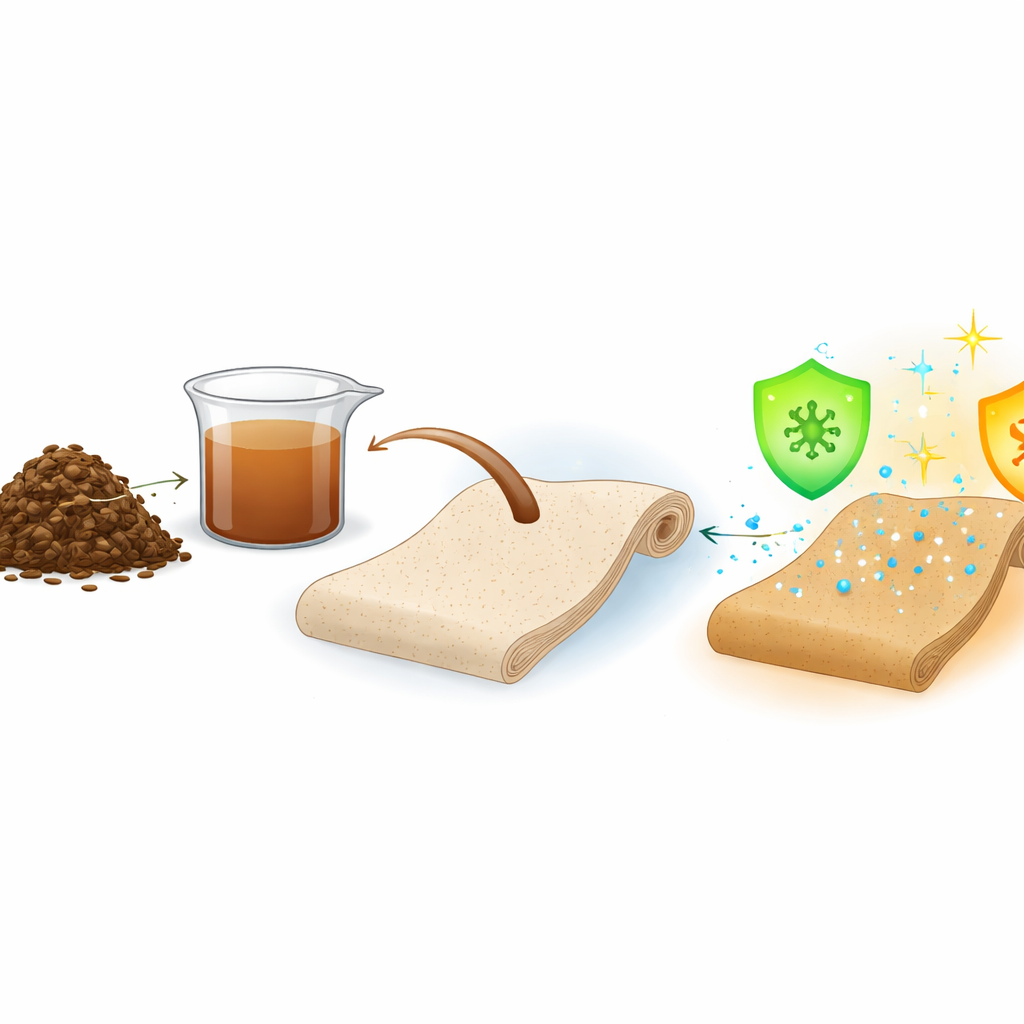
From Tea Cup to Fabric
The team began with spent black tea leaves, the damp grounds left after brewing. These leaves are rich in natural plant compounds called polyphenols and tannins, which give tea its color and some of its health properties. The researchers boiled and filtered the dried tea waste to create a coloring liquid, then used it to dye viscose fabric under different conditions. They systematically varied the acidity of the bath, temperature, amount of tea extract, and dyeing time to see which combination gave the deepest, most even color while still being gentle on the fabric.
Finding the Sweet Spot for Green Dyeing
By measuring how much light the fabric absorbed, the authors identified a clear “sweet spot” for this natural dyeing recipe: an acidic bath (pH 3) at a modest 45 °C, using 4% tea extract for one hour. Under these conditions, the viscose took on a warm, brownish shade with good depth of color, despite the relatively low temperature. That matters because conventional dyeing often runs near boiling, using synthetic dyes that can pollute waterways. Here, the lower temperature means less energy and water use, without sacrificing color quality. The dyed samples also showed good resistance to washing, rubbing, sweat, and light, making the process practical for everyday textiles.
Adding Tiny Helpers for Protection
The second part of the work looked beyond color to function. The researchers combined the tea extract with zinc oxide nanoparticles – ultra-small particles of a mineral already used in sunscreens and antimicrobial coatings. When dyeing and nanoparticle treatment were done together in a single bath, the fabric not only became darker and richer in tone, it also gained strong resistance to harmful microbes. Tests against two common bacteria (Staphylococcus aureus and Escherichia coli) and a fungus (Candida albicans) showed that tea-dyed viscose alone greatly reduced microbial growth, and that adding zinc oxide pushed this reduction to above 96% in all three cases.
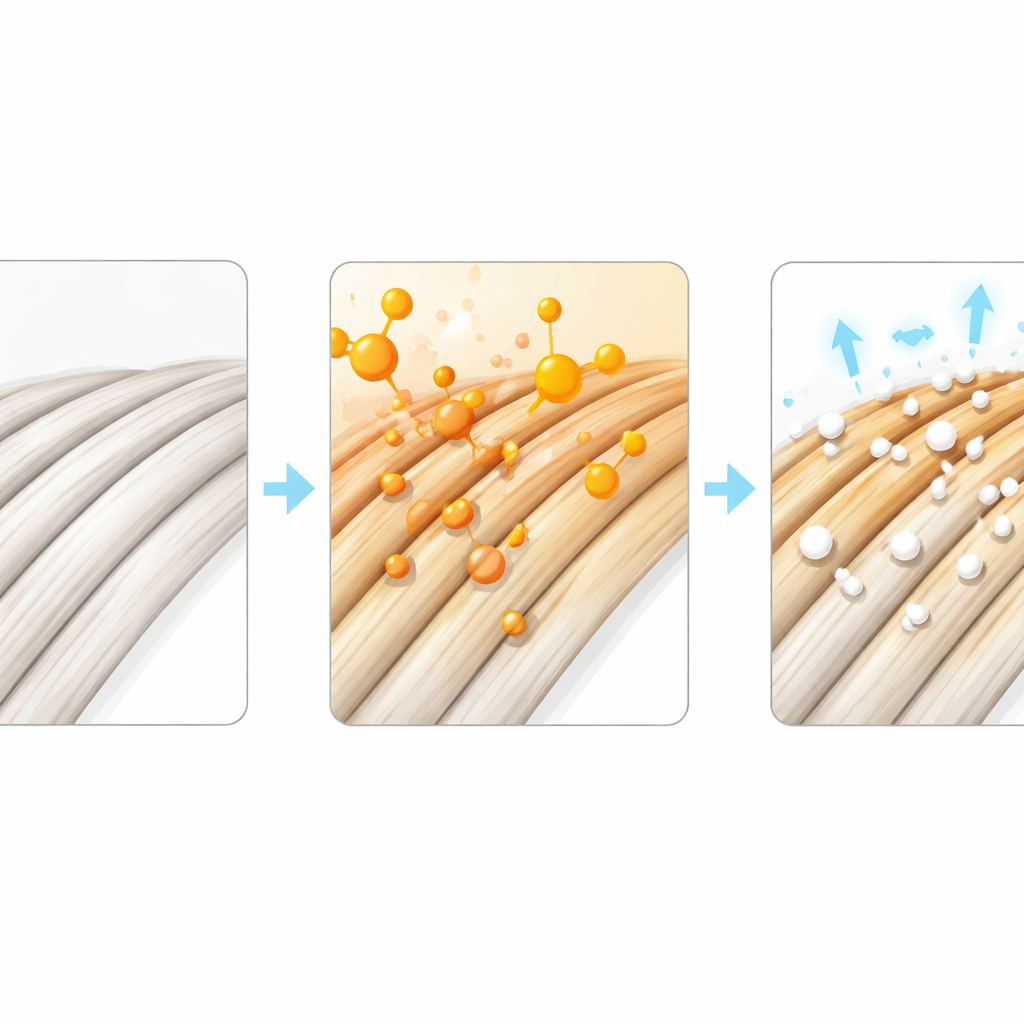
Hidden Health Benefits in Everyday Cloth
The tea-colored viscose carried another bonus: strong antioxidant activity. In simple terms, the fabric could neutralize reactive molecules that help drive aging and material breakdown, thanks to the tea’s polyphenols binding to the fiber surface. This may help the cloth better endure exposure to sunlight and oxidizing chemicals in daily life. At the same time, the mechanical strength of the viscose remained essentially unchanged, although the improvement in protection against ultraviolet rays was modest, suggesting that additional surface-focused treatments would be needed for true sun-protective garments.
What This Means for Future Clothes
To a layperson, the takeaway is straightforward: waste tea leaves can do more than flavor a drink and then head to the trash. Under carefully chosen conditions, they can color viscose fabric in a more sustainable way and arm it with germ-fighting and antioxidant powers, especially when teamed with zinc oxide nanoparticles. While the protection does fade after many wash cycles, making these textiles best suited for disposable medical items or rarely washed furnishings, the approach points toward a future in which textile mills transform food waste into value – coloring and upgrading fabrics while easing the environmental burden of synthetic dyes.
Citation: Rasmy, S., Mowafi, S., Suleyman, M. et al. Synergetic effect of Camellia sinensis waste extract and zinc oxide nanoparticle for improving performance and appearance attributes of viscose fabrics. Sci Rep 16, 10917 (2026). https://doi.org/10.1038/s41598-026-42384-4
Keywords: eco-friendly dyeing, black tea waste, viscose fabric, functional textiles, zinc oxide nanoparticles