Clear Sky Science · en
Povidone iodine demonstrates strong efficacy in reducing Candida biofilm in an in vitro fungal prosthetic infection
Why cleaning artificial joints is harder than it looks
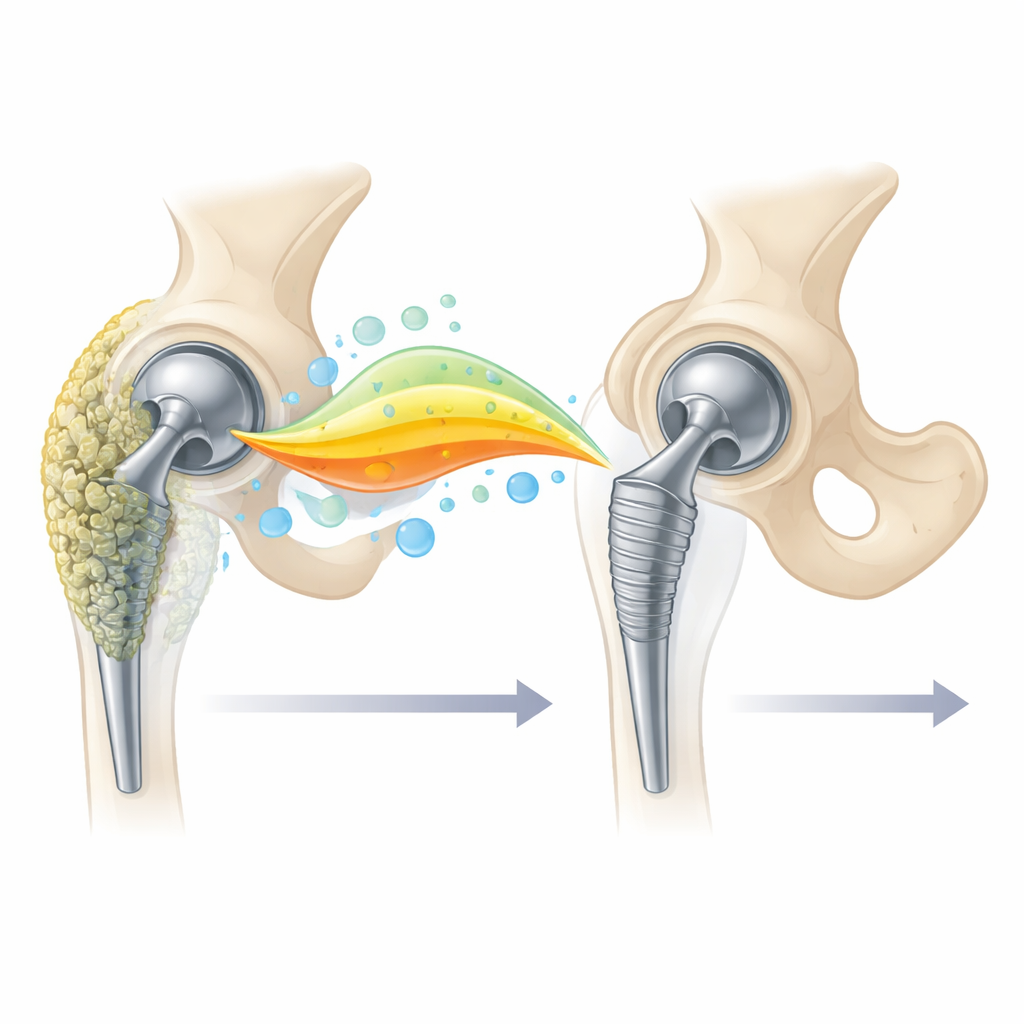
Hip and knee replacements have transformed life for millions of people, but a small number of these artificial joints become infected. When a fungus called Candida albicans is involved, the infection can cling stubbornly to metal parts as a slimy community known as a biofilm. This makes it very hard to clear, even with powerful drugs. The study in this paper asked a practical, surgery-focused question: which common washing solution does the best job of stripping this fungal layer off metal surfaces similar to those used in joint implants?
A sticky problem on metal joints
Most joint infections are caused by bacteria, but a small fraction involve fungi such as Candida albicans. Even though rare, these fungal infections can be devastating, sometimes leading to repeated surgeries or even loss of the limb. One reason is that Candida readily forms biofilms—dense layers of yeast and filament-like cells glued together by a protective matrix. On rough titanium surfaces, like those on many implants, this structure acts as armor, shielding the fungus from the immune system, antifungal drugs, and routine surgical cleaning. Surgeons do use antiseptic washes during operations, but most research has focused on bacteria, leaving a gap in evidence for what works best on fungal biofilms.
Testing surgical washes in the lab
To tackle this, the researchers grew Candida albicans biofilms on titanium screw caps made from the same alloy used in hip replacements. They then exposed these coated caps to six different washing solutions that are already used or considered in operating rooms: plain saltwater (as the control), two antifungal drug solutions (nystatin and fluconazole), chlorhexidine (a common skin antiseptic), and two strengths of povidone iodine (a brown antiseptic often used before surgery), one at the usual diluted level and one at full strength. Each cap was soaked for either three minutes or ten minutes—times meant to mimic how long a joint might realistically be irrigated during surgery. Afterward, the team shook loose the remaining biofilm with ultrasound and counted how many living fungal cells were left.
Which wash worked best?
All of the antiseptic solutions could stop free-floating fungal cells from growing in standard lab tests, but biofilms proved far tougher. In the three-minute soaks, the antifungal drug solutions barely outperformed plain saltwater, trimming the biofilm by less than tenfold. Chlorhexidine and low-strength povidone iodine did somewhat better, cutting the live fungus count by about a factor of ten. The standout, however, was full-strength 10% povidone iodine, which reduced live cells by more than a hundredfold in just three minutes. When the soak time was extended to ten minutes, all the chemical antiseptics improved, and both povidone iodine solutions—diluted and full strength—came close to wiping out the biofilm entirely.
Seeing the damage up close
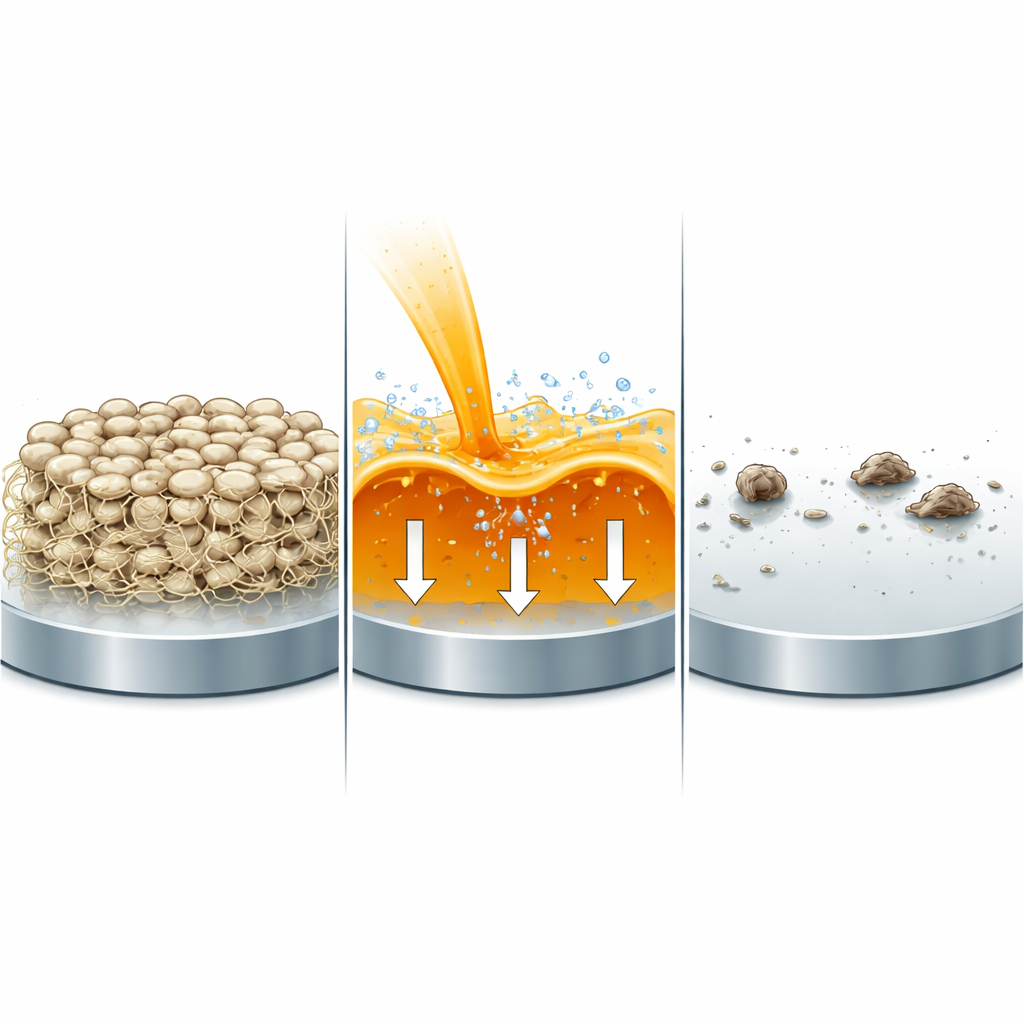
To visualize what was happening on the metal surface, the team used scanning electron microscopy, a technique that produces detailed images of the biofilm. Before treatment, the titanium was covered with a dense, layered mat of yeast cells and filamentous forms tightly attached to the rough surface. After ten minutes in 10% povidone iodine, much of this structure was stripped away, and many remaining cells looked misshapen and damaged. Some cells retained a normal outer shape but were likely no longer active, a pattern seen in other studies where the cell’s internal machinery has been quietly shut down by antiseptics.
What this means for patients and surgeons
In plain terms, this study suggests that povidone iodine—especially at higher strength and with longer contact time—does a better job than common antifungal drugs or chlorhexidine at clearing stubborn Candida growth from metal similar to joint implants. The authors propose that, when a fungal joint infection is confirmed and time allows, a ten-minute rinse with diluted povidone iodine could be a practical option; when time is short or diagnosis uncertain, a brief rinse with stronger solution may still offer an advantage. Because these experiments were done in the lab, not inside the body, the safety and effectiveness of such approaches still need to be tested in living tissues. Even so, the work provides a concrete, testable strategy to improve the cleaning step of surgery for a rare but very serious type of joint infection.
Citation: Hong, JY., Moon, Y.G., Choi, S.K. et al. Povidone iodine demonstrates strong efficacy in reducing Candida biofilm in an in vitro fungal prosthetic infection. Sci Rep 16, 12236 (2026). https://doi.org/10.1038/s41598-026-42366-6
Keywords: joint infection, Candida biofilm, povidone iodine, prosthetic surgery, antiseptic irrigation