Clear Sky Science · en
Performance improvements of recycled concrete and ceramic aggregates using graphene oxide nanocoating
Turning Building Rubble into a Resource
Every time a building is demolished, mountains of broken concrete and bricks are produced. Much of this construction and demolition waste still ends up in landfills, even though it could replace the gravel and stone dug from quarries to make new concrete. This study explores a nanoscale trick—using ultra-thin flakes of graphene oxide—to make these recycled bits of rubble behave more like high-quality natural stone, opening the door to stronger, longer-lasting, and more sustainable buildings.
Why Old Concrete and Bricks Are Hard to Reuse
Recycled chunks of concrete and ceramic materials already look a lot like the gravel used in fresh concrete, but they soak up far more water. Their surfaces are rough and porous, full of tiny cracks and holes, especially in pieces that contain old cement paste or fired clay. This high water absorption makes it harder for engineers to control how new concrete flows and hardens, and it can also leave more pathways for water and harmful substances to creep in over time. As a result, strict building standards often limit how much recycled material can be used, even in regions such as the European Union that actively promote a more circular, less wasteful construction industry.
A Thin Protective Skin from Carbon Sheets
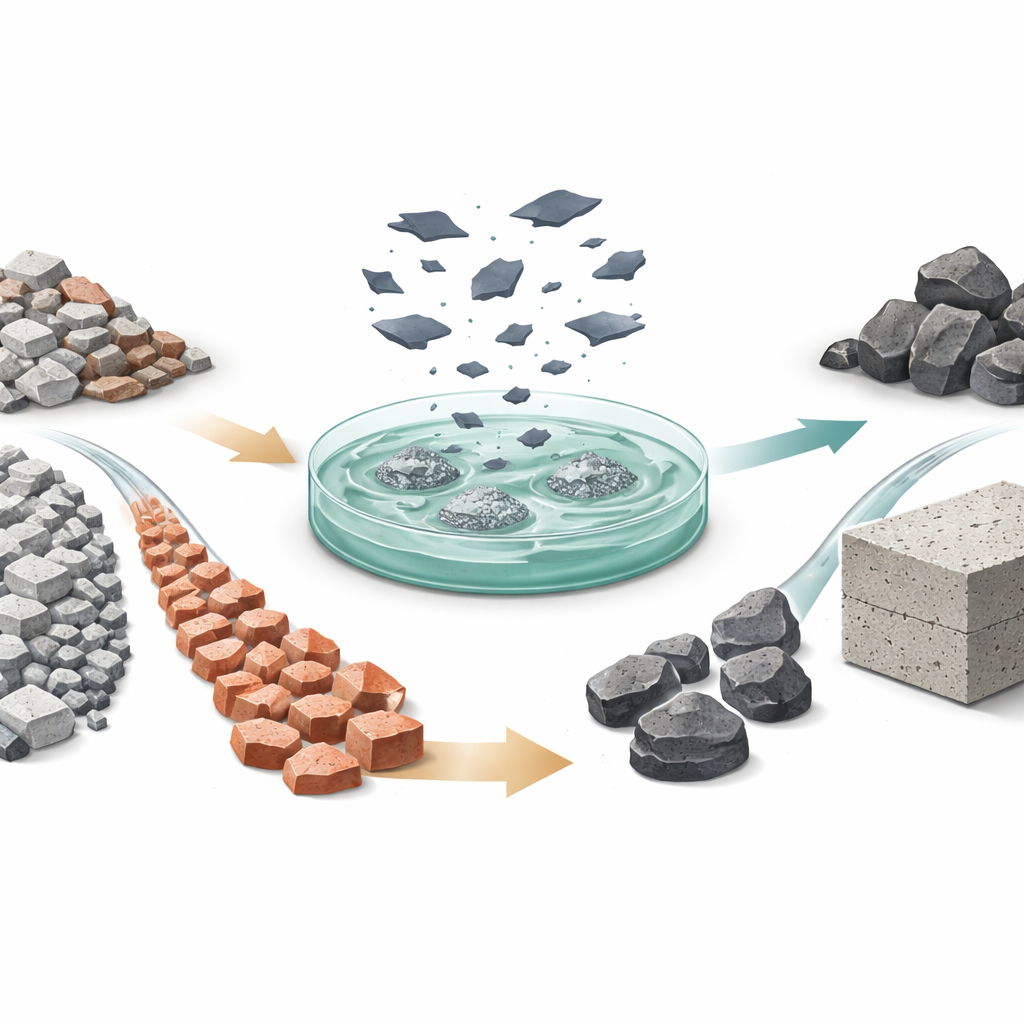
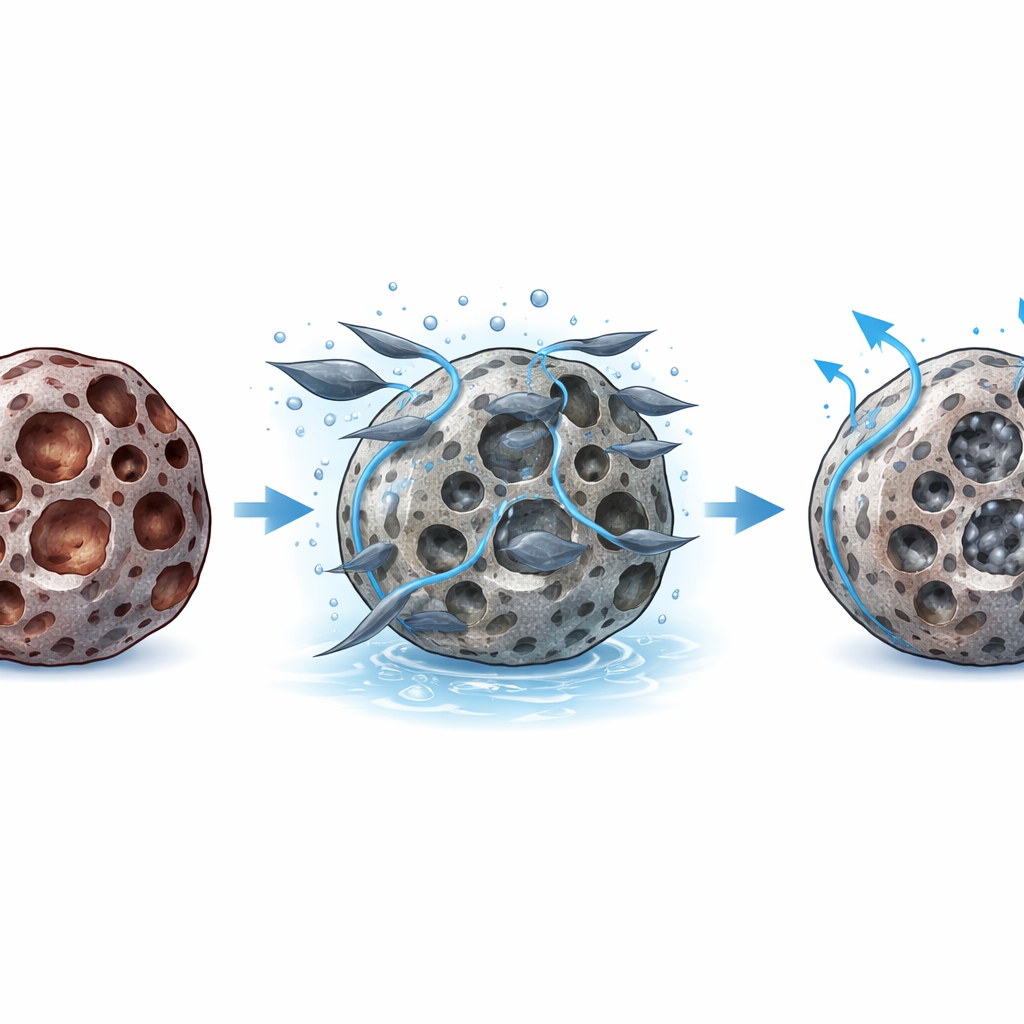
The researchers tested whether graphene oxide—a carbon-based material made of sheets only a few atoms thick—could act as a protective skin for recycled aggregates. They worked with two types of coarse particles taken directly from a recycling plant: one mainly from crushed concrete and one mainly from broken ceramics such as bricks and tiles. Both were immersed for just ten minutes in a watery suspension of graphene oxide, then dried in a low-temperature oven. During this bath, part of the liquid seeps into the pores while flat graphene oxide flakes attach themselves to the inner walls and outer surface, forming a very thin but continuous coating.
Making Rubble Less Thirsty and More Robust
After coating, the team compared the behavior of treated and untreated particles in several simple but telling tests. First, they measured how much water the aggregates could absorb. The graphene oxide treatment cut water uptake by about one fifth in the recycled concrete particles and by one quarter in the ceramic ones, with the more porous ceramics benefiting the most. Importantly, the overall weight of the particles did not increase; in fact, it dropped slightly because the immersion step washed away loose dust, meaning the improvement came from pore blocking and better surfaces rather than from adding bulk material.
Standing Up to Harsh Vibration and Close Inspection
To see how firmly the coating stayed in place, the aggregates were repeatedly exposed to ultrasonic waves in water, a harsh treatment that tends to shake off weakly attached grains. Coated particles lost noticeably less material than uncoated ones—about 17% less loss for the concrete-based aggregates and 25% less for the ceramic-based ones—showing that their surfaces had become more consolidated. High-magnification images confirmed what these numbers suggested: graphene oxide formed a thin, conformal film over the rough surfaces, while also lining and partially filling internal pores. This reduced the volume of the very smallest pores that are most responsible for drawing in water, yet the coating remained thin enough that the natural roughness, which helps new concrete bond well, was preserved.
From Lab Treatment to Greener Construction
Together, these results show that a simple dip-and-dry treatment using a low dose of graphene oxide can make recycled concrete and ceramic aggregates less absorbent and more resistant to surface damage. Because the method resembles an extra washing step, the authors argue it could be folded into existing recycling plant operations at modest cost, while adding little to the overall climate impact of concrete. If adopted at scale, such nano-thin coatings could help turn today’s building rubble into tomorrow’s reliable raw material, reducing the need for new quarrying and cutting the environmental footprint of the construction sector.
Citation: Antolín-Rodríguez, A., García-González, J., Guerra-Romero, M.I. et al. Performance improvements of recycled concrete and ceramic aggregates using graphene oxide nanocoating. Sci Rep 16, 12971 (2026). https://doi.org/10.1038/s41598-026-42362-w
Keywords: recycled concrete, graphene oxide, construction waste, nanocoating, sustainable building materials