Clear Sky Science · en
Design of a fault-tolerant control system for a centrifugal pump-based level control system for sensor faults
Keeping Industrial Water Flow on Track
Modern factories, power plants, and water treatment facilities all rely on pumps and sensors to move and control enormous volumes of water. If a single sensor that measures tank level or pump behavior suddenly fails, production can be disrupted, equipment can be damaged, and safety margins can shrink. This paper explores a way to keep a centrifugal pump–driven water tank system running smoothly even when a key sensor stops working, using a smart control approach that can "fill in" missing information instead of shutting the process down.
Why Pump Systems Need Backup Brains
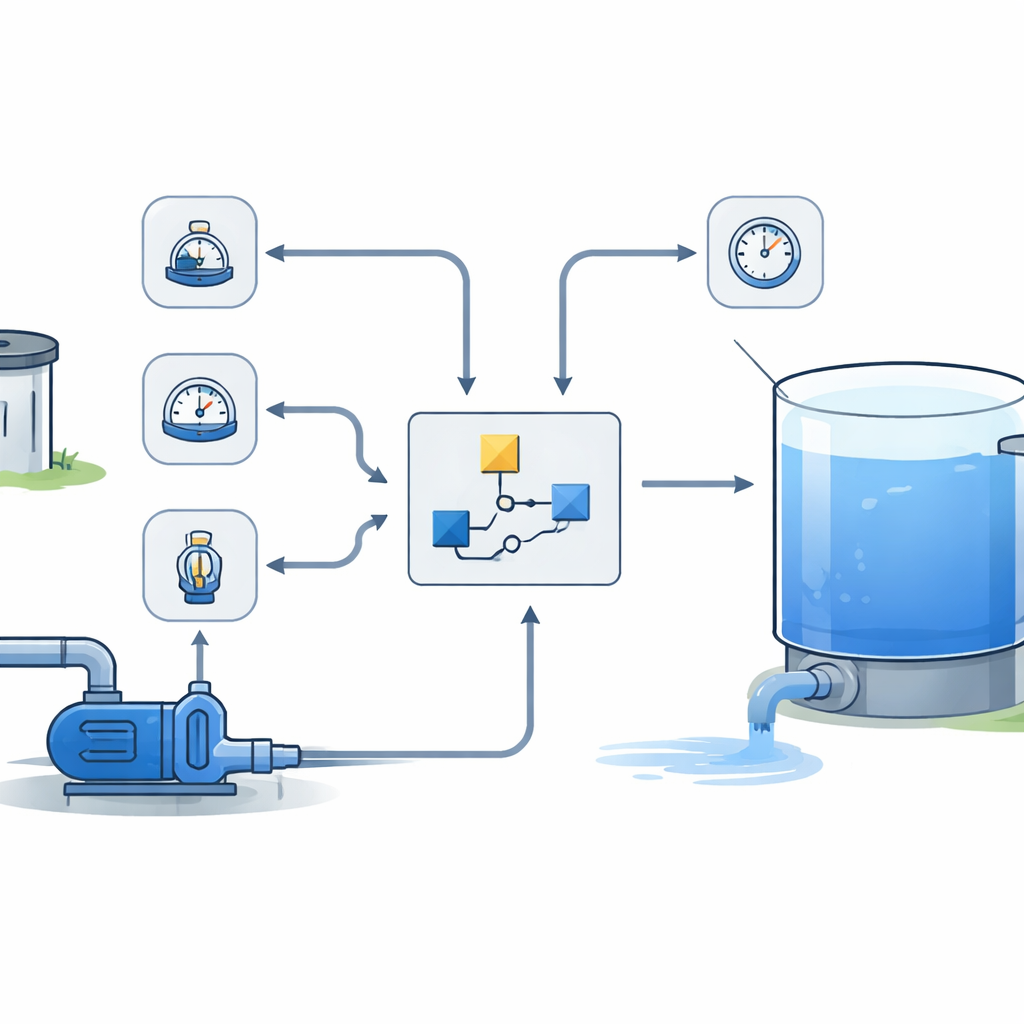
Centrifugal pumps are workhorses of industry, pushing liquids through pipes in water treatment, chemical processing, and many other fields. To keep a storage tank at just the right level, a controller continually compares a desired level to the actual level reported by a sensor and adjusts pump speed. In most plants this job is handled by a classic PID controller, which reacts to differences between the set point and what the sensor reports. But if the level sensor—or a sensor that tracks pump speed or outlet pressure—fails or gets stuck at a false reading, the controller is effectively flying blind. That can lead to overfilling, running the tank dry, or triggering costly emergency shutdowns.
Turning Spare Signals into a Safety Net
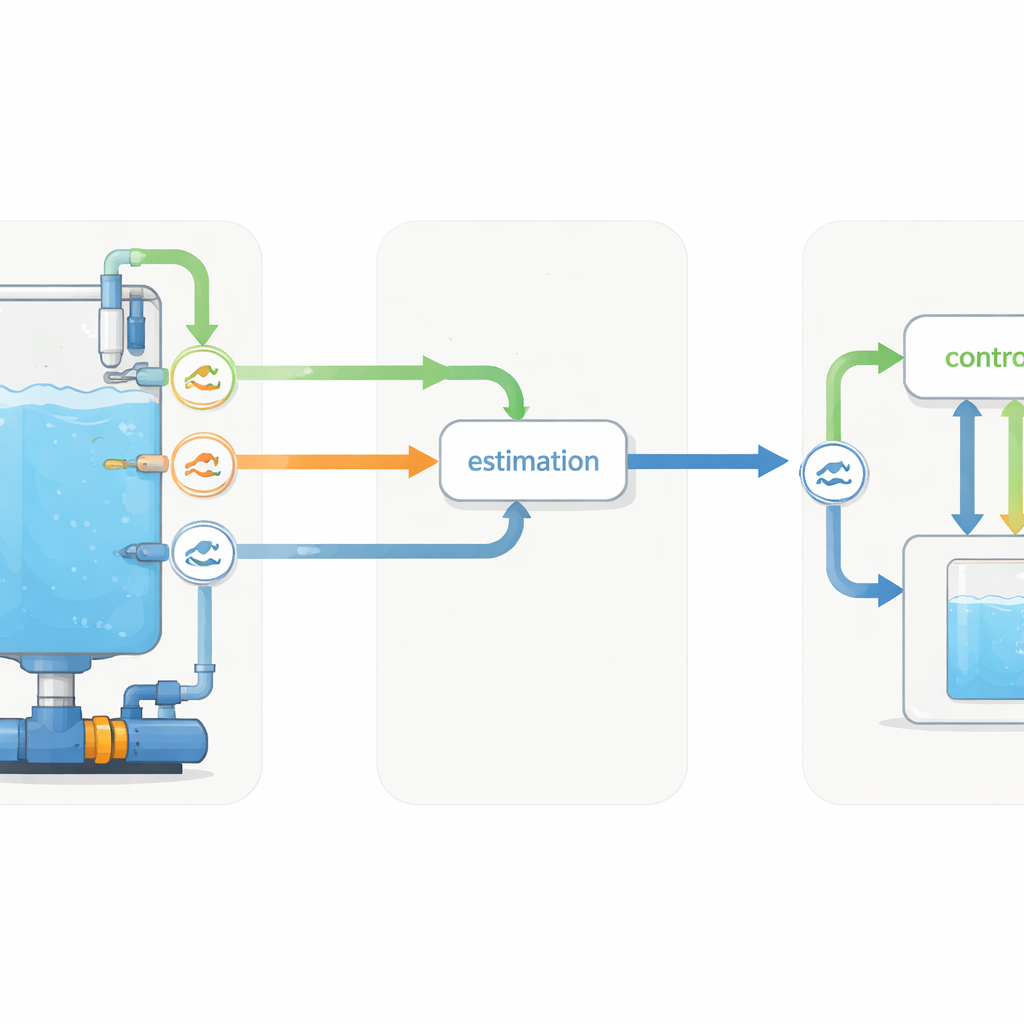
The authors propose an “active fault-tolerant” control design that treats sensor readings as a team rather than as isolated numbers. Their model centers on a water tank fed by a centrifugal pump, with three sensors: one for the tank level, one for pump speed, and one for discharge pressure. Under normal conditions, the PID controller uses the level reading to adjust pump speed so the tank stays at its target height. At the same time, all three sensors send their readings into a separate module whose job is to watch for faults and, when needed, synthesize a missing measurement from the remaining healthy signals.
A Simple Statistical Stand-In for Failed Sensors
To build that backup capability, the researchers rely on multiple linear regression—a straightforward statistical tool rather than a heavy, complex model. Using simulation data from a healthy system, they learn how the three measurements usually relate to one another. For example, they derive formulas that express tank level as a weighted combination of pump speed and pressure, and similar formulas for estimating speed or pressure from the other two. In operation, a fault detection unit continually compares each real sensor reading to the value predicted by the regression model. If the difference, or residual, crosses a threshold, the system flags that sensor as faulty and instantly replaces its reading with the corresponding estimate from the other two sensors.
Putting the Fault-Tolerant Design to the Test
The team implements their design in MATLAB and Simulink using an existing model that includes a well, a jet pump, a centrifugal pump, and a storage tank. They focus on a particularly harsh but common failure mode: a sensor that suddenly becomes “stuck at zero,” representing a complete loss of information. When they inject such faults into the level, speed, or pressure sensors without any protection, the tank level control quickly degrades or would lead to shutdown. With the fault-tolerant scheme turned on, the detection and reconfiguration happen in milliseconds: the level estimate is restored in about 2 milliseconds, and the speed and pressure estimates stabilize in roughly 40 milliseconds. The PID loop continues to hold the tank near its 1.4-meter target with almost no visible disturbance, even though one sensor has effectively dropped out.
What This Means for Real-World Plants
For plant operators, the key message is that a relatively simple statistical add-on can make existing pump control loops far more resilient to sensor failures. Instead of adding costly duplicate hardware, the method uses analytical redundancy—spare information already present in other signals—to keep the system running. While the study assumes only one sensor fails at a time and is demonstrated in simulation with water as the working fluid, it shows that low-complexity software can prevent shutdowns, smooth out fault responses, and provide a practical baseline for more advanced techniques. In everyday terms, the system learns typical patterns among its gauges and, when one gauge goes dark, it can still steer the pump safely by trusting the others.
Citation: Irfan, M., Amin, A.A., Waseem, S. et al. Design of a fault-tolerant control system for a centrifugal pump-based level control system for sensor faults. Sci Rep 16, 14189 (2026). https://doi.org/10.1038/s41598-026-42361-x
Keywords: fault-tolerant control, centrifugal pumps, sensor failures, industrial process control, water level regulation