Clear Sky Science · en
Exploring the anti-inflammatory effects of genistein in an in vitro lipopolysaccharide-induced macrophage model
Why this matters for everyday health
Many common illnesses—from heart disease to arthritis—have one thing in common: long-lasting inflammation that quietly damages tissues over time. In this study, researchers explored whether genistein, a natural compound found in soy, can gently “calm down” key immune cells called macrophages without harming them. Understanding how a diet-derived molecule helps switch off excessive inflammation could one day contribute to safer strategies for preventing or managing chronic inflammatory conditions.
Guardians of the body that can misfire
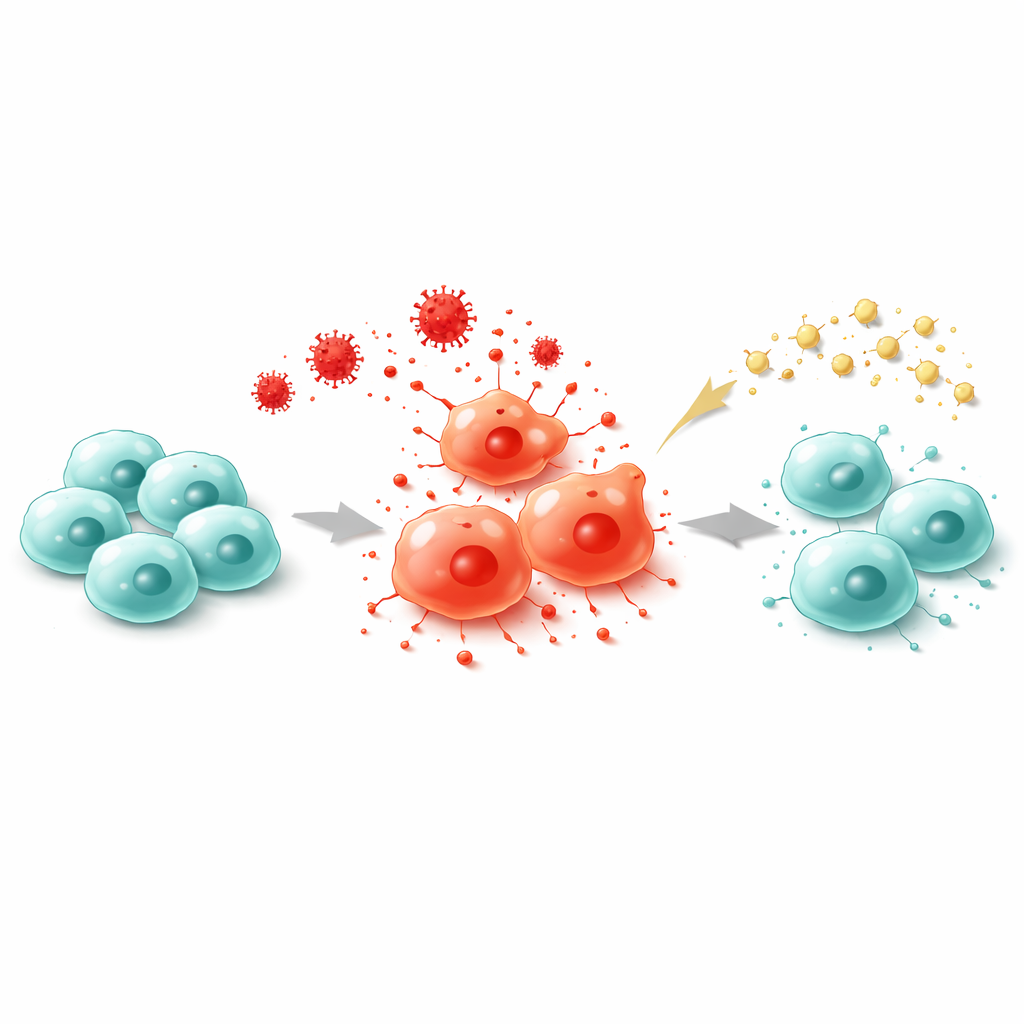
Macrophages are front-line defenders that patrol our tissues, swallowing germs and debris and coordinating the broader immune response. They can adopt a “fighter” mode that promotes inflammation or a more “healer” mode that supports repair and recovery. When too many macrophages stay stuck in the fighter state, they release high levels of inflammatory substances that can fuel diseases such as cardiovascular problems, cancer, and metabolic or joint disorders. The team wanted to know whether genistein could push these cells away from the harmful, overactive state and back toward a calmer, healing profile.
A soy compound that helps without hurting
First, the scientists tested whether genistein itself was safe for macrophages grown in the lab. Using a well-established mouse macrophage line, they exposed the cells to increasing doses of genistein and checked cell survival, division, and programmed cell death. A moderate dose—similar to levels that can be reached in humans with high dietary intake or supplements—did not kill the cells, did not stop them from cycling normally, and caused only a very small increase in apoptosis, or orderly cell death. At the same time, genistein improved the cells’ internal balance by slightly boosting mitochondrial function and clearly reducing reactive oxygen species, a type of damaging chemical linked to both inflammation and aging. These results showed that genistein could act on the cells without compromising their basic health.
Turning down the inflammatory volume
The researchers then mimicked an inflammatory flare-up by treating macrophages with lipopolysaccharide (LPS), a molecule from bacterial walls that is widely used to trigger a strong immune reaction in the lab. They tested two scenarios: giving genistein before the inflammatory trigger (a preventive approach) and adding it afterward (a restorative approach). In both cases, genistein lowered the production of nitric oxide, a reactive gas that rises during inflammation, and sharply reduced the activity of several classic pro-inflammatory messengers. At the same time, it boosted an anti-inflammatory mediator associated with tissue protection and healing. Together, these shifts indicated that genistein was nudging the cells away from the aggressive fighter state toward a more resolving, repair-oriented behavior.
How genistein interferes with the inflammatory engine
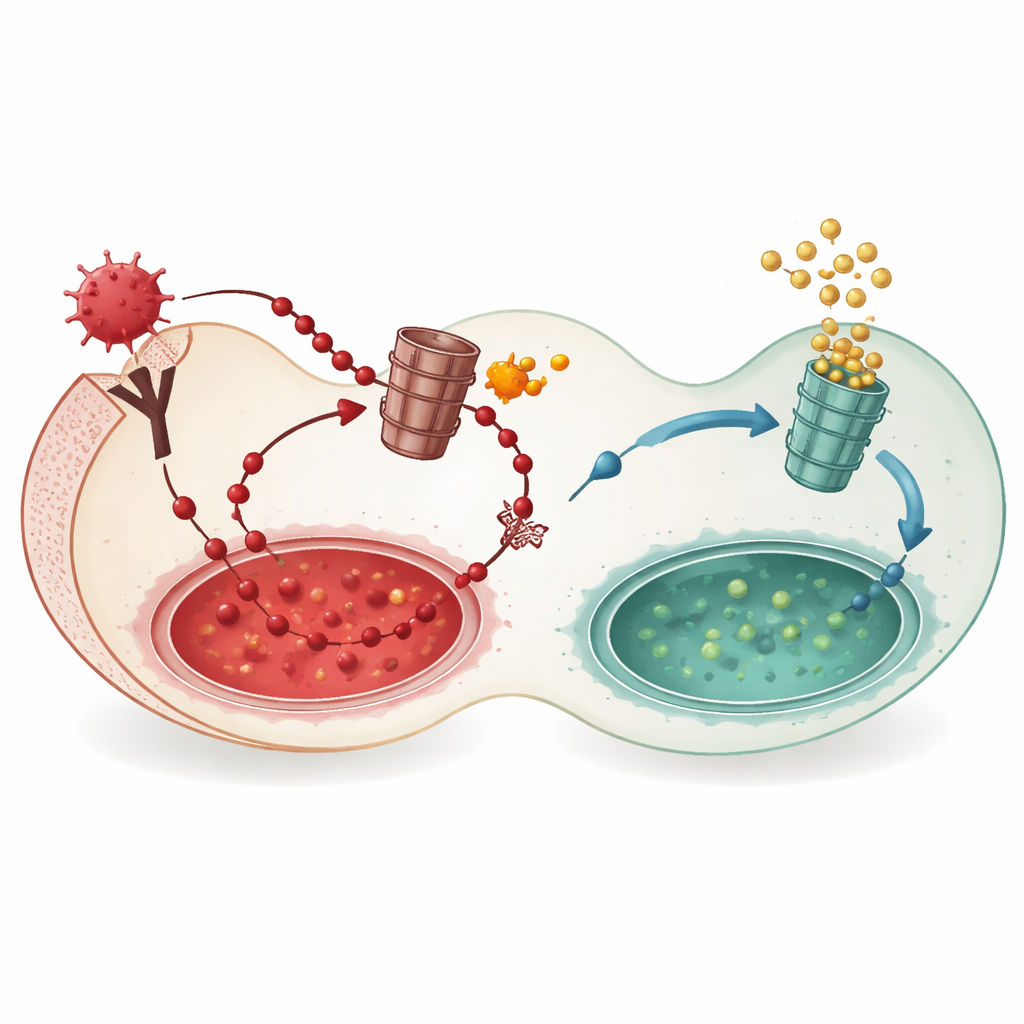
To understand how genistein works inside the cell, the team looked at both gene activity and protein levels. They found that genistein reduced the expression of iNOS, an enzyme that drives nitric oxide production, as well as key inflammatory cytokines such as IL-6 and TNF-α at the protein level. Microscopy studies showed that LPS normally stretches and reshapes macrophages into an activated form, but genistein treatment restored their size and appearance to something closer to resting cells. Crucially, genistein decreased the activity of a protein-degrading machine called the 20S proteasome, which plays a central role in switching on NF-κB, a master controller of inflammation. Confocal imaging confirmed that genistein prevented NF-κB’s p65 subunit from moving into the cell nucleus, where it would otherwise turn on inflammatory genes. By keeping this switch in the “off” or “low” position, genistein appears to blunt the entire inflammatory cascade.
Balancing promise and real-world limits
Taken together, the findings suggest that genistein can safely reshape macrophages toward a less inflammatory state, dampening harmful signals while preserving cell viability and antioxidant defenses. For a layperson, this means that a compound naturally present in soybeans has the potential to help calm overactive immune responses that underlie many chronic disorders. However, the study was done in cells grown in dishes, not in animals or people, and genistein’s complex actions and limited absorption in the body may affect how well it works in real-world settings. Further research in animal models and clinical studies will be needed to determine whether genistein, alone or as part of broader strategies, can meaningfully contribute to treating or preventing inflammation-driven diseases.
Citation: de Ganuza, C.R., López, S. & Mendoza, G. Exploring the anti-inflammatory effects of genistein in an in vitro lipopolysaccharide-induced macrophage model. Sci Rep 16, 11592 (2026). https://doi.org/10.1038/s41598-026-42357-7
Keywords: genistein, macrophage polarization, chronic inflammation, NF-kappaB pathway, soy isoflavones