Clear Sky Science · en
An intelligent controlling in electric vehicle system with integrated DBS and BMS for sustainable solution
Why Smarter Batteries Matter for Electric Cars
Electric cars promise cleaner air and quieter streets, but their success still depends on one stubborn piece of hardware: the battery. Drivers worry about range, charging time, and how long the battery will last before it needs replacing. This study explores a new way to run an electric vehicle using two cooperating batteries, a smart control system, and help from the sun, all working together to squeeze more useful energy out of every charge and to keep the battery pack healthier for longer.
Two Batteries Are Better Than One
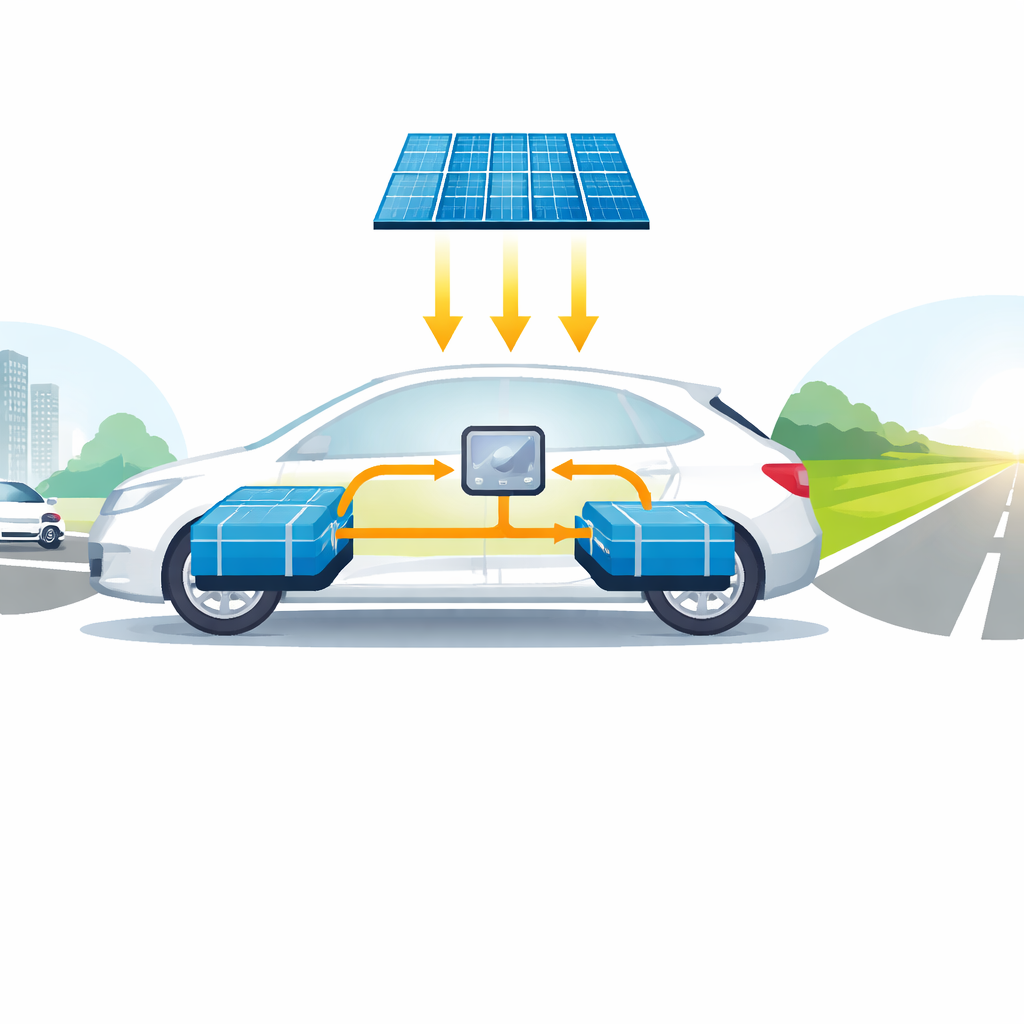
The researchers propose a dual battery system in which an electric vehicle uses two separate battery packs instead of relying on just one. A dedicated control unit, known as a battery management system, constantly watches the voltage, temperature, and charge level of both packs. Rather than drawing power evenly or blindly, the system decides in real time which battery should supply power and which should rest or recharge. By sharing the workload, the two batteries avoid deep discharges and stressful operating conditions that typically shorten battery life and limit driving range.
How the Smart Control Keeps Energy in Balance
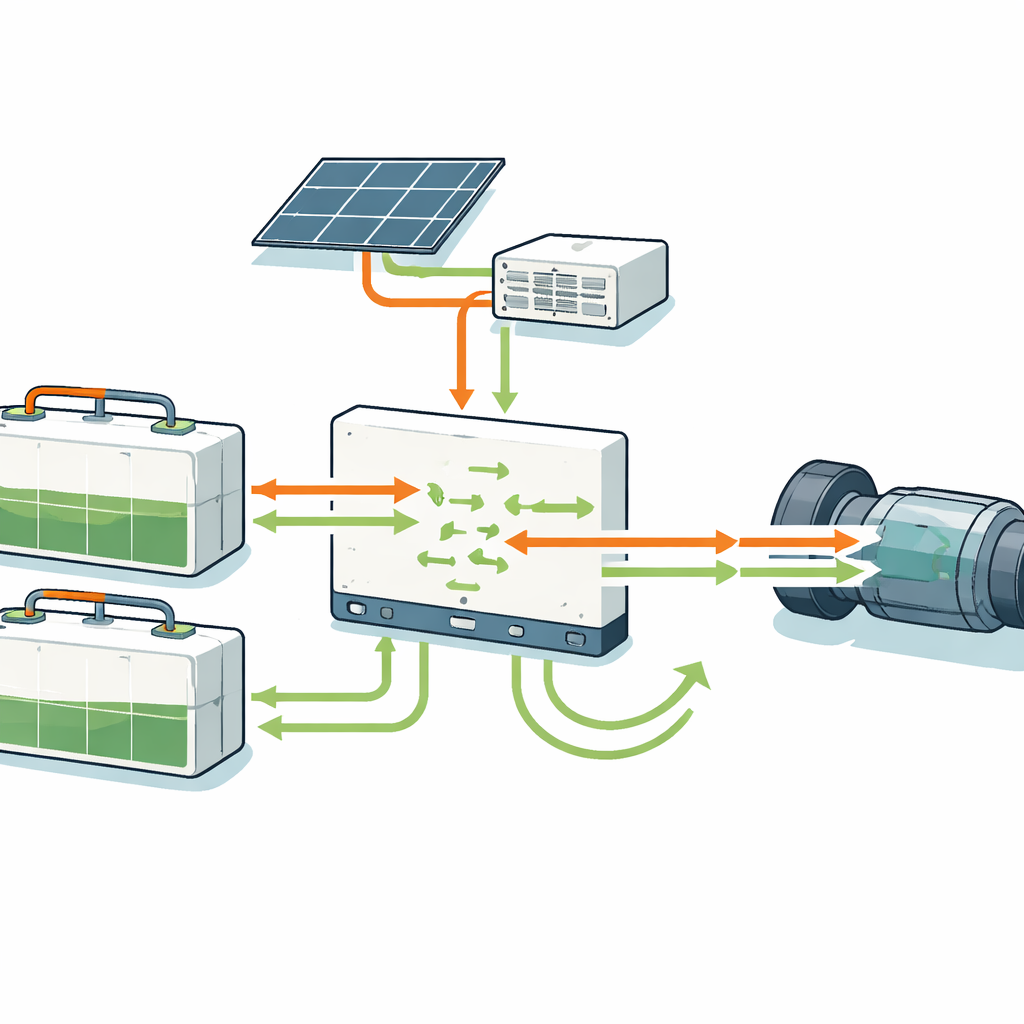
At the heart of the approach is an intelligent controller that performs dynamic load balancing. It measures the state of charge of each battery and compares their voltages, then uses electronic switches to route power where it is needed. When one battery is more depleted, the controller can favor the healthier pack or recharge the weaker one if energy is available from other sources. The team built and tested this logic using MATLAB/Simulink simulations and a small-scale hardware setup based on an Arduino microcontroller, sensors, relays, and lithium-ion cells. In the prototype, one battery can power the vehicle while the other is topped up, and the system automatically swaps roles as charge levels change.
Adding Sunshine to the Power Mix
The vehicle design also integrates solar panels to support the batteries. Photovoltaic modules mounted externally feed their power through a converter that continuously searches for the panel’s most productive operating point, a method known as maximum power point tracking. The harvested solar energy is then directed into the dual battery system through the same smart controller that manages driving power. Although the solar contribution is modest compared with the main battery capacity, it can extend run time, help keep the charge level healthier during daytime use, and reduce dependence on electricity drawn from the grid, especially in sunny regions.
From Laboratory Model to Real-World Driving
To explore how the idea behaves over time, the authors first measured how a single 12 V lithium-ion battery discharges while running an electric load meant to mimic a small vehicle. Voltage and state of charge both dropped steadily over several hours. They then repeated the tests with the dual battery system active. In this case, one battery began supplying power while the other was repeatedly recharged by the solar panels and swapped into service once it reached a target charge level. Over an eight-hour operating period, the combined system maintained healthier charge levels and a more stable voltage profile than the lone battery could achieve, while keeping power flowing to the motors.
What the Results Mean for Everyday Users
Viewed in simple terms, the study shows that treating the battery pack as a managed team instead of a single worker can pay off. By coordinating two batteries, steering energy intelligently, and adding a steady trickle of solar power, the prototype achieved higher overall efficiency (about 85%), reduced wasted energy, and kept the batteries within a safer charge range of roughly 60% instead of letting them swing from nearly full to almost empty. For drivers, that combination could translate into longer driving range per charge, fewer plug-in stops, and slower battery aging. While this work is still at the experimental stage, it points toward future electric vehicles that quietly juggle multiple energy sources behind the scenes to deliver a smoother, more reliable, and more sustainable ride.
Citation: Prashant, Verma, G., Virmani, R. et al. An intelligent controlling in electric vehicle system with integrated DBS and BMS for sustainable solution. Sci Rep 16, 13734 (2026). https://doi.org/10.1038/s41598-026-42354-w
Keywords: electric vehicles, battery management, dual battery system, solar charging, energy efficiency