Clear Sky Science · en
Age-friendly design of health detection integrated machine: A user requirement-driven approach
Why Smarter Health Check Machines Matter for Older Adults
More and more health check machines are appearing in community clinics and senior centers, promising convenient blood pressure checks, blood tests, and health reports. Yet many older adults find these devices intimidating, confusing, or simply uncomfortable to use—and so they avoid them. This paper explores how to redesign an integrated health detection machine so that it truly fits the abilities, habits, and feelings of older users, turning a cold piece of equipment into a supportive partner in everyday health care.
Understanding What Older Users Really Need
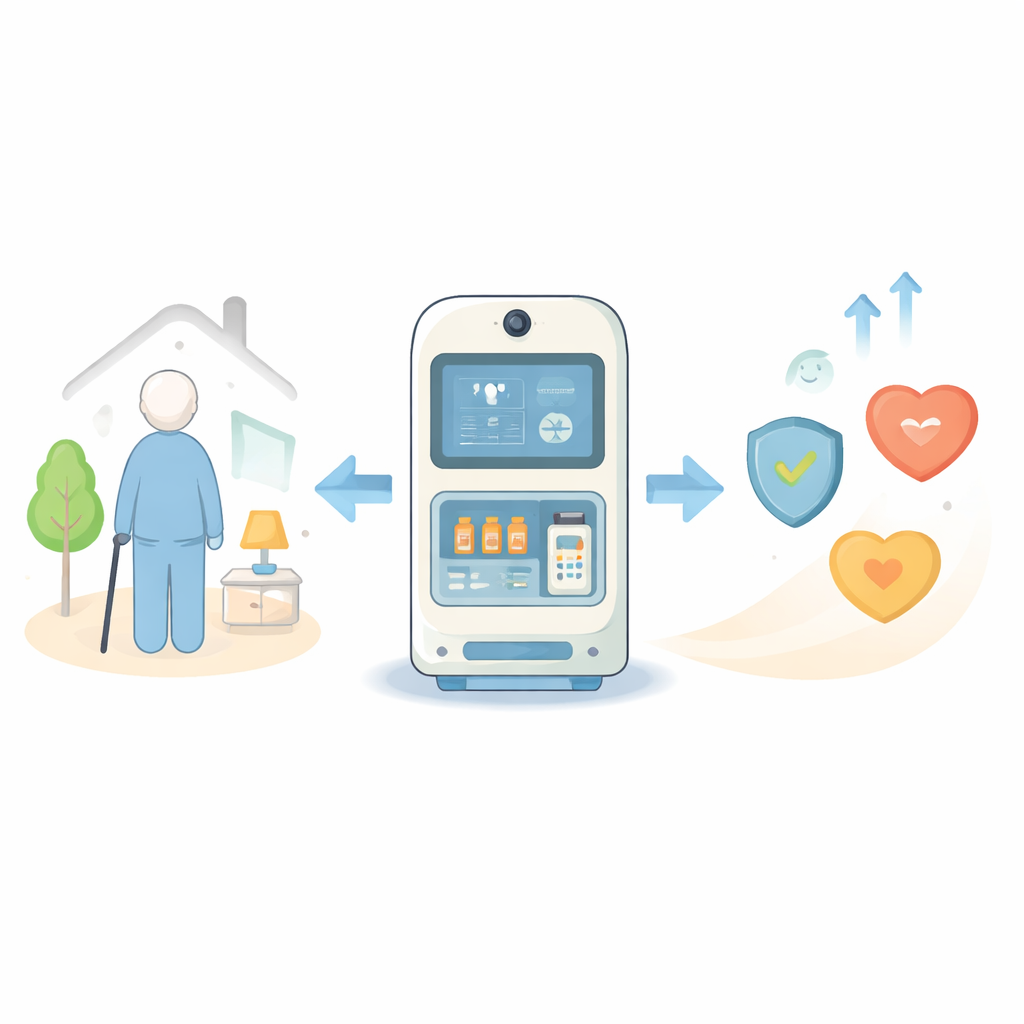
The authors begin by examining why many current smart health devices fail older adults. Manufacturers often focus on technical features while overlooking practical issues such as confusing log‑in steps, small or cluttered interfaces, unclear instructions, awkward layouts, and weak support for limited mobility or slower learning. Through observations and interviews, the researchers map out the “pain points” older users face, such as not knowing where to place personal items, worrying about hygiene when many people share equipment, feeling rushed or embarrassed during tests, or struggling to remember multi‑step instructions. They also distill five straightforward design principles: support two‑way learning between users and devices; ensure professional‑level accuracy and hygiene; provide assistance and safety; use modular, easy‑to-maintain hardware; and create a warm, caring overall experience.
From Vague Wishes to Clear Design Priorities
Older adults often describe their needs in emotional or fuzzy terms—wanting the machine to feel “reliable,” “easy,” or “reassuring.” To turn these fuzzy wishes into concrete design guidance, the researchers use a method called Analytic Network Process. Rather than treating each requirement as separate, this method analyzes how needs influence each other and how they relate to design rules such as cleanliness, technical quality, assistance functions, and visual comfort. By building a network of links between needs and design specifications, and asking experts to compare their relative importance, the team calculates how strongly each need should influence the final design. Top priorities include delivering clearly professional medical service, providing accurate test reports, and ensuring that the size and layout feel comfortable and human-friendly for older bodies.
Linking Needs to the Inner Workings of the Machine
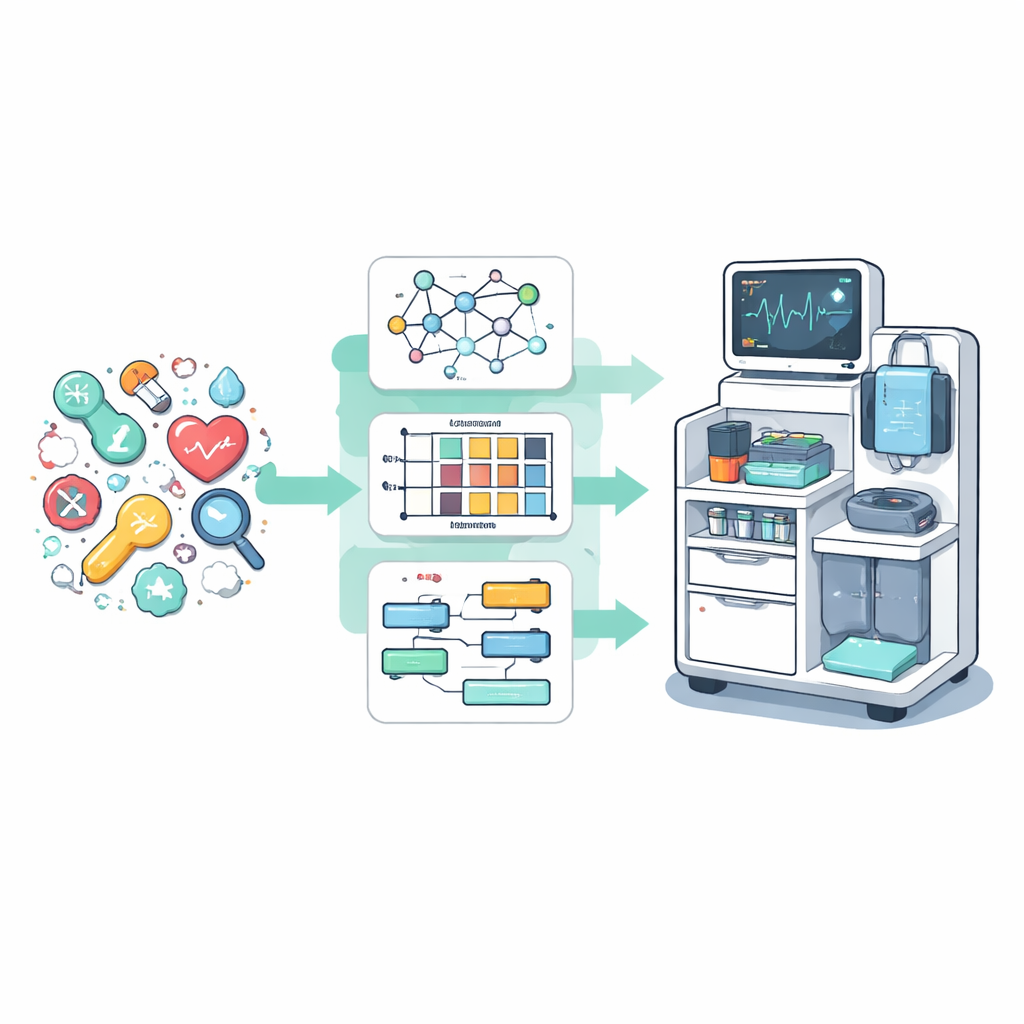
Once important needs are ranked, the next challenge is translating them into technical features that engineers can actually build. For this, the authors apply a planning tool called Quality Function Deployment. They create a large matrix that links key user needs to specific parts and functions of the machine—such as body‑monitoring instruments, software and hardware platforms, voice and light reminders, hygiene modules, layout of components, replaceable modules, and interaction surfaces. The matrix highlights which technical areas must be improved first. For example, it points to the importance of clear voice prompts, flexible and modular layouts, safe and convenient medical waste handling, and a human‑computer interaction zone that feels intuitive and not crowded. These insights guide which features should receive engineering effort and which can be postponed.
Designing Around the Real Use Journey
To make sure the machine fits real daily use, the researchers go beyond lists of functions and follow the user’s journey step by step: before the test, during the test, and after the test. They combine this journey with a Function‑Behavior‑Structure model, which asks three linked questions: what should the machine do, how should the user and device behave, and what physical form supports that behavior. Before testing, this leads to structures such as a clear, multi‑mode login area (using cards, faces, or phones) and safe storage spaces for personal belongings. During testing, it results in obvious positions for each measurement module, guided by gentle voice prompts and indicator lights, plus assistive handrails and supports. After testing, it shapes features like contactless hand disinfection, well‑placed medical‑waste containers, and straightforward report printing and digital feedback. The final concept integrates these elements into a visually softer, more approachable machine with rounded shapes and warmer colors.
Showing Real Improvements in Everyday Use
To see whether these ideas work in practice, the authors compare user reactions to ordinary commercial health detection machines and to their redesigned concept using a standard usability questionnaire with 60 older adults. Existing devices score in the “poor” range, reflecting frustration and reluctance to use them regularly. The redesigned machine, by contrast, reaches a “good” rating with a very large improvement in scores, indicating that users find it easier to learn, more comfortable to operate, and more pleasant overall. In simple terms, by carefully tracing older adults’ needs through networks of requirements, planning tools, and use‑journey‑based design, the study shows how to turn complex methods into a practical, age‑friendly health detection machine that older people are far more willing to use.
Citation: Shi, Y., Xie, Y. Age-friendly design of health detection integrated machine: A user requirement-driven approach. Sci Rep 16, 11884 (2026). https://doi.org/10.1038/s41598-026-42353-x
Keywords: age-friendly design, elderly health technology, user-centered medical devices, usability of health kiosks, smart elder care