Clear Sky Science · en
Association between serum vitamin D levels and atherogenic lipid subfractions: insights from NMR-based lipid profiling in a large adult population
Why sunlight vitamins and blood fats matter
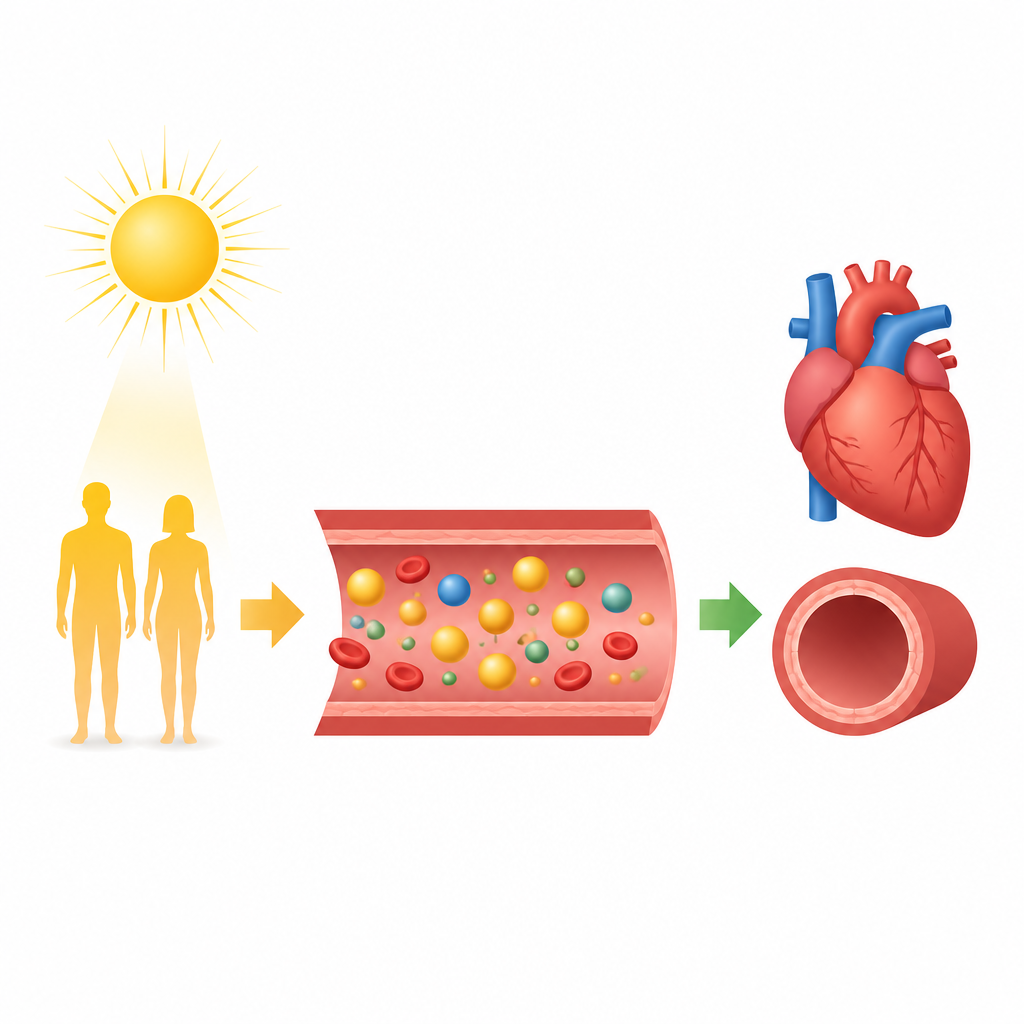
Many people know vitamin D as the sunshine vitamin that keeps bones strong. Far fewer realize it may also be connected to the fats that travel in our blood and help shape our risk of heart disease. This study looked closely at how vitamin D levels in adults relate not just to total cholesterol, but to the tiny particles that carry cholesterol through the bloodstream, some of which are more harmful to arteries than others. Understanding this link could help refine how doctors judge heart risk and why low vitamin D often travels together with unhealthy blood fats.
A closer look at cholesterol carriers
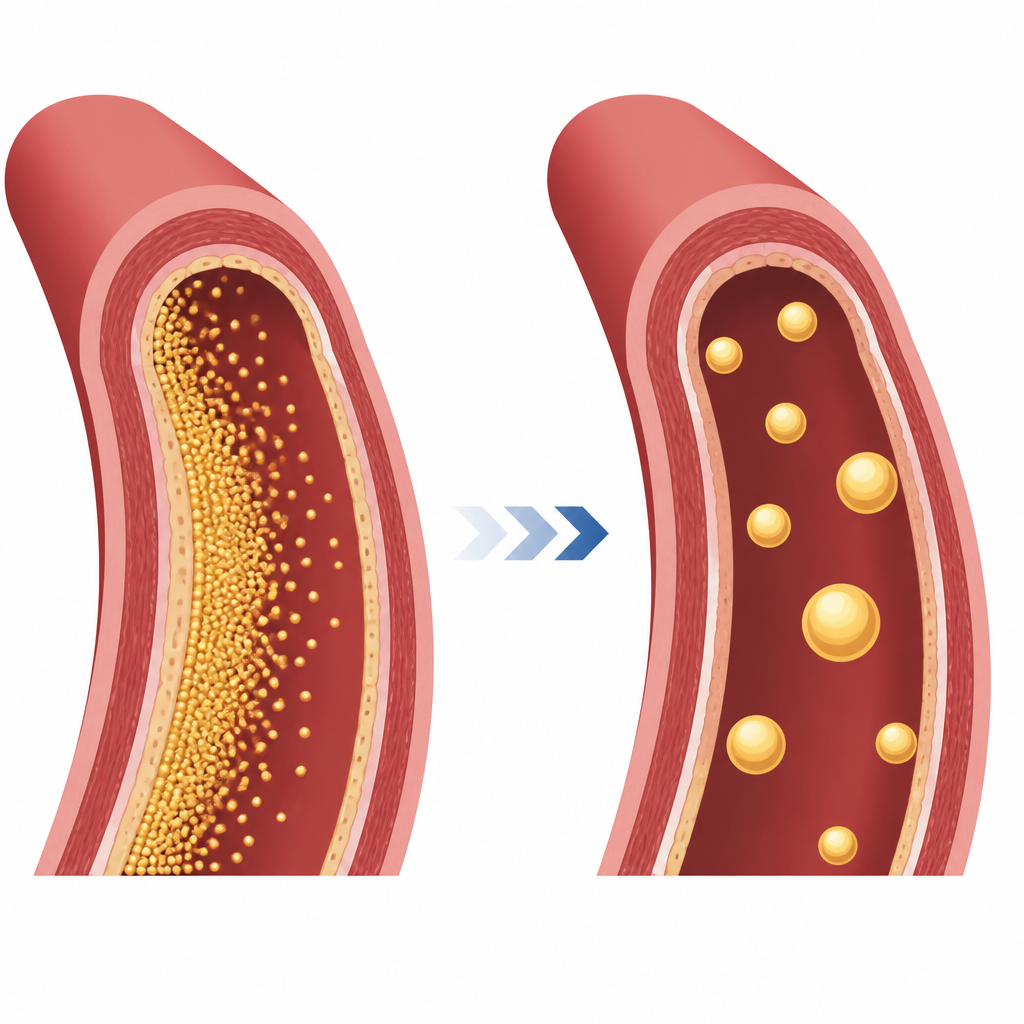
Cholesterol and other fats do not float freely in blood; they ride inside small packages called lipoproteins. One type, LDL, is often nicknamed bad cholesterol because it delivers cholesterol to tissues and can build up in artery walls. Another type, HDL, is known as good cholesterol because it helps carry cholesterol back to the liver for removal. But LDL itself is not all the same. Large, buoyant LDL particles are considered less harmful, while small dense LDL particles are more likely to slip into artery walls and trigger clogging and inflammation. Traditional blood tests cannot easily separate these different LDL types.
How the researchers studied the problem
To tease apart these differences, the authors analyzed blood samples from 11,551 adults who came for routine health checkups. They measured each person’s vitamin D level and then used a nuclear magnetic resonance technique to break LDL into six subclasses, from larger, lighter particles to the smallest and densest ones. At the same time, they recorded standard measures like total cholesterol, triglycerides, and HDL. Participants were grouped into four vitamin D ranges, from low to very high, and the team used statistical methods that accounted for age and sex to see how vitamin D status related to each type of blood fat.
Patterns linking vitamin D to blood fats
People with lower vitamin D levels tended to have higher triglycerides, a type of fat often linked to unhealthy diets and increased heart risk. As vitamin D levels rose from low to higher categories, triglyceride levels steadily fell. HDL showed the opposite pattern: those with higher vitamin D usually had more of this protective cholesterol. Total LDL cholesterol changed very little across vitamin D groups, which might suggest at first glance that vitamin D has little to do with LDL. However, the particle-level view told a different and more detailed story.
The role of small dense LDL particles
When the researchers looked at LDL subclasses, they found that the smallest, densest LDL particles were notably more common in people with low vitamin D. Levels of these small dense particles, labeled as the LDL-5 and LDL-6 groups, dropped as vitamin D increased. After adjusting for age and sex, higher amounts of these particles were linked to a lower chance of falling into a higher vitamin D category, whereas some of the larger LDL particles were slightly more common in people with better vitamin D status. In other words, even when overall LDL cholesterol did not change much, its internal makeup shifted toward a more harmful pattern in those lacking vitamin D.
What this means for heart health
To a lay reader, the main message is that people with lower vitamin D levels are more likely to show a blood fat pattern associated with greater heart risk: higher triglycerides, lower good cholesterol, and more of the particularly troublesome small dense LDL particles. This study cannot prove that vitamin D itself causes these changes, but it suggests that vitamin D deficiency tends to travel with a more dangerous form of cholesterol packaging. The work also shows that looking beyond simple cholesterol numbers to the fine details of LDL particle types can sharpen our picture of cardiovascular risk.
Citation: Şahin, F., Saral, N.Y., Toker, A. et al. Association between serum vitamin D levels and atherogenic lipid subfractions: insights from NMR-based lipid profiling in a large adult population. Sci Rep 16, 16109 (2026). https://doi.org/10.1038/s41598-026-42349-7
Keywords: vitamin D, cholesterol, small dense LDL, cardiovascular risk, lipid profile