Clear Sky Science · en
Machine learning algorithm reveals neurodevelopmental signatures of combined family income and neighborhood disadvantage in adolescents
Why Money and Neighborhoods Matter for Growing Brains
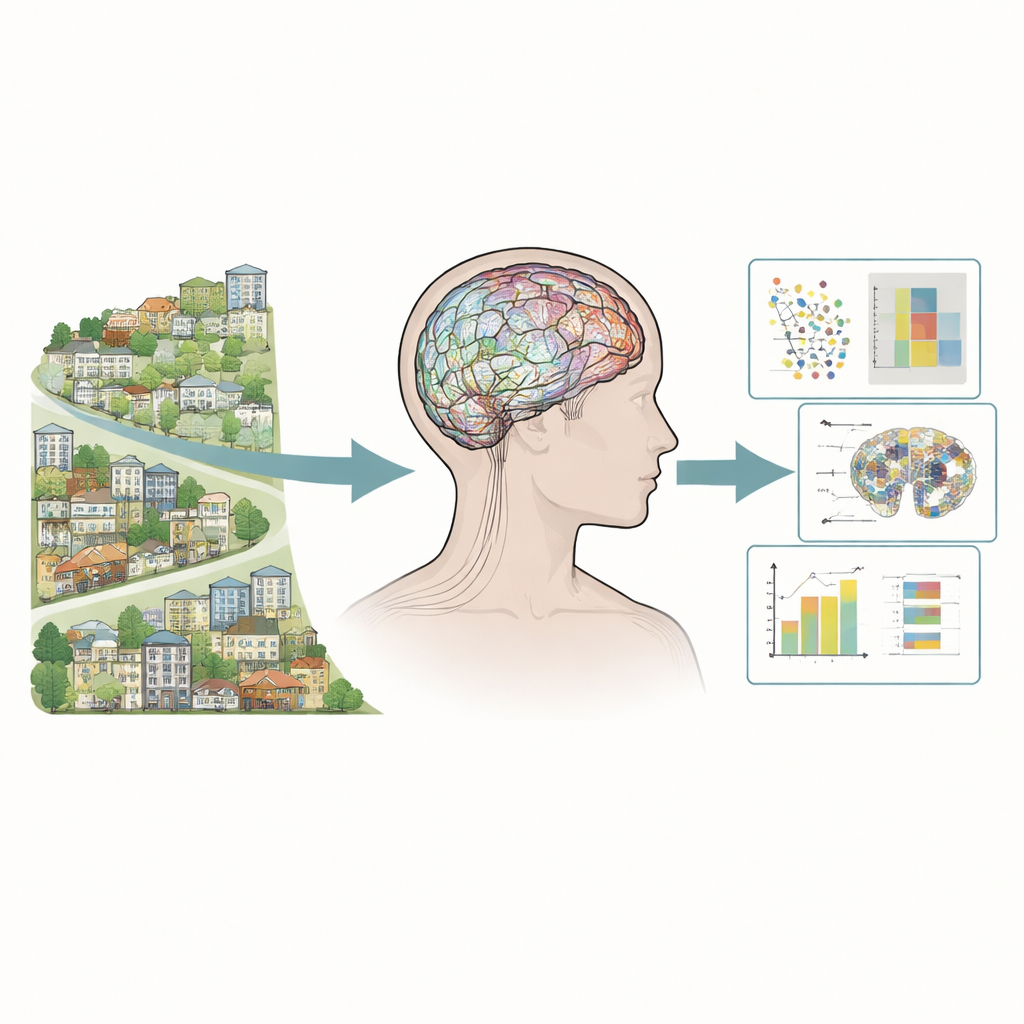
Why do children from wealthier families and safer neighborhoods so often do better in school and have fewer behavior problems? This study asks whether traces of a child’s family income and neighborhood conditions can actually be seen inside the brain. Using brain scans from thousands of U.S. adolescents and modern computer techniques, the researcher shows that the brain carries a surprisingly strong “imprint” of socioeconomic status—and that this imprint is tied to thinking skills and behavior.
Peeking Inside the Brains of Thousands of Teens
The work relies on the Adolescent Brain Cognitive Development (ABCD) Study, which is following more than 11,000 children across the United States. From this group, over 7,000 nine- and ten-year-olds had high-quality brain scans and complete background information. Families reported their total household income, and researchers linked each child’s home address to two neighborhood indicators: one that captures overall deprivation and another that focuses on opportunities important for children, such as access to good schools, parks, and health care. Together, these measures paint a rich picture of each child’s social and economic world.
Teaching Computers to Read Social Clues in the Brain
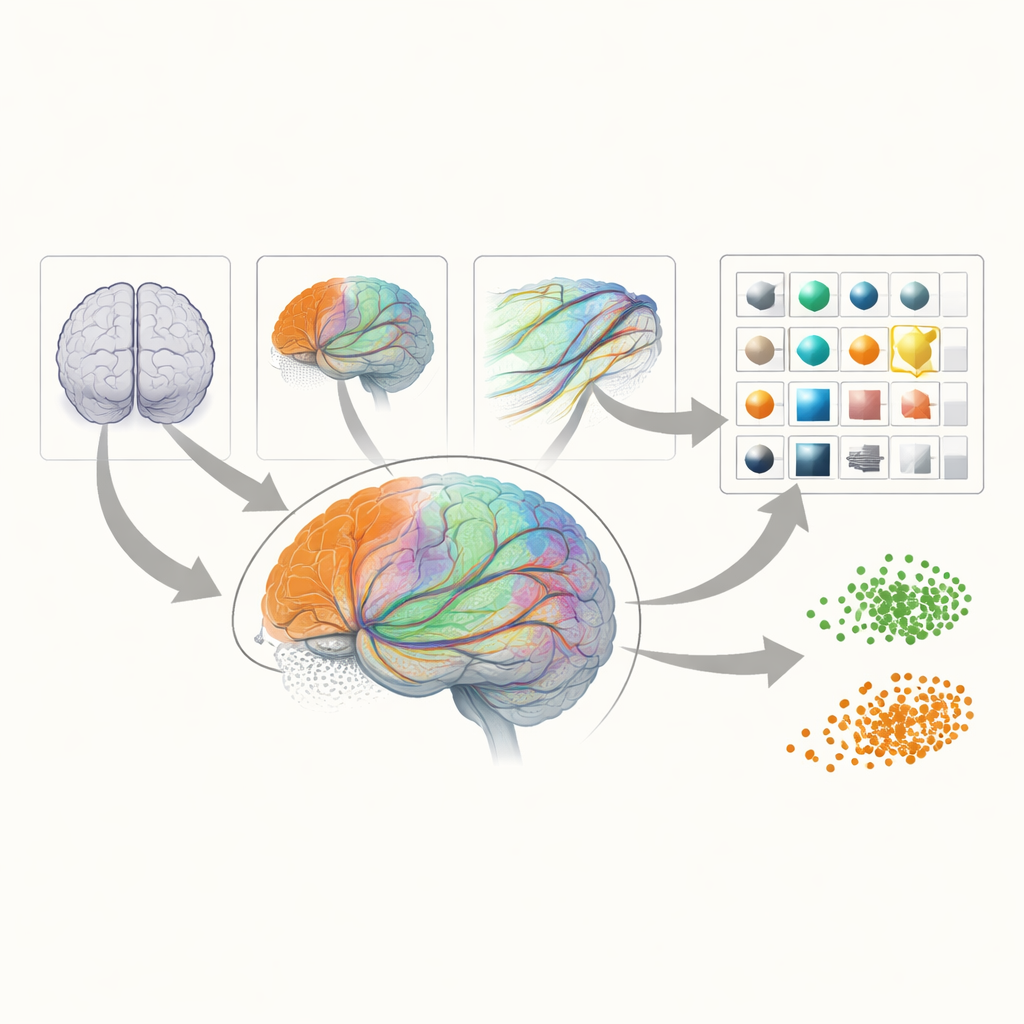
Instead of looking at one brain measure at a time, the study uses a machine learning method called elastic net, which can handle thousands of highly related brain features at once. Three kinds of brain data were fed into the models. Structural MRI measured the size and thickness of different brain regions; diffusion imaging tracked the integrity and organization of white matter, the wiring that links regions together; and resting-state scans captured how brain networks naturally communicate when a child is lying still. The computer models were trained on 80 percent of the sample and then tested on the remaining 20 percent, ensuring that results would generalize beyond the original group.
How Well the Brain Reveals Social Circumstances
The models could reliably distinguish children from higher- versus lower-income families and from more- versus less-disadvantaged neighborhoods. Using only brain data, the best-performing model correctly separated lower- and higher-income children roughly three-quarters of the time, which is similar to performance in other cutting-edge brain prediction studies. Adding information such as race and sex improved accuracy only slightly, suggesting that the brain itself holds robust clues about a child’s socioeconomic background. When the researcher focused on the most extreme comparisons—children from the bottom 10–20 percent of the income range versus those from the top 10–20 percent—accuracy climbed even higher, and then dropped steadily as the income groups being compared became more similar.
What Parts of the Brain Tell the Story
One of the most striking findings is that the brain’s wiring appears especially sensitive to social and economic conditions. Measures of white matter integrity, which reflect how well nerve fibers are organized and insulated, were often more informative than traditional measures of brain size. These differences were spread broadly across the brain but were particularly strong in connections linking the frontal lobes to deeper structures and to parietal and temporal regions near the side of the head. These areas support executive skills such as planning and attention, as well as language and social understanding. Neighborhood disadvantage, in contrast, was more closely tied to very global features, such as averages across an entire hemisphere, suggesting that some aspects of place affect brain development in a widespread way.
From Brain Differences to Everyday Thinking and Behavior
The study also checked whether the brain patterns linked to income and neighborhood showed up in everyday functioning. Across nearly all thinking tests and behavior ratings examined, children from lower-income families or more disadvantaged neighborhoods scored lower on language, memory, and problem-solving tasks, and higher on measures of attention difficulties and outwardly directed behavior. Differences were especially large—often about a full standard deviation—between the lowest and highest income groups. This means that the brain signatures identified by the machine learning models are not just abstract patterns in images; they correspond to meaningful differences in how children think, learn, and behave.
What This Means for Children and Society
Put simply, this research shows that growing up with fewer financial resources or in a disadvantaged neighborhood leaves a noticeable mark on the developing brain, especially on the brain’s wiring and on regions that support language and self-control. These brain differences are already detectable in late childhood and help explain well-known gaps in school performance and behavior. At the same time, prior work suggests that targeted supports—such as poverty reduction programs, enriched early education, and family-based training focused on caregiving and cognitive skills—can improve brain development and outcomes for children in low-income settings. The many pathways through which hardship can affect the brain also offer many chances to intervene, making these findings not only a warning about inequality but also a roadmap for change.
Citation: Hercules, K. Machine learning algorithm reveals neurodevelopmental signatures of combined family income and neighborhood disadvantage in adolescents. Sci Rep 16, 11344 (2026). https://doi.org/10.1038/s41598-026-42346-w
Keywords: socioeconomic status, adolescent brain, white matter, machine learning, neurodevelopment