Clear Sky Science · en
Parental knowledge and practices and associated factors of dental caries in school-age children in Debark Town, Northwest Ethiopia
Why Your Child’s Teeth Tell a Bigger Story
Tooth decay might seem like a small problem, but for school-age children it can mean pain, missed school days, and lifelong health issues. This study from Debark, a town in Northwest Ethiopia, looks beyond the dentist’s chair to ask a simple question with big implications: how much do parents actually know about protecting their children’s teeth, and do they put that knowledge into daily practice? The answers reveal a striking gap between what many parents understand and what really happens at home—and offer clues for improving children’s health in similar communities around the world.
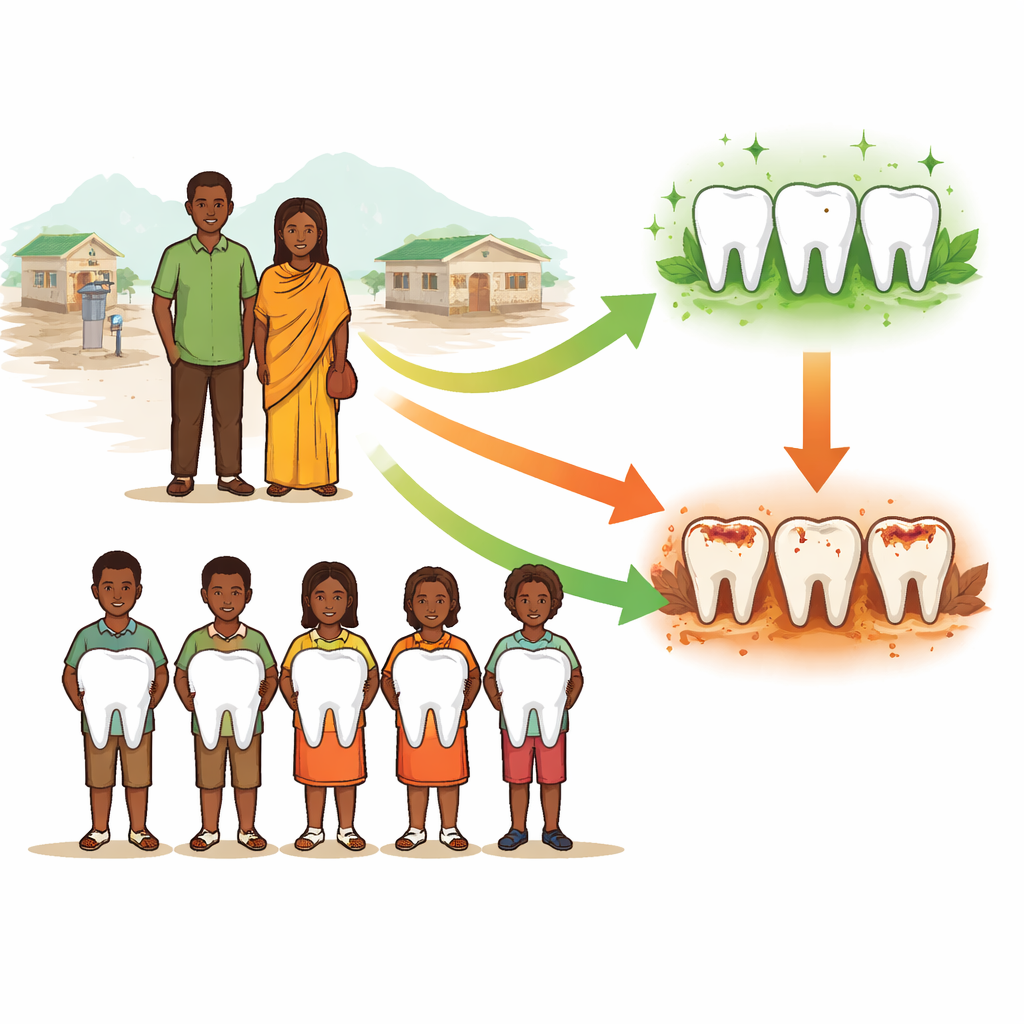
What Tooth Decay Really Means for Children
Tooth decay is more than just a cavity. It is one of the most common long-lasting diseases in children worldwide, driven by sugary diets, bacteria, and poor cleaning habits. When left untreated, it can cause pain, infections, trouble eating and sleeping, and difficulty concentrating in school. Treating bad teeth is also expensive and can strain family and national health budgets, particularly in low- and middle-income countries where regular dental care and fluoride toothpaste are harder to access. Because parents shape what children eat and how they clean their teeth, understanding parents’ habits and beliefs is essential for preventing this highly avoidable problem.
How the Study Was Carried Out
Researchers surveyed more than 600 parents or caregivers of school-age children living in Debark. Using a carefully translated and tested questionnaire, they asked about family background, what parents knew about tooth decay, and what they actually did at home to protect their children’s teeth. Questions covered everyday actions such as brushing, rinsing after meals, limiting sugary snacks, using fluoride toothpaste, and visiting a dentist. The team then used statistical methods to see which family characteristics—such as education, occupation, and dental visit history—were linked to better knowledge and better day-to-day care.
What Parents Know Versus What They Do
The study found that roughly seven out of ten parents had a good basic understanding of tooth decay. Most knew that brushing and rinsing after meals help, that sugary foods can damage teeth, and that fluoride toothpaste can protect them. Many also recognized that cavities are preventable. Yet when the researchers looked at what actually happened in daily life, less than half of parents showed good preventive habits. While many encouraged rinsing after meals and said they would seek help when a child had a toothache, fewer made sure their child used toothpaste regularly, helped with brushing, or arranged routine dental checkups. A large share of families had never taken their child to a dentist at all, and some still relied on traditional extractions or herbal remedies when problems arose.
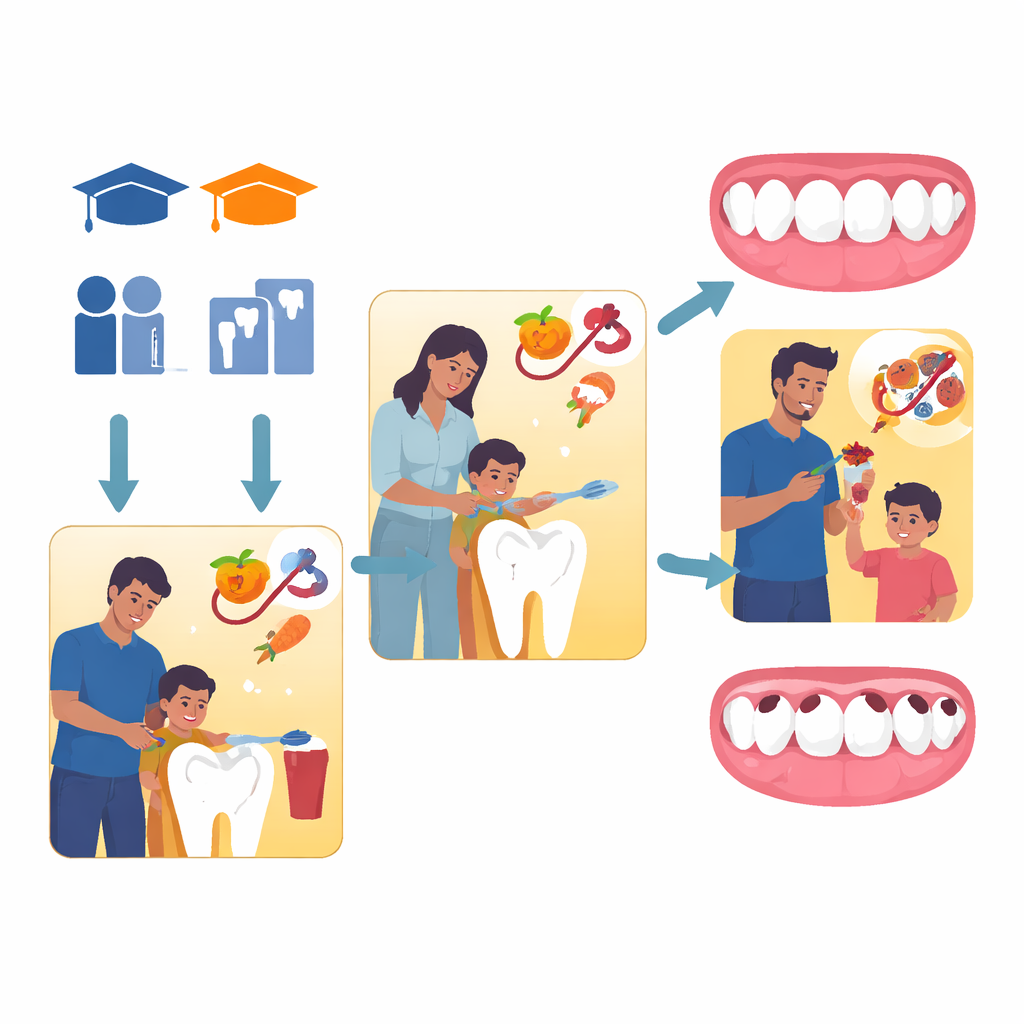
Why Education, Work, and Clinic Visits Matter
The gap between knowing and doing did not affect all families equally. Parents with little or no formal schooling were less likely to have strong knowledge about tooth decay and less likely to put preventive habits into practice. Mothers who worked outside the home tended to be better informed and more active in caring for their children’s teeth than mothers who stayed at home, likely because employment is often linked with higher education and broader exposure to health information. Families who had never visited a dentist showed particularly poor habits, suggesting that even occasional professional contact can reinforce the importance of brushing, limiting sweets, and early treatment.
Turning Awareness into Healthy Smiles
For families in Debark and similar communities, the message of this study is clear: understanding that sugar and poor brushing cause cavities is not enough on its own. Children’s teeth stay healthy when that knowledge is turned into steady routines—twice-daily brushing with fluoride toothpaste, rinsing after meals, limiting sweets, and regular dental checkups. The authors argue that community-based education, especially targeting parents with less schooling and fewer resources, along with programs that make dental visits more common and less intimidating, could help close the gap between what parents know and what they do. In simple terms, protecting a child’s smile requires not just information, but support that makes good habits the easy, everyday choice.
Citation: Mitiku Kidie, D., Kelkay, J.M., Guadie Kassie, D. et al. Parental knowledge and practices and associated factors of dental caries in school-age children in Debark Town, Northwest Ethiopia. Sci Rep 16, 12379 (2026). https://doi.org/10.1038/s41598-026-42344-y
Keywords: children’s dental health, parental oral hygiene practices, tooth decay prevention, Ethiopia, school-age children