Clear Sky Science · en
Increased angiogenesis-osteogenesis coupling in the endplate at early stages of intervertebral disc degeneration
Why Back Pain Starts So Early
Most of us think of low back pain as an inevitable part of getting older, but scientists are still uncovering how it actually begins inside the spine. This study looks at a paper-thin structure called the endplate, which sits between the soft disc and the hard vertebral bone. By watching how tiny blood vessels and bone-forming cells behave in mice, the researchers identify an early chain of events that may set the stage for lifelong disc problems and chronic back pain.
The Hidden Gateway in Your Spine
The intervertebral disc works like a cushion between the bones of the spine, letting us bend and twist while absorbing daily wear and tear. Each disc has a gel-like center, a tough outer ring, and an endplate that connects it to the neighboring vertebra. The disc itself has almost no direct blood supply, so it depends on the endplate to bring in nutrients and remove waste. When the endplate starts to change, the disc can slowly lose its health and structure, eventually leading to degeneration and pain. Yet this slim layer has often been overlooked compared with the rest of the disc.
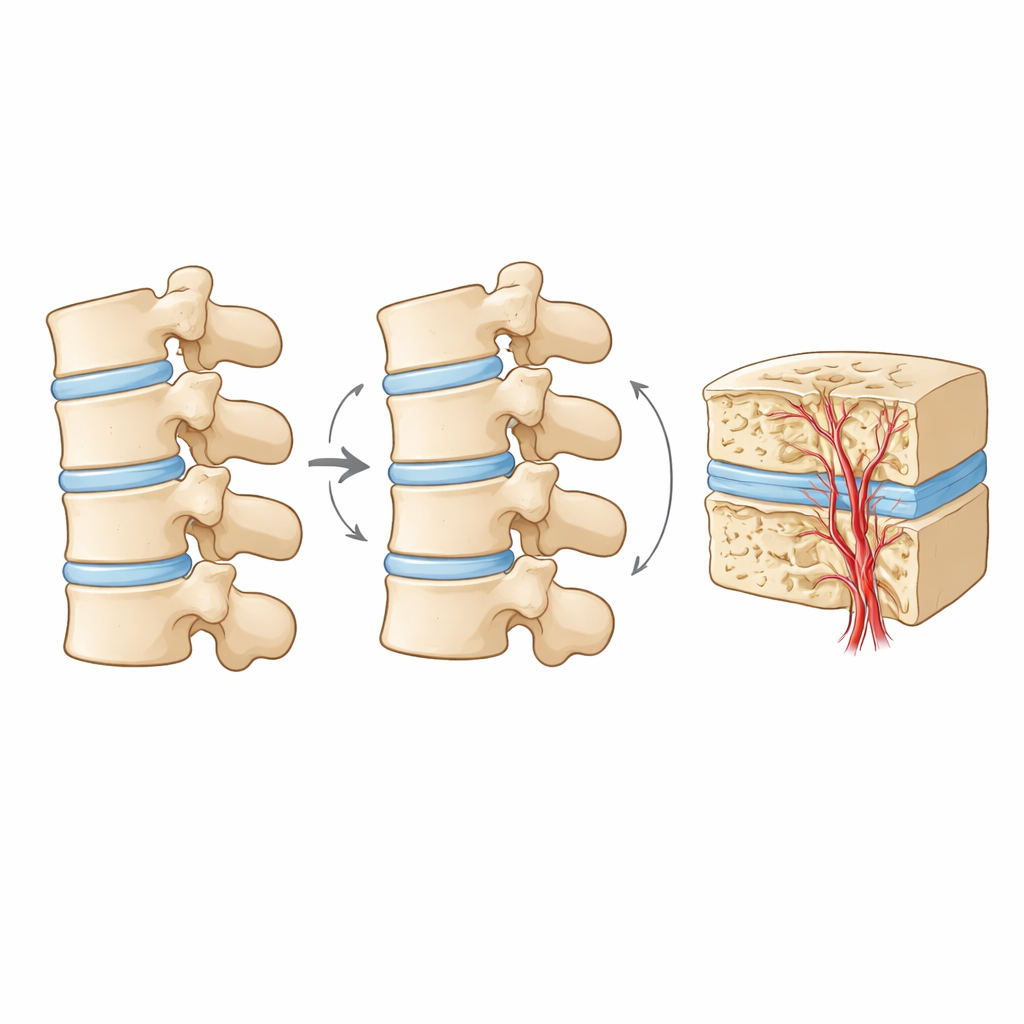
Making the Spine Unstable on Purpose
To probe what happens early in disc disease, the researchers used a mouse model called lumbar spine instability. By removing certain bony projections and ligaments from the back of the spine, they created abnormal motion and stress in the lower lumbar region, similar to what might occur after injury or long-term overloading in people. They then followed the animals for two and four weeks, using high-resolution 3D X-ray scans and classic tissue stains to assess how different parts of the disc changed over time. They found that the upper (cranial) endplate of one key disc level, L4/5, showed the most obvious and earliest signs of damage, including more cavities and signs of stiffening and scarring in the cartilage.
Bone-Building Cells Crowd Around Blood Vessels
The team focused on two major players: special blood vessels known as type-H vessels, and bone-related cells marked by a protein called Osterix. In healthy bone, type-H vessels sit near stem cells and guide normal bone growth. In this study, the scientists used thick 3D fluorescent imaging to map both the vessels and Osterix-positive cells throughout the endplate. Surprisingly, the total volume of type-H vessels did not rise much during the first four weeks of instability. What did change was the behavior of the bone-forming cells. By week four, there were many more Osterix-positive cells in the affected endplate, and detailed distance measurements revealed that a large fraction of them clustered within just a few micrometers of the nearby vessels.
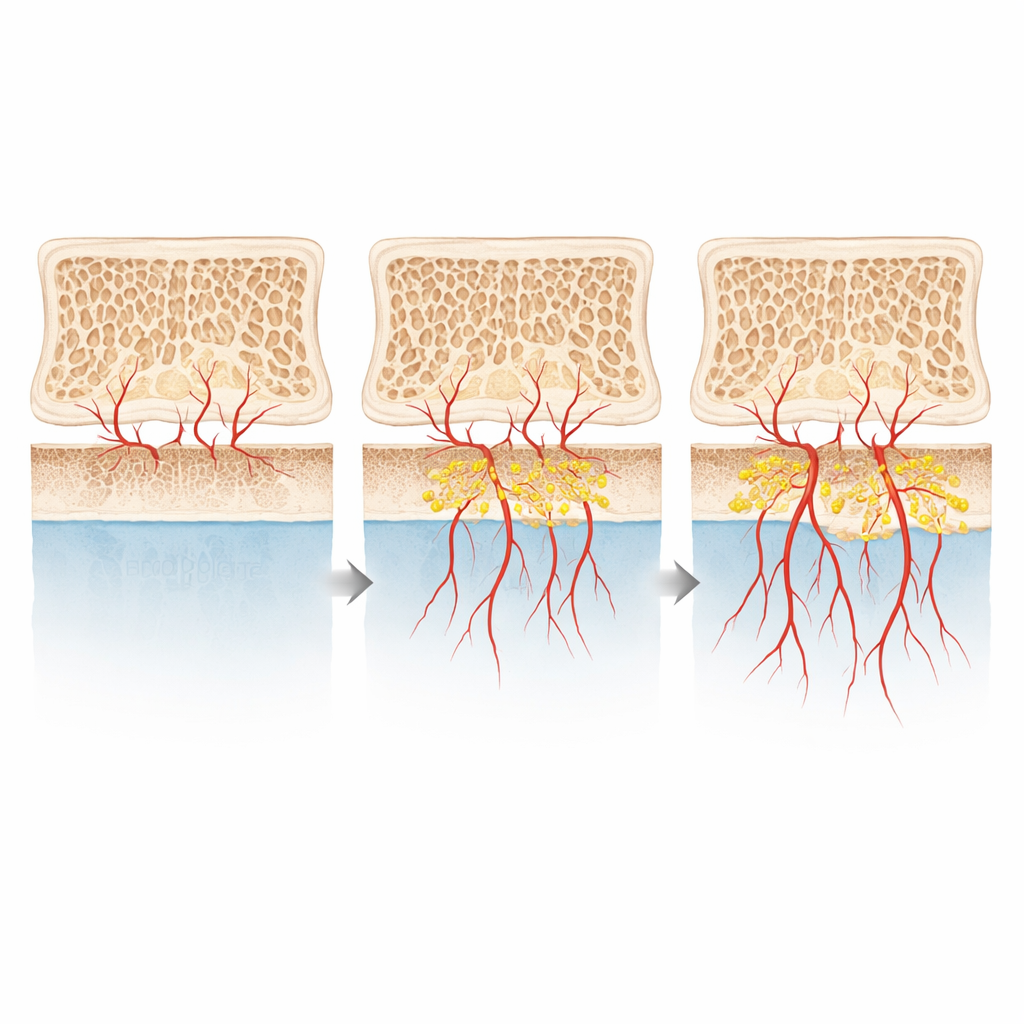
An Early, Tight Partnership That Drives Damage
By carefully analyzing the 3D spacing between vessels and cells, the researchers showed that mechanical instability strengthened the “coupling” between blood vessels and osteogenic cells in the endplate. Even without a big jump in vessel volume, more bone-forming cells were being drawn into the vessel-rich zones and attaching closely along the vessel surfaces. This pattern mirrors what has been seen in long bones during growth and repair, where vessel–cell partnerships power rapid bone formation. In the endplate, however, this same partnership appears harmful: it promotes unwanted bone growth in a region that should remain mostly cartilage, leading to stiffening, blocked nutrient flow, and a disc that is more vulnerable to degeneration.
What This Means for Preventing Back Pain
The study suggests that one of the earliest warning signs of disc trouble is not simply the growth of new vessels, but the rapid gathering of bone-producing cells around existing vessels in the endplate under abnormal mechanical stress. This vascular–bone coupling begins before full-blown structural damage is obvious, highlighting a narrow window when targeted treatment might stop or slow disc degeneration. Approaches that gently correct spinal loading, or that interrupt the chemical signals drawing osteogenic cells to vessel niches, could help preserve the endplate and keep the disc healthier for longer—potentially delaying or reducing chronic low back pain.
Citation: Feng, S., Liang, Y., Lian, Q. et al. Increased angiogenesis-osteogenesis coupling in the endplate at early stages of intervertebral disc degeneration. Sci Rep 16, 11993 (2026). https://doi.org/10.1038/s41598-026-42343-z
Keywords: low back pain, intervertebral disc degeneration, spinal endplate, angiogenesis and bone formation, lumbar spine instability