Clear Sky Science · en
Four year mortality and quality of life after ICU treatment for COVID 19 related acute respiratory distress syndrome
Why this still matters after the pandemic
For many people, COVID-19 is now part of the past. But for those who nearly died in intensive care units (ICUs) with severe lung failure, the story did not end when they left the hospital. This study follows such patients in Poland for four years to ask two simple but crucial questions: how many are still alive, and what kind of life are they living? The answers shed light on the hidden, long-lasting toll of critical COVID-19 and what health systems should do next.
Who was followed and how
The researchers looked at 283 adults treated in a temporary ICU set up specifically for COVID-19 in Zielona Góra, Poland, during the winter and spring waves of 2020–2021. All had life-threatening lung failure that required a breathing machine. First, the team used medical records to track who survived the first month and the next four years. Then, for those still alive after four years, they conducted structured telephone interviews to learn about daily functioning, breathing problems, tiredness, sleep, memory and concentration, mood, ability to work, and financial strain. Standard questionnaires commonly used in health research were adapted for brief, patient-friendly interviews.
What happened to survival over four years
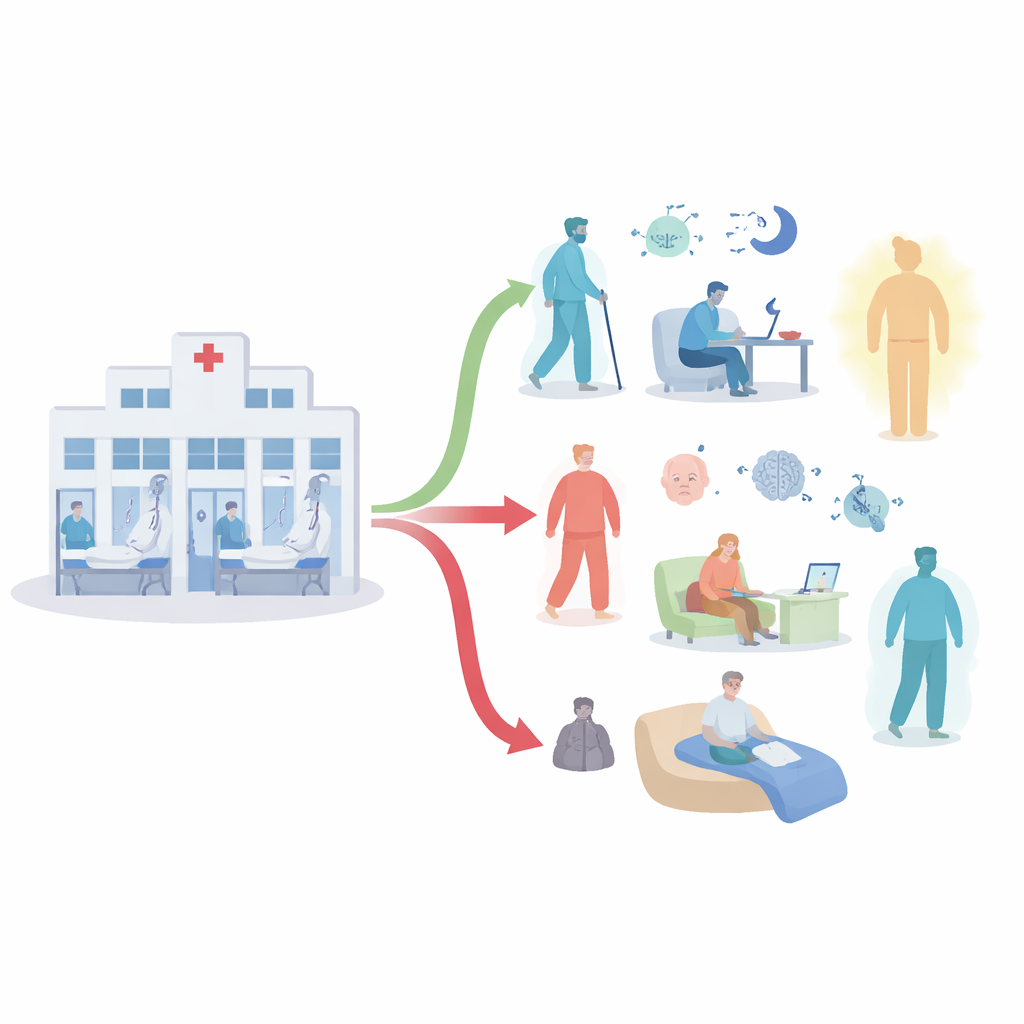
The study shows that the danger did not end when patients left intensive care. Within 30 days of ICU admission, nearly one in three patients (29%) had died. Among those who survived that first month, about one in five died over the following four years. In total, almost half of the original group (45%) had died by year four. Older age stood out as a strong predictor of death both early and late: each additional year of age nudged the risk upward. A higher white blood cell count at ICU admission, a marker of strong inflammatory response, was also linked to dying within the first month. In contrast, many other blood tests and detailed ICU measurements added little extra predictive power once age and inflammation were considered.
Life after ICU: ongoing limits and hidden burdens
Among the 157 people confirmed alive at four years, 81 completed the phone interview. Many described a life that was better than they had feared but still far from their pre-COVID state. About one in three reported at least some ongoing limitation in daily activities, and nearly half said they lived with chronic pain or discomfort. More than a quarter had persistent, clinically relevant fatigue, and almost half reported trouble sleeping. Many also noted problems with attention or memory, and lasting shortness of breath. These symptoms were not just annoyances: people with more severe tiredness, breathing problems, cognitive complaints, or who had not returned to full-time work scored clearly lower on overall quality-of-life measures that combine length and quality of life into a single number. The researchers also built a simple six-point “impairment score” counting major problems such as fatigue, breathlessness, poor sleep, and reduced work ability. Patients with higher scores had distinctly worse long-term quality-adjusted life years.
Work, rehabilitation, and money worries
Severe COVID-19 also left a mark on jobs and finances. Of those who had been working full time before they fell ill, around 15% had not returned to full-time work four years later. More than a third of all respondents had been re-hospitalized at least once. Only 39% reported receiving any rehabilitation, despite international recommendations for post-ICU recovery programs. Those who did attend rehabilitation actually reported lower quality-of-life scores, most likely because they were more impaired to begin with and therefore more likely to seek or be offered therapy. Using national reimbursement data, the authors made a rough calculation of the cost of ICU care per quality-adjusted life year gained. Even with its limitations, this estimate suggested that, in Poland, life-saving ICU care for these patients remained within commonly accepted cost-effectiveness thresholds.
What this means for patients and health systems
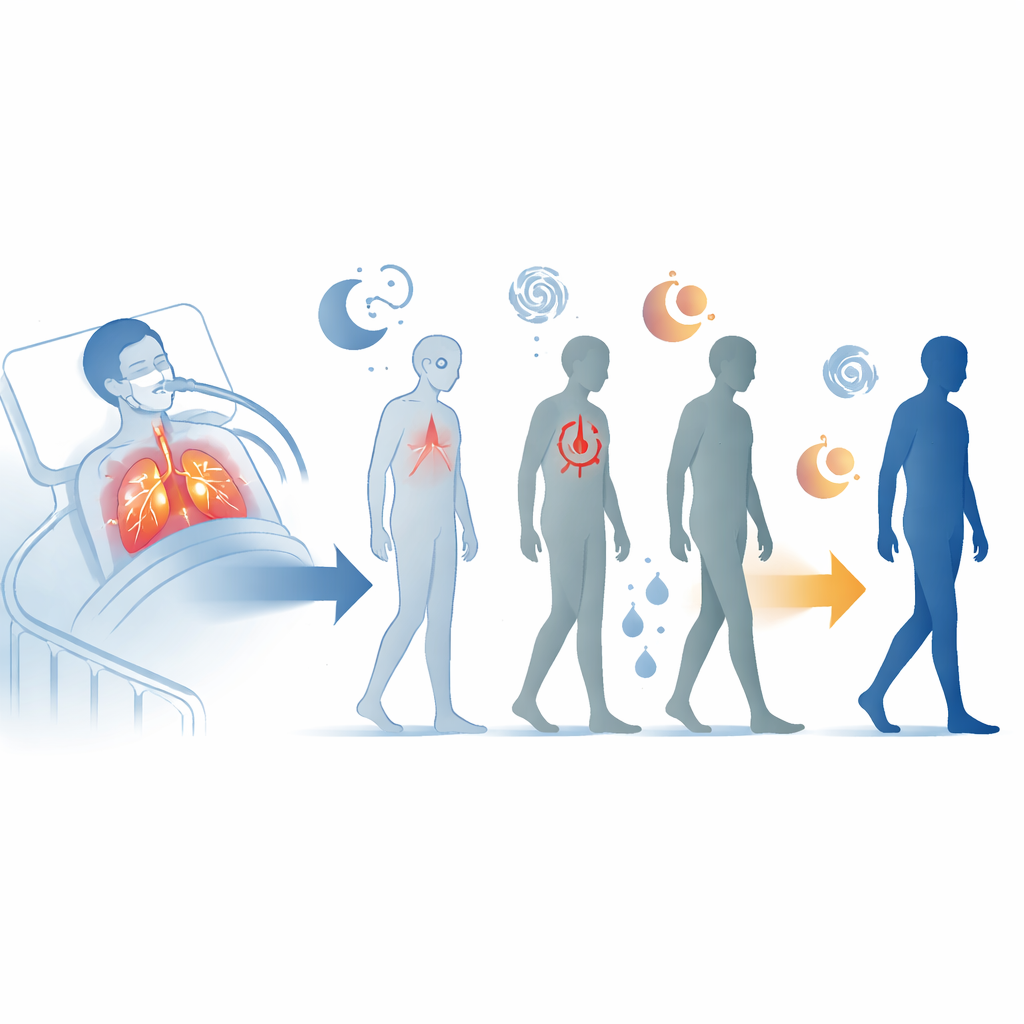
This study makes clear that surviving critical COVID-19 is only the first step. Years later, many former ICU patients still carry a heavy burden of breathlessness, fatigue, poor sleep, pain, and cognitive difficulties, and some never return to their previous work or independence. Simple factors measured on the day of ICU admission—especially age and signs of intense inflammation—help explain who is most at risk of dying, but they do not capture the full story of living with long-term consequences. The authors argue that health systems should not stop care at the hospital door. Instead, they call for structured, multidisciplinary follow-up that includes physical and breathing rehabilitation, mental health support, and help with returning to work and managing financial strain. In short, the legacy of severe COVID-19 extends well beyond infection, and caring for these survivors requires long-term planning, not crisis-only responses.
Citation: Zawadzki, J., Kania, J., Murkos, M. et al. Four year mortality and quality of life after ICU treatment for COVID 19 related acute respiratory distress syndrome. Sci Rep 16, 11510 (2026). https://doi.org/10.1038/s41598-026-42341-1
Keywords: COVID-19 ICU survivors, long COVID, ARDS outcomes, post-intensive care syndrome, rehabilitation after critical illness