Clear Sky Science · en
Structure, evolution, phylogeny, and analysis of domain-deficient genes in the IQD gene family of Brassica juncea
Why mustard genes matter for everyday life
Brown mustard is more than a spicy condiment. It is a major oilseed crop, a promising green fertilizer, and a natural tool for cleaning metal‑polluted soils. This study looks deep inside mustard cells to examine a large group of genes, called the IQD family, that help plants shape their organs and cope with harsh conditions such as excess zinc in the soil. By mapping and comparing these genes across the mustard genome, the authors reveal how they evolved, how they work, and why even seemingly “damaged” versions of these genes may still be important for plant health and environmental resilience.
Tracing a big family of helper genes
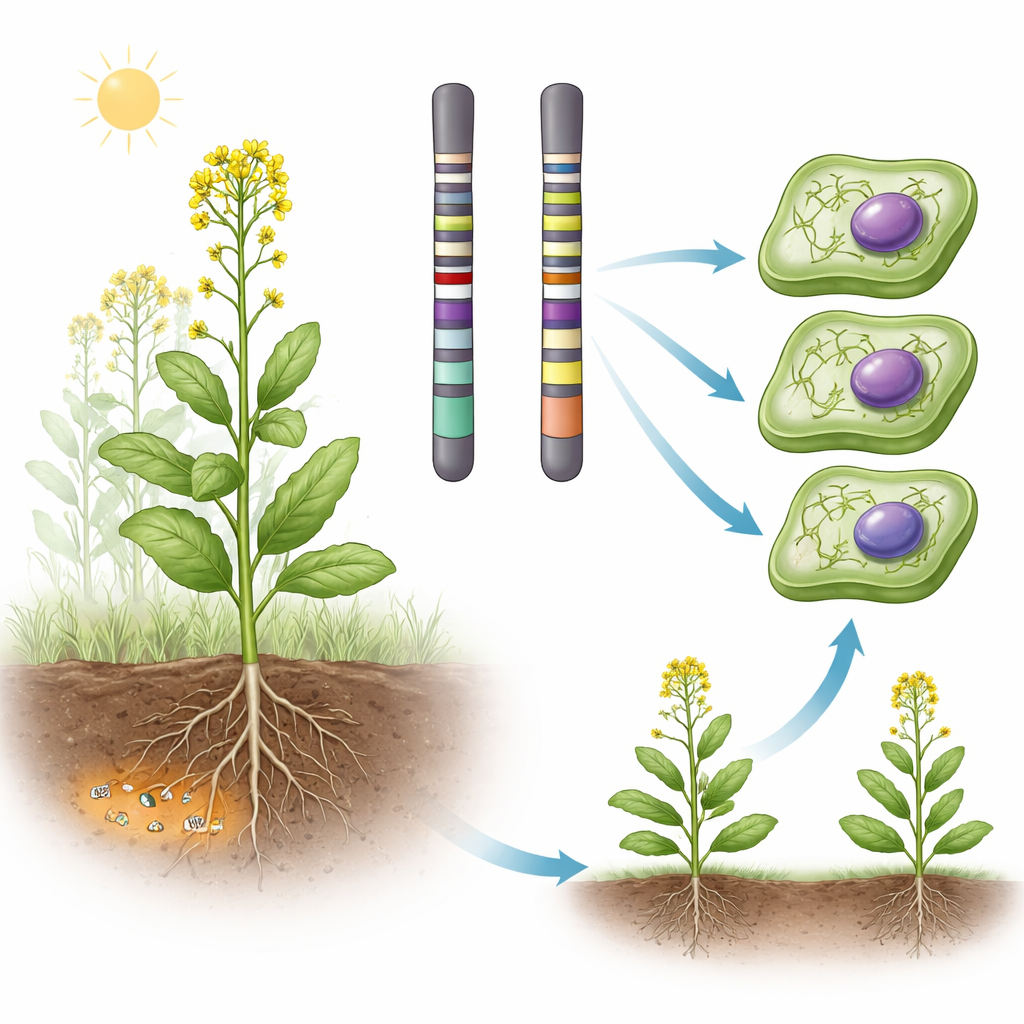
The researchers began by scanning the complete genome of brown mustard (Brassica juncea) using known IQD genes from the model plant Arabidopsis as guides. They identified 107 IQD genes spread across 18 chromosomes, a relatively large number compared with many other crops. Most of the proteins encoded by these genes are water‑loving, slightly basic molecules that tend to reside in the cell nucleus or in energy‑related compartments like chloroplasts and mitochondria. This broad spread across the genome and inside the cell hints that IQD proteins form a flexible toolkit for coordinating growth and responding to changing conditions.
Family history written in chromosomes
To understand how this gene family arose, the team reconstructed its evolutionary tree and examined how the genes line up across related species. They found that mustard IQD genes fall into five major subgroups, mirroring patterns seen in other plants. Most new IQD copies appear to have arisen when large segments of chromosomes were duplicated and shuffled, rather than through single‑gene copying. When the authors compared mustard with Arabidopsis and close relatives like Chinese cabbage and broccoli, they found hundreds of matching IQD pairs, suggesting that many of these genes kept similar roles across species. Calculations of mutation patterns showed that almost all IQD genes have been held under strong “purifying selection,” meaning harmful changes were weeded out over time to preserve essential functions.
Hidden switches for growth and stress
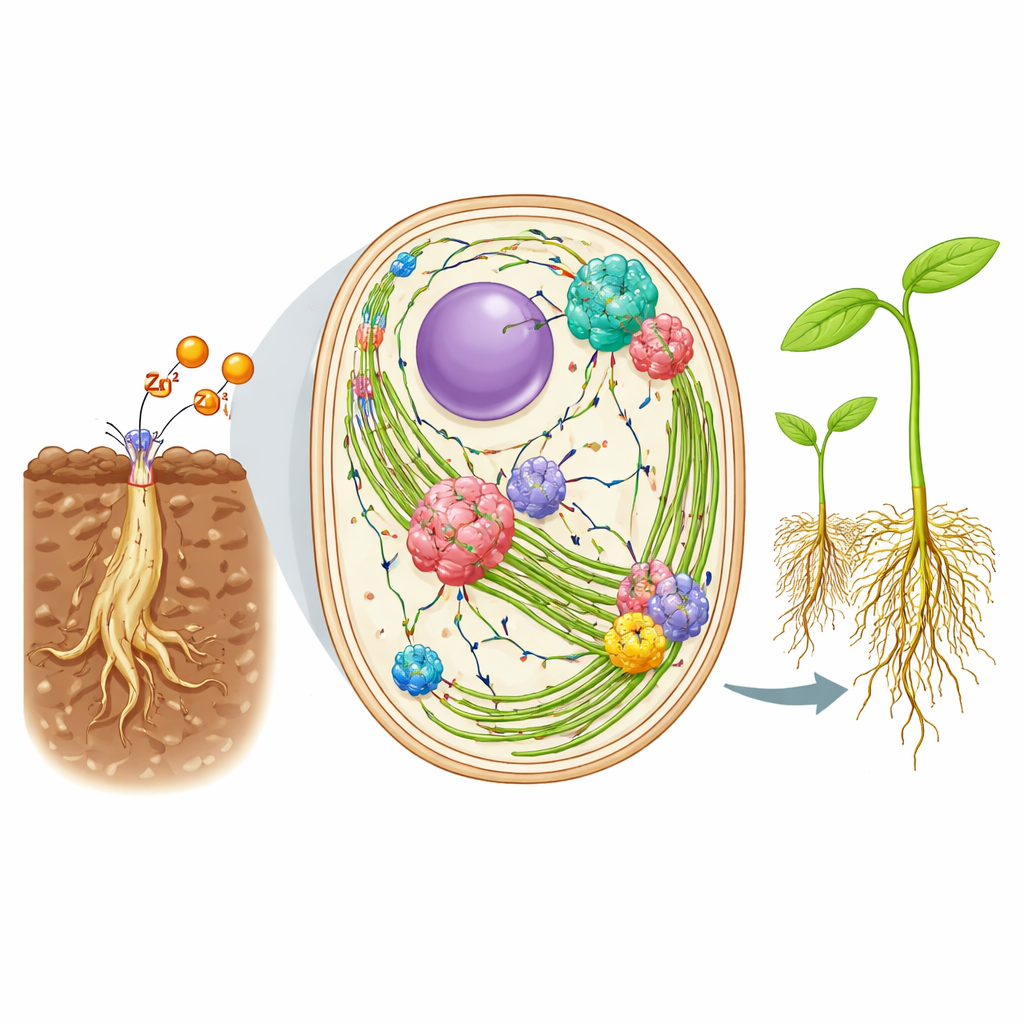
Next, the study zoomed in on the control regions that sit in front of IQD genes and act like tiny switches responding to signals. These promoter regions were packed with DNA elements tied to light responses, plant hormones, development, and different kinds of stress, including cold, drought, and low oxygen. Many elements were linked to hormone pathways that manage growth and survival, such as abscisic acid and jasmonate. Using known protein‑interaction data from Arabidopsis, the authors predicted that mustard IQD proteins connect with several regulators that fine‑tune the cell’s internal scaffolding and stress defenses. Gene‑function annotations supported this picture: IQD proteins are especially enriched for binding other proteins and clinging to microtubules, the stiff filaments that help cells maintain shape and guide growth.
Where and when the genes turn on
Public gene‑expression data showed that most IQD genes are active in more than one part of the plant, but roots and stems generally display the strongest signals, while leaves are often quieter. This pattern fits with IQD roles in shaping organs and supporting transport tissues. To see how the genes respond to a real‑world challenge, the researchers exposed mustard plants at the bolting stage to high levels of zinc, a metal that is essential in small doses but harmful in excess. After one day, six selected IQD genes showed clear shifts in activity in both roots and leaves. Some were turned down, some up, and one responded strongly in both tissues, pointing to a mix of positive and negative regulators that together help the plant adjust to zinc stress.
Surprising value in imperfect genes
An intriguing twist in the story involves “domain‑deficient” IQD genes—those missing one or both of the classic building blocks that define this family. Rather than discarding them as broken pseudogenes, the authors examined their structures, control elements, interaction partners, and expression patterns. Many of these genes still carry exons, contain growth‑ and stress‑related control elements, appear in predicted protein‑interaction networks, and are switched on in specific tissues or under zinc stress. Some even occupy central positions in interaction maps. Together, these clues suggest that trimmed‑down or altered IQD genes may have evolved new, more specialized tasks while still plugging into the same cellular wiring.
What this means for crops and clean soils
In plain terms, this work shows that brown mustard carries a rich, finely tuned network of IQD genes that help organize cell structure and manage responses to tough environments, including metal‑polluted soils. The genes are ancient, carefully preserved, and wired into many layers of growth and stress‑response signaling. Even versions that look incomplete can remain active and useful. Understanding this network opens the door to breeding or engineering mustard and related crops that grow better, yield more oil, and tolerate toxic metals more safely—benefiting both agriculture and environmental cleanup efforts.
Citation: Hu, Y., Song, X., Chen, X. et al. Structure, evolution, phylogeny, and analysis of domain-deficient genes in the IQD gene family of Brassica juncea. Sci Rep 16, 11773 (2026). https://doi.org/10.1038/s41598-026-42340-2
Keywords: Brassica juncea, IQD genes, plant stress tolerance, microtubules, zinc pollution