Clear Sky Science · en
Smart city traffic optimization using IoD and IoT integration
Why Smarter Streets Matter
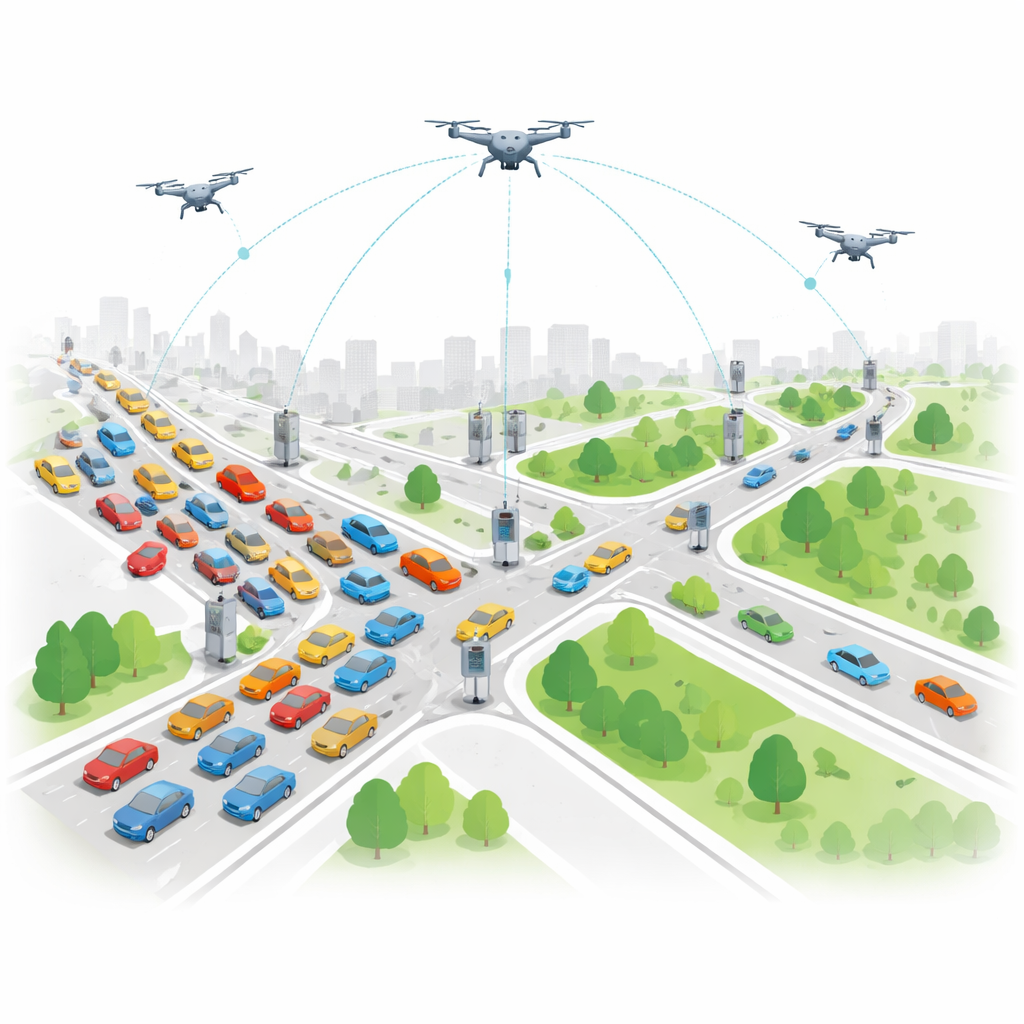
Anyone who has sat in a rush‑hour traffic jam knows how frustrating – and wasteful – it can be. Gridlock steals time, burns extra fuel, and worsens city air. This study explores how a combination of ground sensors and camera‑equipped drones could help cities manage traffic more like a living system: constantly sensing what is happening on the roads and redirecting vehicles before delays and pollution spiral out of control.
How the City Learns What Is Happening
The authors imagine a city where the roads themselves are dotted with simple electronic eyes and ears. These small devices count cars, gauge their speed, and estimate how much exhaust they produce. Nearby roadside boxes act as local hubs, gathering this information and spotting trouble, such as a sudden slowdown or a growing queue at a junction. Instead of relying on fixed timing plans for traffic lights or waiting for human reports of crashes, the system continuously updates its picture of city traffic in real time.
Adding Eyes in the Sky
What makes this approach stand out is the use of drones as flying communication helpers. Many current traffic systems struggle when signals must be passed over long distances or around buildings that block radio links. In this work, drones hover high above key areas and act like mobile antenna masts. They relay alerts between roadside hubs and vehicles, extending coverage to areas that would otherwise be poorly connected. The team carefully planned where to place these drones using a swarm‑inspired search method that tries many possible positions and keeps the ones that give the widest coverage with the fewest aircraft.
Helping Drivers Take Cleaner, Faster Routes
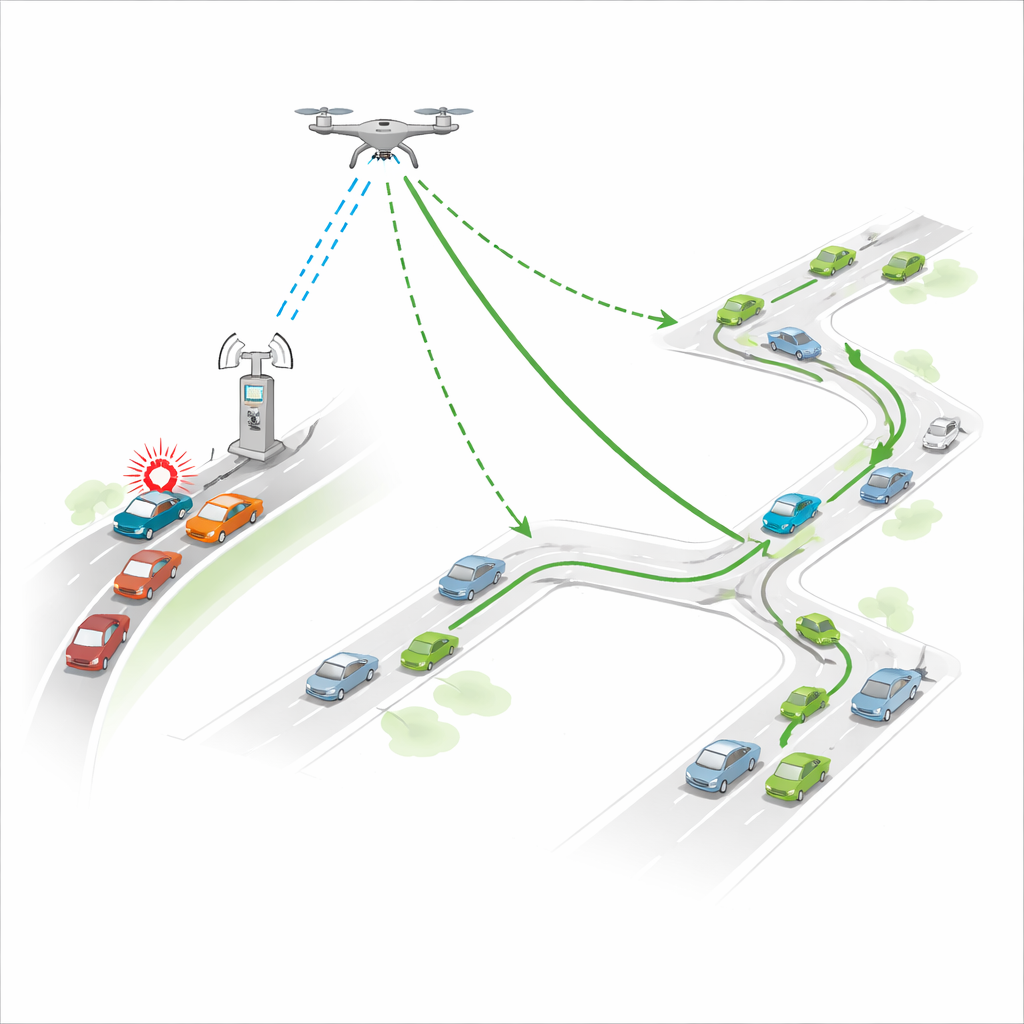
Once an accident or heavy congestion is detected, the system does more than simply warn drivers to be careful. Each equipped vehicle can automatically rethink its route using a digital map. The routing method weighs two things at once: how long the trip will take and how much exhaust it is likely to produce, including extra emissions caused by stopping and starting in queues. The researchers deliberately gave more weight to cleaner travel than to pure speed, so that the suggested detours cut pollution without making journeys unreasonably long.
Testing the Idea in Real City Layouts
To see whether this concept would work beyond theory, the authors built detailed computer models of traffic in two Middle Eastern cities, Dammam in Saudi Arabia and Doha in Qatar, based on open street maps. Thousands of simulated cars, trucks, and buses moved through these networks under typical busy‑hour conditions. The researchers compared three setups: one where vehicles could only talk directly to each other, one with added roadside hubs, and a full system that also included drones. In the most advanced case, alerts about crashes or jams traveled more quickly across the network, so vehicles could divert earlier and avoid forming long queues.
What the Numbers Say
The results were striking. When drones joined the ground sensors and roadside hubs, total travel time for all vehicles dropped by roughly one‑quarter to nearly one‑half, depending on the city and number of drones. At the same time, overall exhaust emissions – including major pollutants like carbon dioxide and nitrogen oxides – fell by similar or even larger fractions, up to about 41 percent in Dammam and 49 percent in Doha. Adding more drones helped until the whole road network was well covered, after which extra aircraft brought little gain but did increase computing effort, suggesting that a modest fleet can be enough.
What This Means for Everyday Drivers
For city dwellers, the study’s message is simple: better information, shared quickly, can make traffic both smoother and cleaner. By linking low‑cost road sensors with intelligent drone relays and route guidance that cares about pollution as well as speed, cities could cut wasted time in jams and reduce harmful exhaust without rebuilding their streets. While real‑world deployment would still need to tackle issues like radio interference, drone regulations, and mixed driving styles, this work shows a practical path toward streets that adapt on the fly, easing the daily commute and improving the air we breathe.
Citation: Yusuf, A., Sheltami, T.R., Mahmoud, A. et al. Smart city traffic optimization using IoD and IoT integration. Sci Rep 16, 11989 (2026). https://doi.org/10.1038/s41598-026-42334-0
Keywords: smart traffic, drones, urban mobility, vehicle rerouting, emissions reduction