Clear Sky Science · en
Evaluation of a sensitive real-time PCR assay for Group B Streptococcus detection in vaginal-rectal swab
Why this matters for mothers and babies
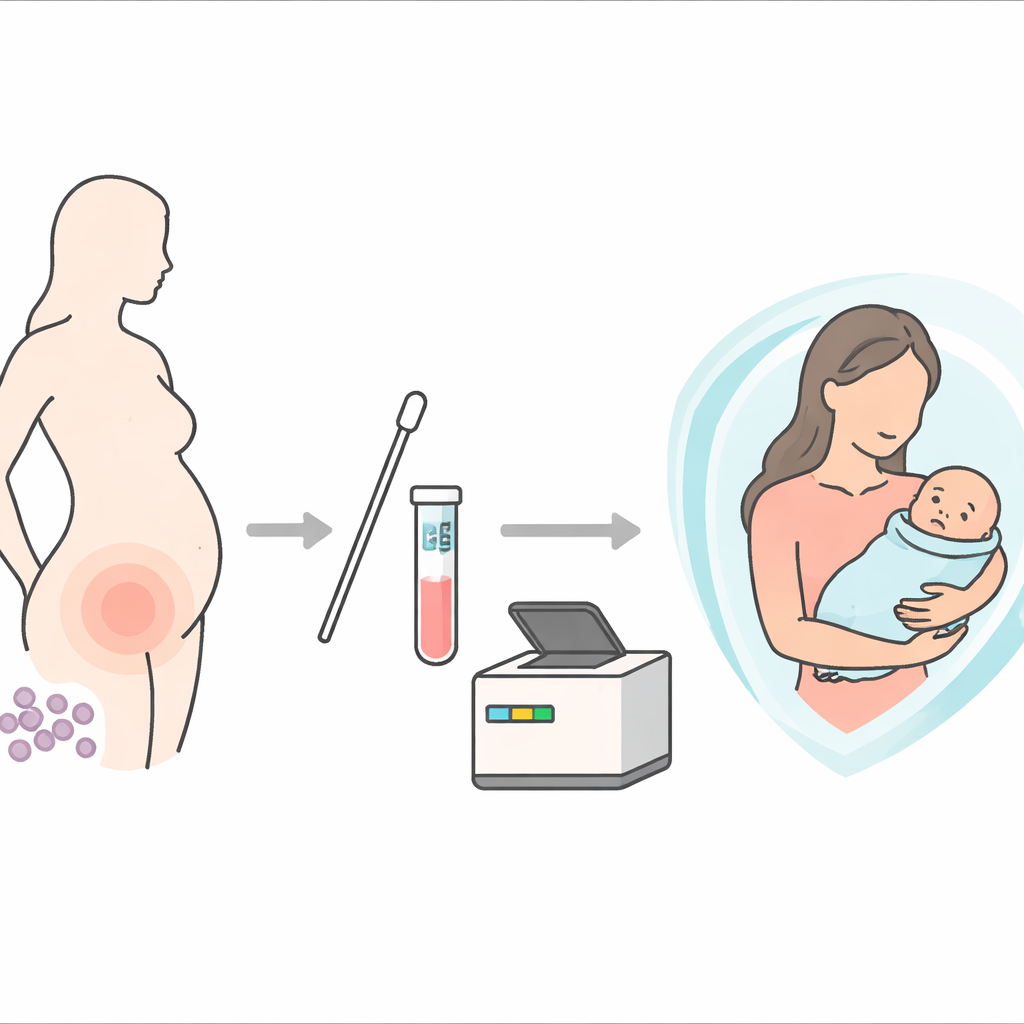
Group B Streptococcus (GBS) is a common bacterium that can quietly live in a pregnant woman’s birth canal and intestines. Most carriers feel completely healthy, but during childbirth the germ can pass to the newborn and cause life-threatening infections such as sepsis and meningitis. Doctors therefore try to find out before or during labor which women carry GBS. This study from a hospital in Qingdao, China, asks a practical question with real consequences for families: can a faster genetic test reliably spot GBS so that babies get timely protection without unnecessary antibiotics?
A hidden germ with high stakes
GBS colonization means the bacterium is present in the vagina, rectum, or nearby areas of a pregnant woman, even if she has no symptoms. Without preventive treatment, about half of babies born to colonized mothers are exposed, and 1–2% of these infants may develop serious early infections. To reduce this risk, guidelines in many countries recommend that all pregnant women be screened for GBS late in pregnancy and that those who test positive receive antibiotics during labor. The challenge is that the traditional lab method—growing the bacteria in culture—can miss some carriers and usually takes one to three days for results, which is too slow in urgent situations such as early labor or ruptured membranes.
From slow growth to fast gene reading
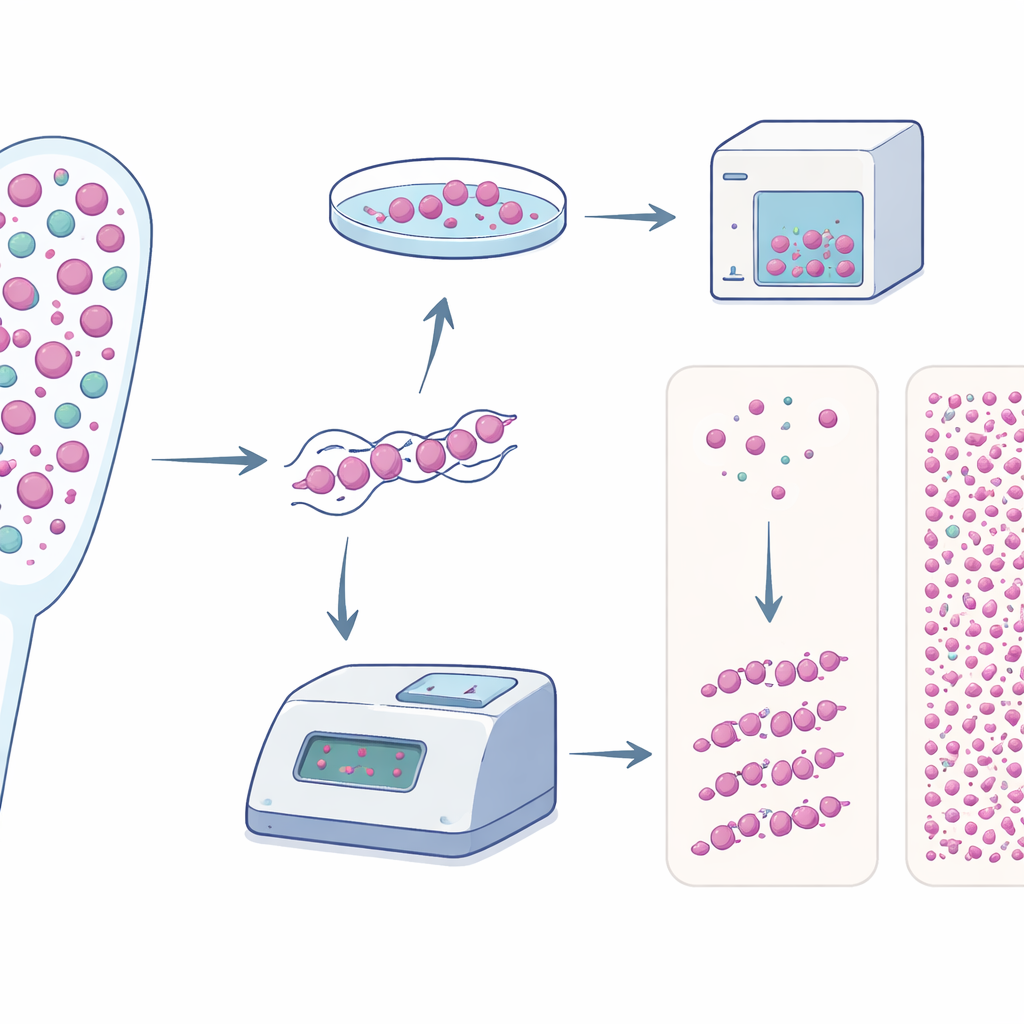
In this study, 301 women at 35–37 weeks of pregnancy had swabs taken from both the vagina and rectum. One swab was used for the standard culture method, which involves first placing the sample in an enrichment broth to help any GBS present multiply, then transferring it to a blood agar plate and incubating again before inspecting colonies. The other swab was used for a commercial real-time PCR test, which looks for specific pieces of GBS genetic material. The researchers examined the PCR test in two ways: used directly on the swab suspension, and used after an enrichment step similar to culture. When the three methods disagreed, the team used DNA sequencing as a tie-breaker to decide whether GBS was truly present.
How the new test performed
Overall, about 8.6% of the women in this Chinese cohort carried GBS in late pregnancy. The direct real-time PCR test found more positives (11.6%) than either enriched PCR (8.9%) or culture (6.9%). When compared to a combined reference that included culture plus sequencing, the direct PCR test correctly identified 96% of true carriers and correctly reassured 96% of non-carriers. The enriched PCR version showed similar sensitivity (also about 96%) but even higher specificity at roughly 99%, meaning it produced very few false alarms. Traditional culture was perfectly specific—every positive really was GBS—but only detected about 81% of true carriers, missing nearly one in five. Statistical agreement between the new test and the reference standard was high, indicating that the rapid genetic method is largely in line with the more laborious approaches.
Speed, trade-offs, and real-world use
The authors emphasize that time is critical when a woman arrives in labor without a recent GBS result. Real-time PCR can produce answers within one to two hours, compared with up to three days for culture. This speed could allow doctors to start antibiotics for truly colonized mothers while avoiding blanket treatment for everyone. However, the study did find some false positives, particularly with direct PCR, likely because the swabs contain many different microbes and some may partly resemble GBS at the genetic level. Enrichment before PCR appears to dilute out some of this background, reducing spurious signals. At the same time, molecular tests do not show which antibiotics the germ is resistant to, so culture still has a role when treatment choices are complex, especially in women allergic to standard drugs.
What this means for future care
For expectant parents, the message is cautiously encouraging: a sensitive real-time PCR test can quickly and reliably identify most GBS carriers, offering a promising tool to protect newborns from dangerous infections. In this study, the rapid assay matched or exceeded the performance of the traditional culture method while delivering results far faster. The researchers suggest using PCR as a front-line screen, followed by culture only when needed to check drug sensitivity. Before this approach becomes routine everywhere, larger multi-hospital studies and clear practice guidelines are needed. If confirmed, these findings could help shift prenatal and in-labor GBS screening toward faster, more accurate testing, supporting timely, targeted prevention for mothers and their babies.
Citation: Wang, X., Wang, N., Wang, J. et al. Evaluation of a sensitive real-time PCR assay for Group B Streptococcus detection in vaginal-rectal swab. Sci Rep 16, 11582 (2026). https://doi.org/10.1038/s41598-026-42326-0
Keywords: group B streptococcus, pregnancy screening, real-time PCR, newborn infection, prenatal testing