Clear Sky Science · en
Joint trajectories of burden and benefits of caregiving among informal caregivers of older adults with functional limitations: a longitudinal study
Why Caring for Aging Loved Ones Matters
Across the world, more families are caring for very old parents or relatives who struggle with everyday tasks like bathing, dressing, or managing medications. These unpaid caregivers often juggle work, family, and finances, and the experience can feel both exhausting and deeply meaningful. This study, conducted in Singapore, followed family caregivers over several years to find out how their feelings of strain and satisfaction change over time—and what kinds of support help them stay well.
Different Paths Caregivers Can Take
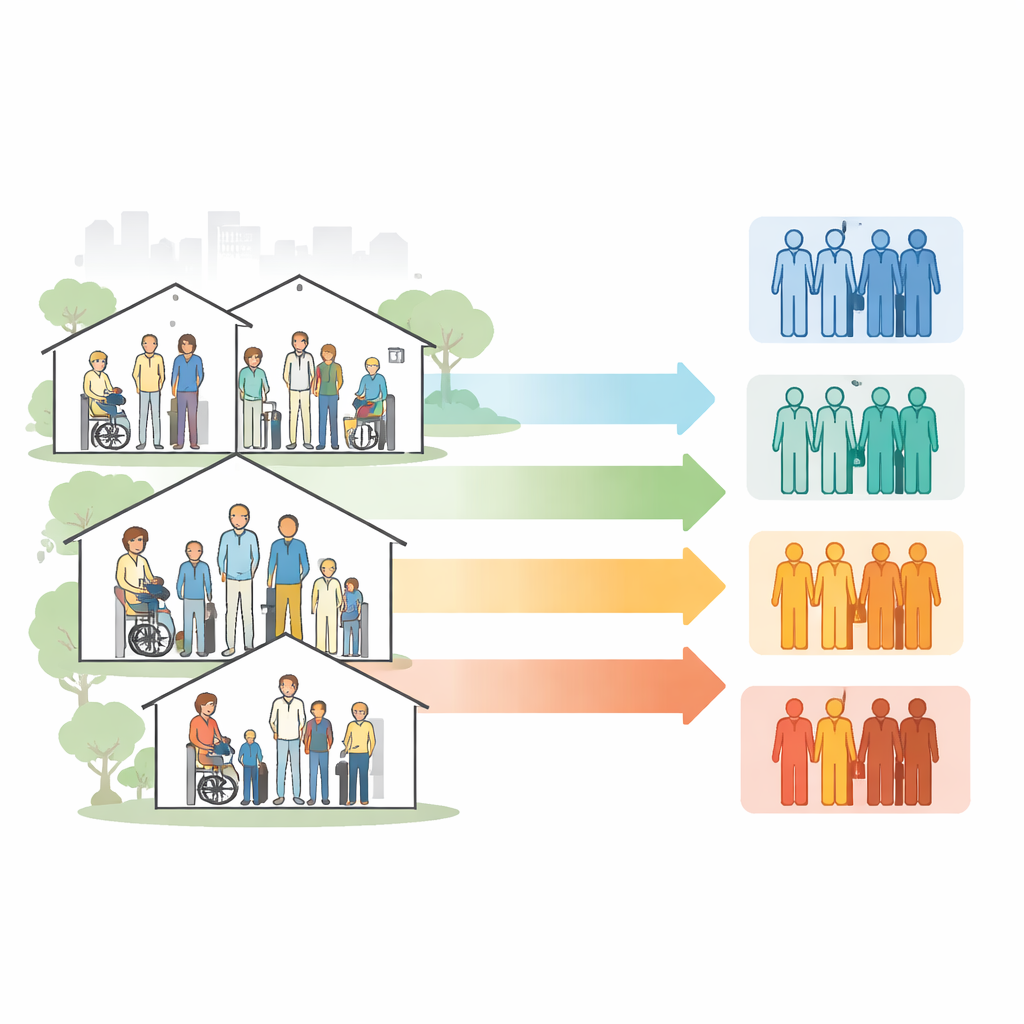
The researchers tracked 274 family and friend caregivers of older adults who needed help with daily activities. Over four rounds of interviews spread across a little more than two years, caregivers rated how burdened they felt—physically, emotionally, socially, and financially—as well as how much personal growth, purpose, and closer relationships they gained from caregiving. Instead of assuming that all caregivers follow the same pattern, the team used a statistical method that looks for distinct “paths” or trajectories over time. They discovered four clear groups: some caregivers had low strain and high positive feelings, others had moderate or high strain but still reported strong positive aspects of caregiving.
Four Common Caregiving Journeys
About 45% of caregivers followed a path of persistently low burden and high benefits, suggesting that although caregiving took time and effort, it did not overwhelm them and often felt rewarding. Another 23% experienced moderate burden but very high benefits—they felt stretched, yet strongly affirmed and supported by their caregiving role. A further 19% lived with moderate burden and high benefits, while 14% reported high burden alongside high benefits. For most people—around 87%—these patterns stayed remarkably stable over the study period, likely because many had already been caring for their loved ones for close to a decade before the study even began.
Help in the Home and Feeling Prepared
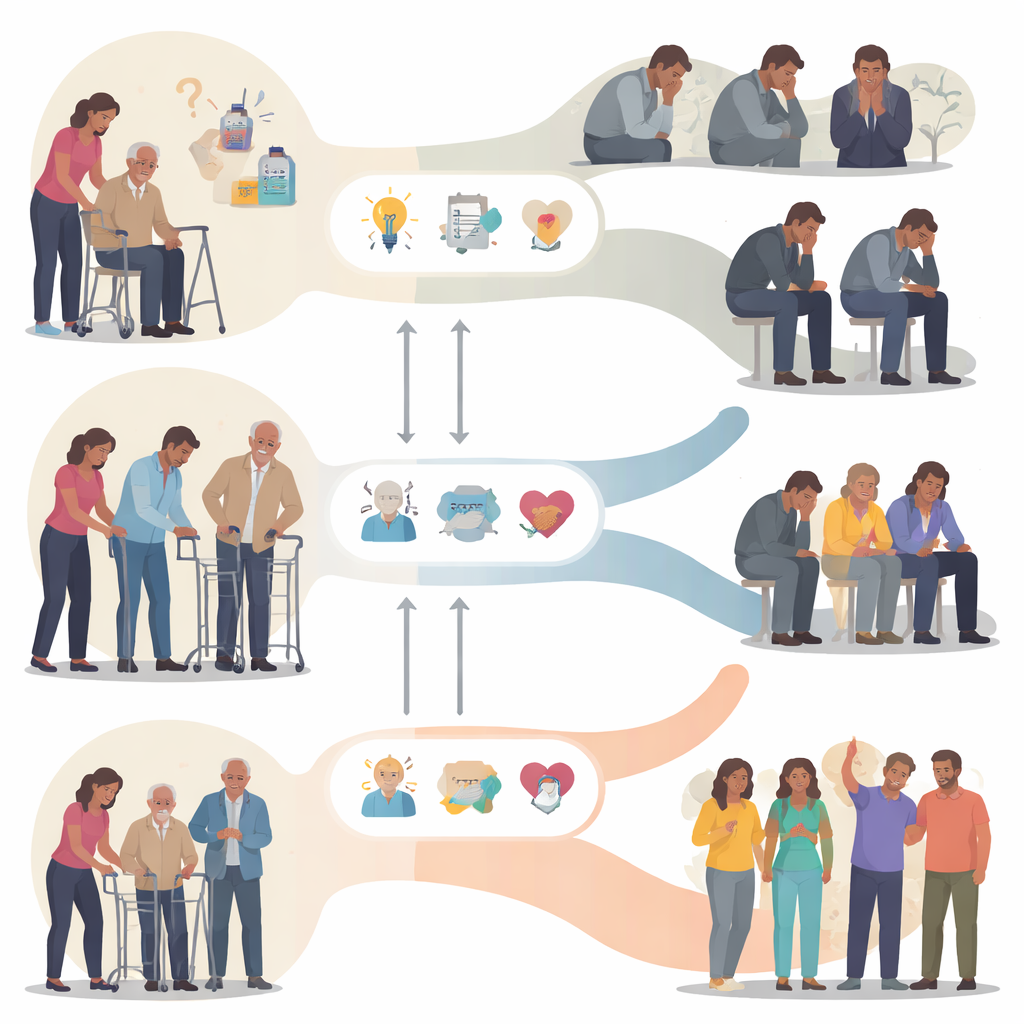
The team then asked what separated caregivers with lighter burdens from those more heavily strained. One key factor was help from an experienced, live-in home helper (often a migrant domestic worker). Caregivers who shared duties with a helper who had prior training or experience in elder care were less likely to fall into the more burdened groups. Another factor was how prepared caregivers felt for their role: among those with a moderate level of burden, people who felt more ready—confident about managing physical care, emotions, and daily tasks—were more likely to report very high benefits from caregiving over time. These findings suggest that both practical, hands-on support and skills-building for caregivers can shift their experience toward the more sustainable paths.
Caregiver Health and Well-Being
Next, the researchers examined how these different paths related to caregivers’ mental and physical health at the end of the study. Those on the high-burden path had more symptoms of depression and lower quality of life across physical, emotional, social, and environmental areas, even though they also reported high benefits. Caregivers with moderate burden generally had worse physical health and, in some cases, poorer mood compared with those in the low-burden group. In other words, positive feelings about caring for a loved one did not fully protect people from the toll of ongoing, heavy responsibilities on sleep, pain, energy, or social life.
What This Means for Families and Policymakers
To a layperson, the message is straightforward: long-term caregiving can be both uplifting and draining at the same time, but the level of strain really matters for caregivers’ health. Many caregivers in this study managed to keep their burden relatively low while still finding meaning in what they do. Sharing care with trained helpers and preparing caregivers through education and skills training seem to tilt people toward these healthier paths. For governments and service providers, that means supporting accessible, well-trained home help and practical caregiver training is not just a kindness—it is a public health strategy that can protect the well-being of the many families who make aging at home possible.
Citation: Ping, Y., Lim-Soh, J., Østbye, T. et al. Joint trajectories of burden and benefits of caregiving among informal caregivers of older adults with functional limitations: a longitudinal study. Sci Rep 16, 12399 (2026). https://doi.org/10.1038/s41598-026-42321-5
Keywords: informal caregiving, family caregivers, older adults, caregiver burden, live-in home help