Clear Sky Science · en
Bioactivity-guided analysis of Moringa olifera fractionated extracts for potential medical application
A tree with many healing talents
Moringa oleifera, sometimes called the “miracle tree,” is already popular in traditional medicine and as a nutritional supplement. This study takes a closer look at how different chemical portions of its leaves act on cancer cells, viruses, and harmful oxygen-based molecules. By separating one leaf extract into several parts and testing each in the lab, the researchers show that different fractions of moringa can specialize: one is better at targeting tumor cells, another at blocking viruses, and another at mopping up damaging free radicals. 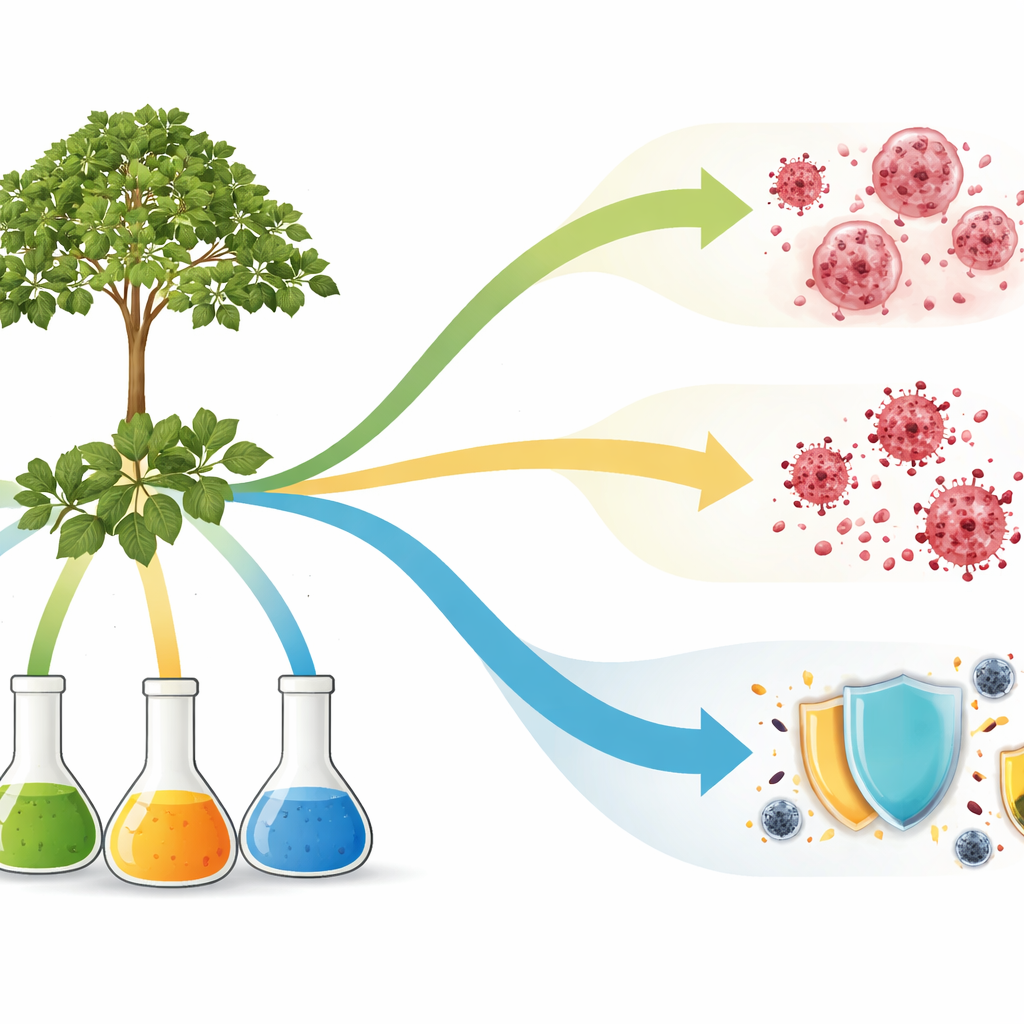
Taking the leaves apart step by step
The scientists started with fresh moringa leaves, dried and ground them, then soaked the powder in alcohol to pull out a wide range of natural compounds. They then split this crude extract into several fractions using solvents that range from oily to watery. Each solvent “likes” different kinds of molecules, so this process sorted the plant chemicals into distinct groups. These purified fractions, along with the original extract, were then tested on normal immune cells and monkey kidney cells to check basic safety before moving to cancer and virus experiments.
Finding a cancer-focused fraction
When the fractions were exposed to a panel of human cancer cell lines from breast, liver, lung, pancreas, intestine, and cervix, one stood out. The hexane fraction—rich in oily, fat-like molecules—was especially good at slowing the growth of breast and liver cancer cells while showing much milder effects on normal immune cells. The researchers also looked at two genes that act like a cellular see‑saw for life and death decisions: one encourages cells to self‑destruct when damaged, and the other helps them survive. After treatment with moringa fractions, the “self‑destruct” signal rose sharply while the “stay alive” signal dropped, particularly with the hexane fraction, suggesting that it pushes cancer cells toward an orderly shutdown rather than simply poisoning them. 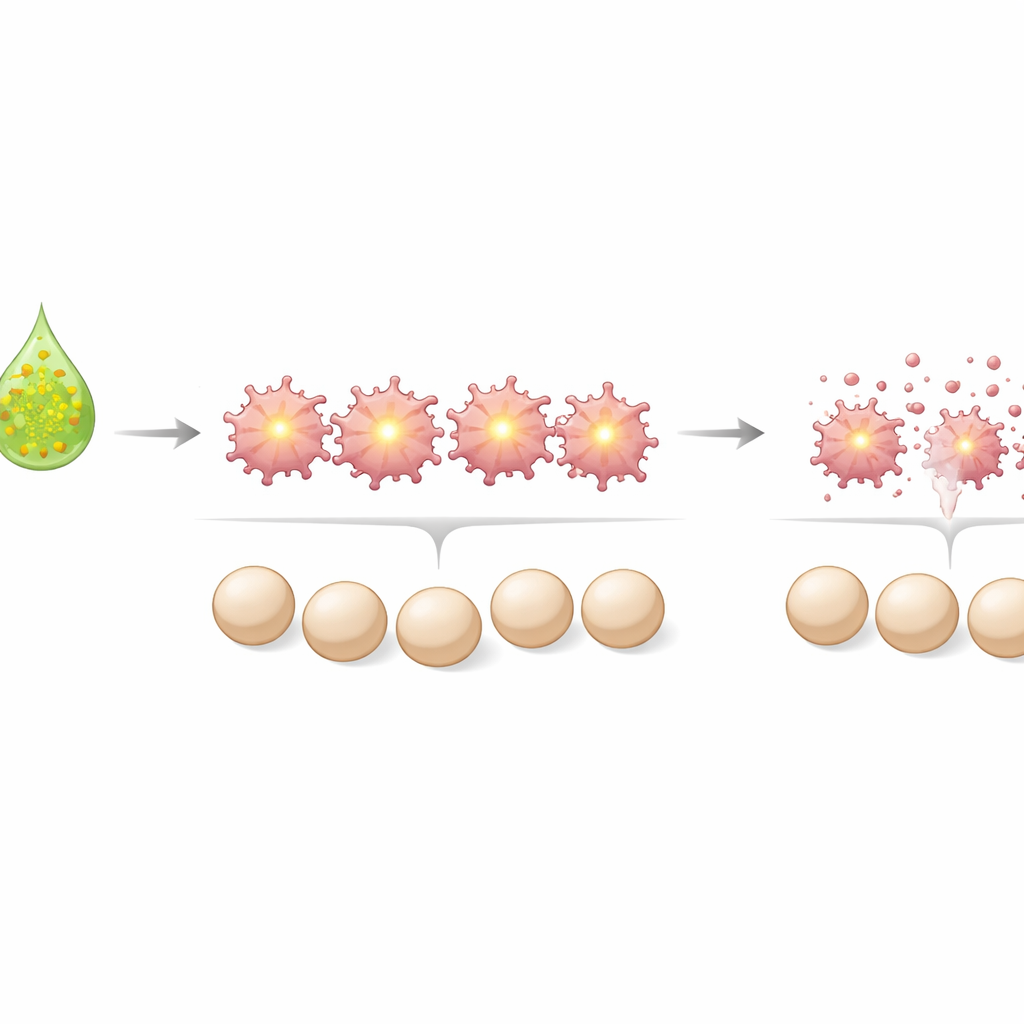
Blocking viruses and calming oxidative stress
The team next tested how well the same fractions could stop three common viruses in cell culture: hepatitis A and two forms of herpes simplex. Here, a more water‑friendly fraction, extracted with butanol, was the clear winner. It strongly reduced viral damage to cells at doses that were still safe for the host cells, approaching—but not matching—the performance of a standard antiviral drug used as a comparison. Another fraction, obtained with ethyl acetate, showed the strongest ability to neutralize free radicals in a standard antioxidant test, nearly rivaling vitamin C. This suggests that different chemical groups within moringa leaves may be better suited for different protective roles in the body.
Peeking under the chemical hood
To understand why the fractions behaved so differently, the researchers profiled their contents using advanced methods that weigh and separate tiny molecules. Across all samples they detected more than 60 identifiable compounds, including many plant acids, flavonoids (pigments also found in tea, berries, and cocoa), and fat‑like substances and plant sterols. The antiviral butanol fraction was especially rich in certain polyphenols that have been linked to blocking viral enzymes and supporting the body’s own defenses. The antioxidant ethyl acetate fraction contained high levels of well‑known radical‑scavenging molecules, while the cancer‑targeting hexane fraction was enriched in oily terpenoids, fatty acid esters, and plant steroids that easily slip into cell membranes and can nudge damaged cells toward programmed death.
What this means for future medicines
Taken together, the work shows that moringa leaves are not a single remedy but a toolbox of different chemical groups, each with its own strength. One fraction looks promising as a selective anticancer lead, another as a broad antiviral candidate, and another as a powerful antioxidant source. These results come from controlled lab dishes, not from people, so they are an early step rather than proof of medical benefit. Still, by linking specific plant compounds to specific actions, the study lays scientific groundwork for turning moringa fractions—or carefully standardized mixtures of them—into future therapies that can target cancer cells, fight infections, or protect tissues from oxidative damage while sparing healthy cells.
Citation: Banoub, N.G., Sakr, M.M., M. Tawfick , M. et al. Bioactivity-guided analysis of Moringa olifera fractionated extracts for potential medical application. Sci Rep 16, 9939 (2026). https://doi.org/10.1038/s41598-026-42314-4
Keywords: Moringa oleifera, plant-based anticancer, antiviral extracts, antioxidant phytochemicals, bioactive fractions