Clear Sky Science · en
lnc-ALX1-2:10 is a novel regulator that enhances proliferation, migration and invasion in prostate cancer cells
Why this research matters for men’s health
Prostate cancer is one of the most common cancers in men, and it becomes especially dangerous when tumor cells learn to grow faster and spread to other parts of the body. This study uncovers a previously little-known genetic "switch"—a long noncoding RNA called lnc-ALX1-2:10—that helps prostate cancer cells become more aggressive. Understanding this switch could open the door to new tests that flag high-risk tumors and new treatments that slow or stop their spread.
A hidden layer in the cell’s instruction manual
When we think about genes, we usually picture stretches of DNA that carry instructions for making proteins. But our cells also produce many RNA molecules that never become proteins. These are called long noncoding RNAs, and they can still strongly influence how cells behave. The team behind this study focused on one such RNA, lnc-ALX1-2:10, located near a known cancer-related gene called ALX1. Earlier work in other cancers hinted that this RNA might help tumor cells move and invade, but its role in prostate cancer had not been tested.
Comparing “quiet” and “aggressive” cancer cells
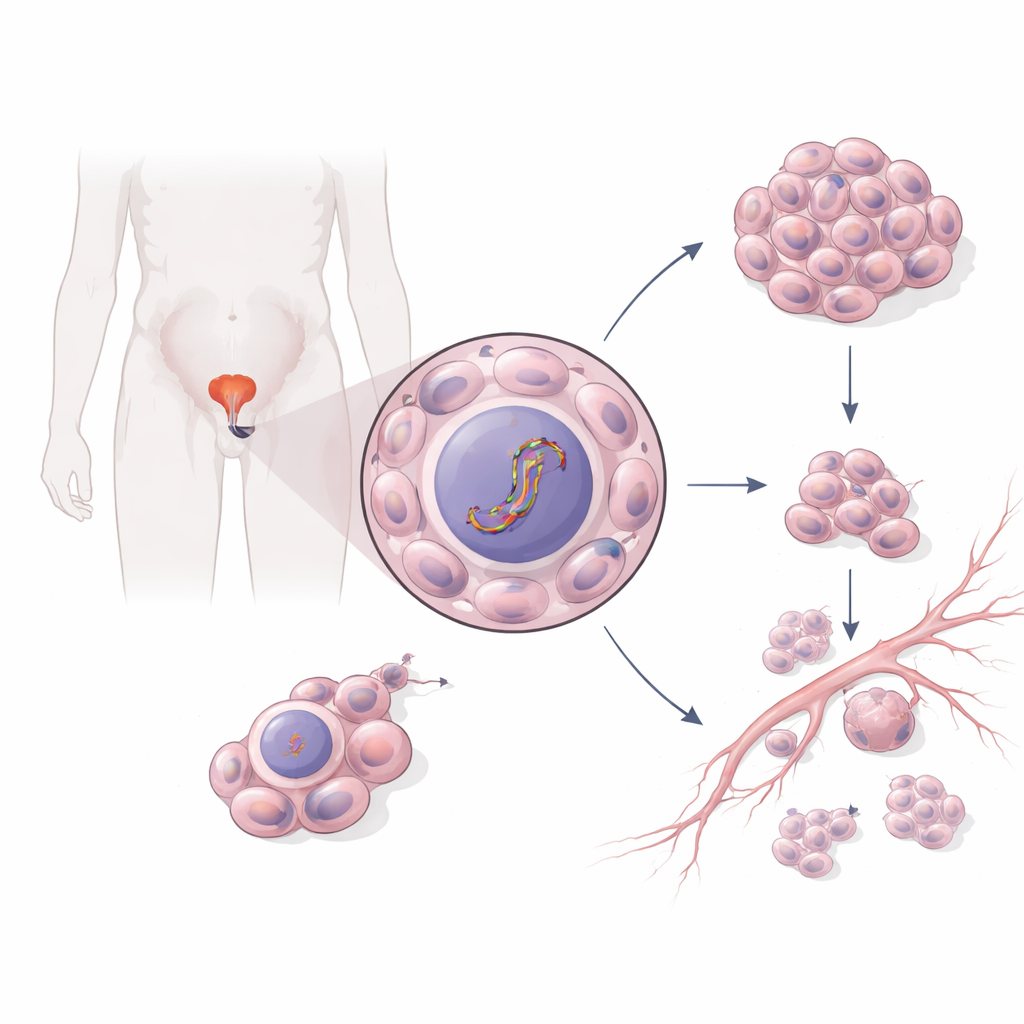
To track down troublemaking RNAs, the researchers compared two closely related prostate cancer cell lines: one that spreads easily and one that does not. Using broad gene-activity profiling, they found that hundreds of long noncoding RNAs were either turned up or turned down in the highly metastatic cells. Among the most strongly increased was the lnc-ALX1-2 gene cluster, especially the variant lnc-ALX1-2:10. Follow-up measurements confirmed that this RNA was much more abundant in the aggressive cells, hinting that it might be helping them grow and move.
Turning down the volume on a dangerous signal
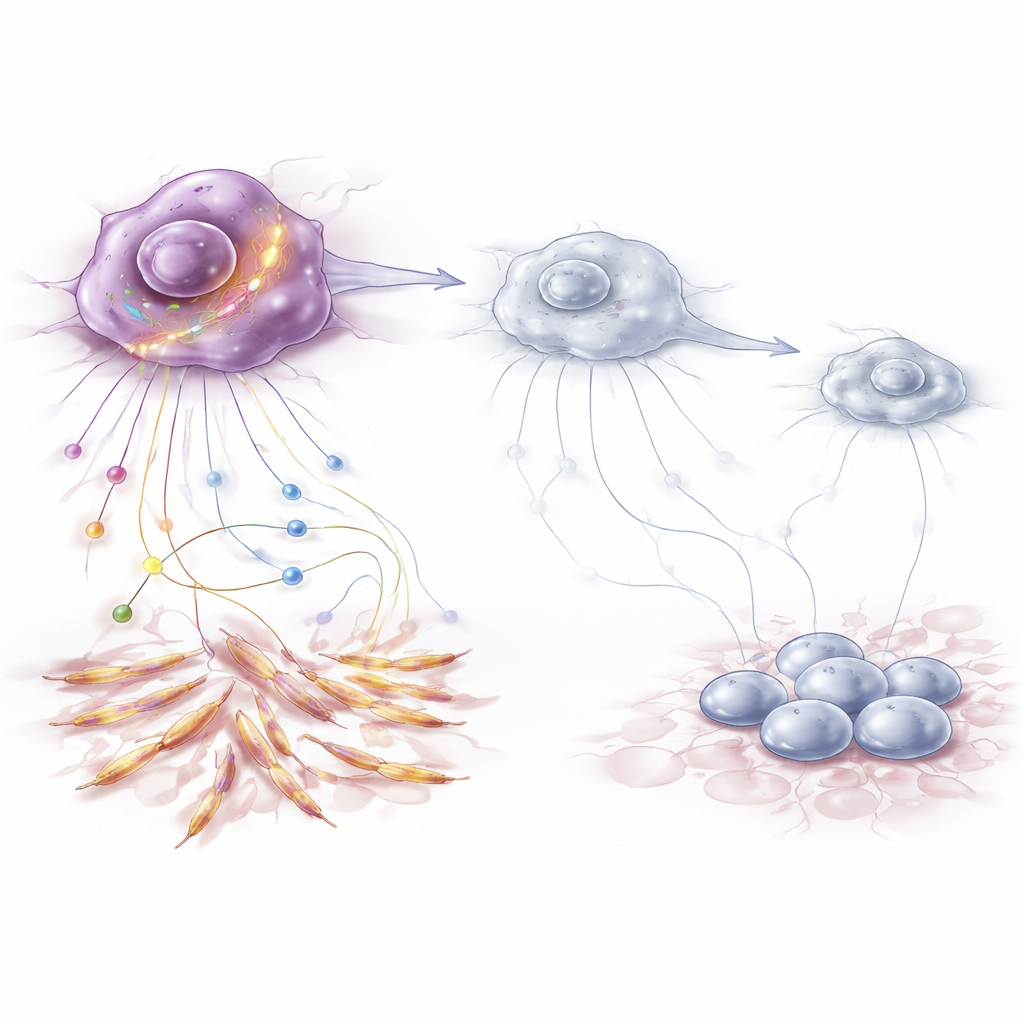
The scientists then asked what would happen if they forced the aggressive cells to make less of this RNA. Using targeted molecular tools, they knocked down each member of the lnc-ALX1-2 cluster. All three cuts slowed cell growth and reduced the ability of cells to migrate and invade through a membrane, but silencing lnc-ALX1-2:10 had the strongest effect. Under the microscope and by measuring key proteins, they saw that cells with less lnc-ALX1-2:10 shifted away from a mobile, spindle-like form toward a more stable, tightly connected appearance. Markers linked to cell movement and invasion dropped, while those associated with firm cell–cell attachment rose, suggesting that the cells were less able to break away and spread.
Rewiring many growth and movement pathways at once
To understand how one RNA could have such broad influence, the team looked at which genes changed their activity when lnc-ALX1-2:10 was reduced. Thousands of genes shifted up or down, and nearly 200 were tied to both cell growth and movement. Many belonged to well-known cancer signaling routes, including pathways often hijacked in prostate tumors. Important drivers of tumor expansion and invasion, such as CCNE1 and PDGFRA, were dialed down, while genes linked to more restrained behavior, like ITGAL and the adhesion molecule E-cadherin, were dialed up. Network analyses suggested that these changes converge on a small set of master control proteins inside the nucleus, indicating that lnc-ALX1-2:10 may influence tumor behavior by nudging these central regulators.
Testing the switch in living animals
Cell culture experiments can only go so far, so the researchers next implanted human prostate cancer cells with or without lnc-ALX1-2:10 knockdown into mice. Tumors that lacked this RNA grew more slowly and remained smaller over several weeks, even though the animals’ body weights stayed stable, suggesting that this strategy did not cause obvious general harm. When the tumors were later examined, they showed the same molecular shifts seen in cell dishes: reduced levels of proteins tied to rapid growth and invasion, and increased levels of proteins that keep cells more firmly in place.
What this means for future diagnosis and treatment
Taken together, the findings portray lnc-ALX1-2:10 as a previously unrecognized driver that helps prostate cancer cells multiply and break away to invade other tissues. By acting on many genes and signaling routes at once, this RNA appears to tilt cells toward a more aggressive state. While more work is needed in patient samples and diverse tumor types, lnc-ALX1-2:10 now stands out as a promising marker to identify higher-risk prostate cancers and a potential target for therapies aimed at slowing tumor growth and spread.
Citation: Wang, X., Zong, Q., Bu, Y. et al. lnc-ALX1-2:10 is a novel regulator that enhances proliferation, migration and invasion in prostate cancer cells. Sci Rep 16, 11870 (2026). https://doi.org/10.1038/s41598-026-42299-0
Keywords: prostate cancer, long noncoding RNA, metastasis, tumor invasion, cancer biomarkers