Clear Sky Science · en
Synthesis of magnetite nanocomposite supported on apple peel-derived activated carbon for removal of methylene blue from aqueous solutions
Turning Fruit Waste into Clean Water
Coloured wastewater from textile factories and other industries is a growing threat to rivers, lakes, and drinking water. This study shows how something as humble as discarded apple peels can be transformed into a powerful, magnetically removable filter that strips a common blue dye pollutant from water almost completely. By marrying kitchen waste with nanoscale magnetite particles, the researchers create a reusable material that points toward cheaper, cleaner ways to treat industrial wastewater.
Why Bright Dyes Darken Our Rivers
Synthetic dyes, including the vivid blue compound used here as a test case, are designed to be tough: they resist sunlight, heat, and breakdown by microbes. When dye-laden water is discharged, even tiny amounts can block light, disturb photosynthesis in aquatic plants, and harm fish and other organisms. Some dyes and their breakdown products are also suspected of causing cancer or genetic damage in humans. Removing these molecules from water is challenging, and many existing treatment methods are expensive, generate secondary waste, or are difficult to operate at scale.
From Apple Peels to Magnetic Sponges
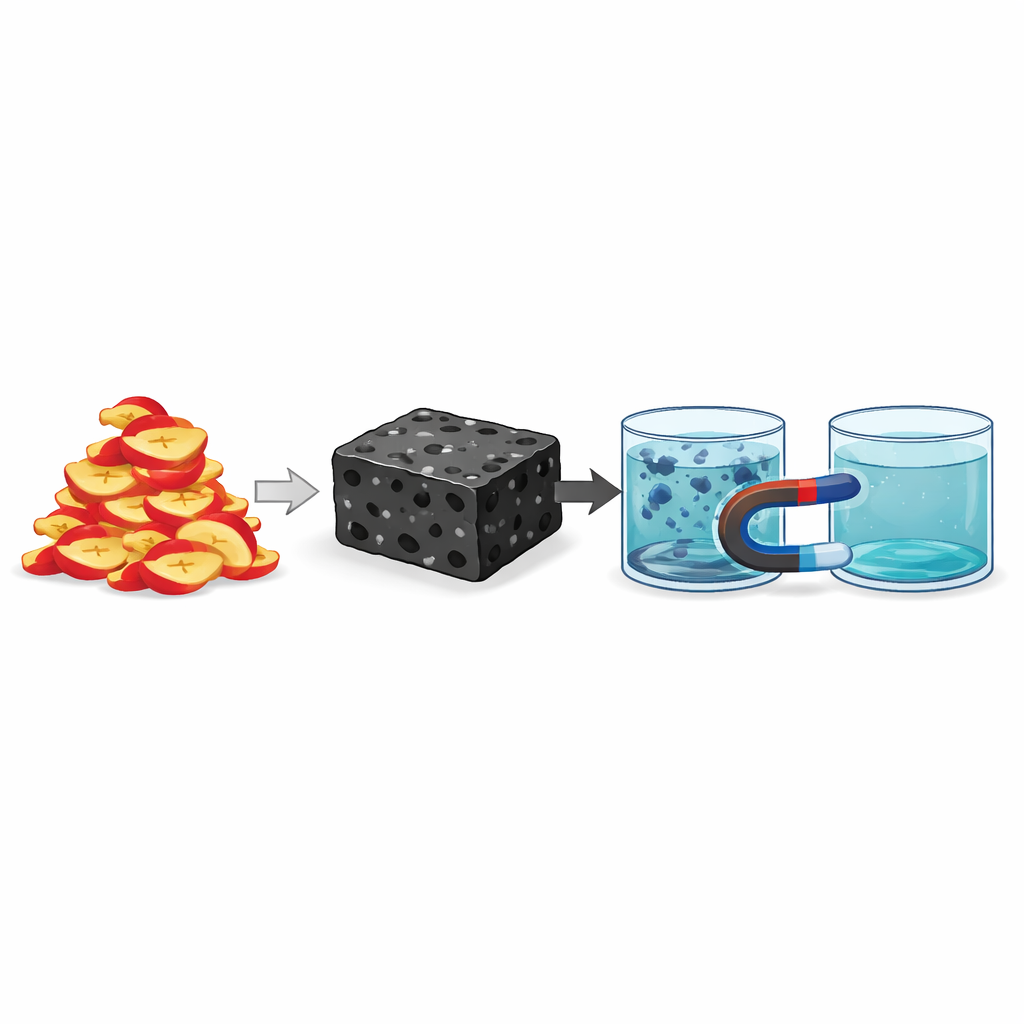
The team set out to build a low-cost filter material using only waste apple peels as the carbon source. First, the peels were cleaned, dried, and heated in the absence of air to form a charcoal-like material. This was then treated with sodium hydroxide and heated again to create activated carbon with an enormous internal surface area—over 700 square metres per gram—full of tiny pores where pollutants can lodge. Next, the researchers formed magnetite (an iron oxide) nanoparticles directly on this carbon using a simple chemical precipitation step. The result is a black, powdery nanocomposite that behaves like a sponge for dye molecules and can be pulled out of water with a magnet.
How the New Material Cleans Water
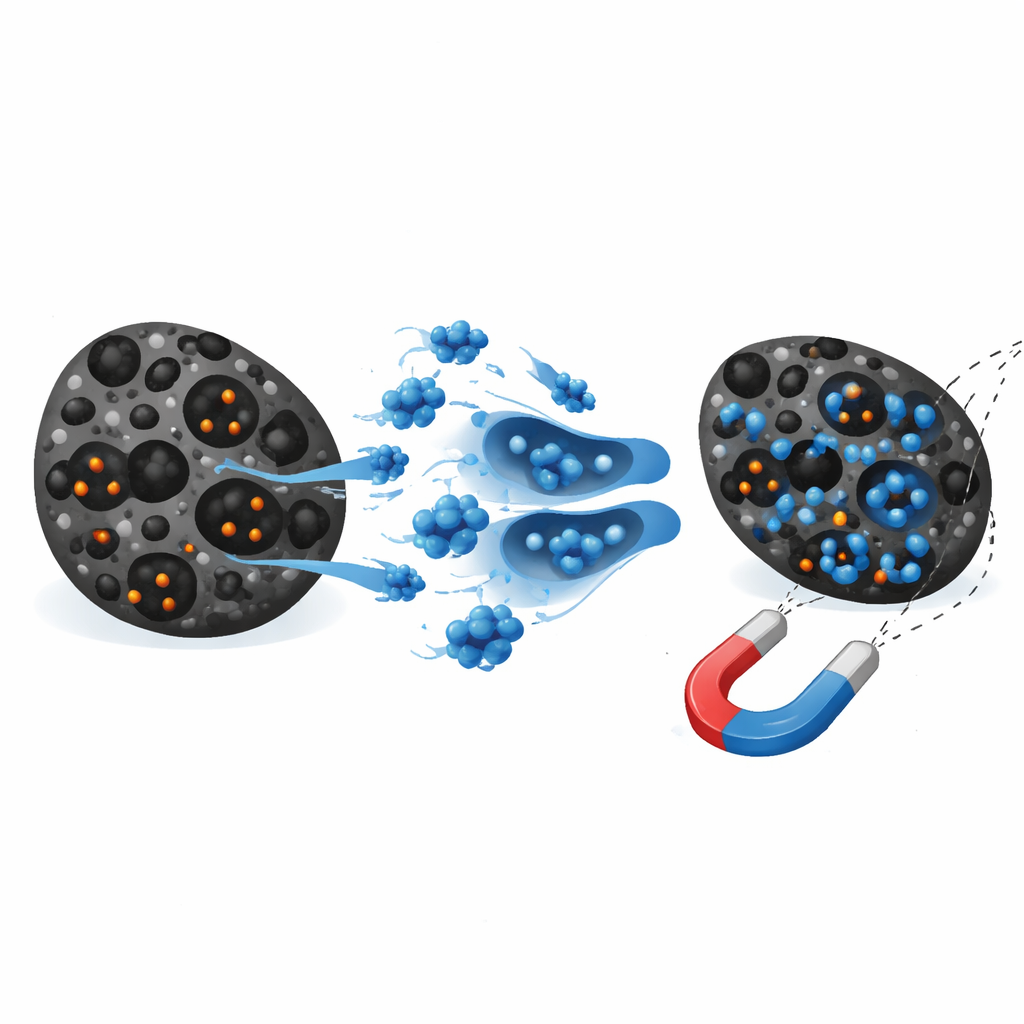
The scientists tested how well this apple-peel magnetite material removes the blue dye under different conditions. They varied the water’s acidity, the contact time, the amount of adsorbent, dye concentration, and temperature. At near‑neutral pH, room temperature, and with a modest dose of the material, it removed about 99–100% of the dye from water containing 10 milligrams of dye per litre within two hours. The dye molecules form a single, tightly packed layer on the carbon surface, and the data show that the process behaves like a chemical bonding step rather than simple sticking. Negatively charged sites and oxygen‑rich groups on the carbon attract the positively charged dye, while the fine pore network helps trap the molecules. Importantly, the embedded magnetite provides just enough magnetic strength to separate the used particles quickly with an external magnet.
Performance, Reuse, and Real Wastewater
Beyond controlled lab solutions, the researchers compared their material with a range of other natural and synthetic adsorbents reported in earlier studies. The apple‑peel composite showed a high maximum dye uptake capacity of about 152 milligrams per gram, outperforming many other agricultural‑waste‑based materials. It also worked well in real textile wastewater, which contains a mix of dyes and other pollutants, reaching about 90% removal efficiency. After five cycles of dye uptake and cleaning with ethanol, the material still retained around 83% of its initial performance, illustrating that it can be regenerated and reused multiple times without complex equipment.
What This Means for Cleaner Water
For a non‑specialist, the key message is simple: a plentiful food-processing waste—apple peels—can be engineered into a magnetically retrievable filter that very effectively removes stubborn dye molecules from water. The material combines high efficiency, low cost, and easy recovery, making it attractive for factories that need to treat coloured wastewater before discharge. Because the process is strongly favourable and works under mild conditions, it could be adapted to large treatment systems and possibly extended to other contaminants like heavy metals or drug residues. In this way, agricultural waste becomes part of the solution to industrial pollution, turning everyday leftovers into a tool for protecting rivers and drinking water.
Citation: Mohammadi, P., Khajenoori, M. & Ghandali, M. Synthesis of magnetite nanocomposite supported on apple peel-derived activated carbon for removal of methylene blue from aqueous solutions. Sci Rep 16, 14617 (2026). https://doi.org/10.1038/s41598-026-42265-w
Keywords: wastewater treatment, dye removal, activated carbon, apple peel, magnetic nanocomposite