Clear Sky Science · en
Not all task-unrelated thoughts (TUT) are created equal - TUT characteristics as predictors of affective states and heart-rate variability
Why your wandering mind matters
Everyone’s mind drifts: in the middle of a meeting, while brushing your teeth, or just before falling asleep. We often lump these moments together as “daydreaming” or “mind-wandering” and assume they are either all bad or all good. This study shows that not all off-task thoughts are created equal. Subtle differences in what you think about, how in control you feel, and how you judge those thoughts can shape your mood during the day and even your risk for depressive feelings.
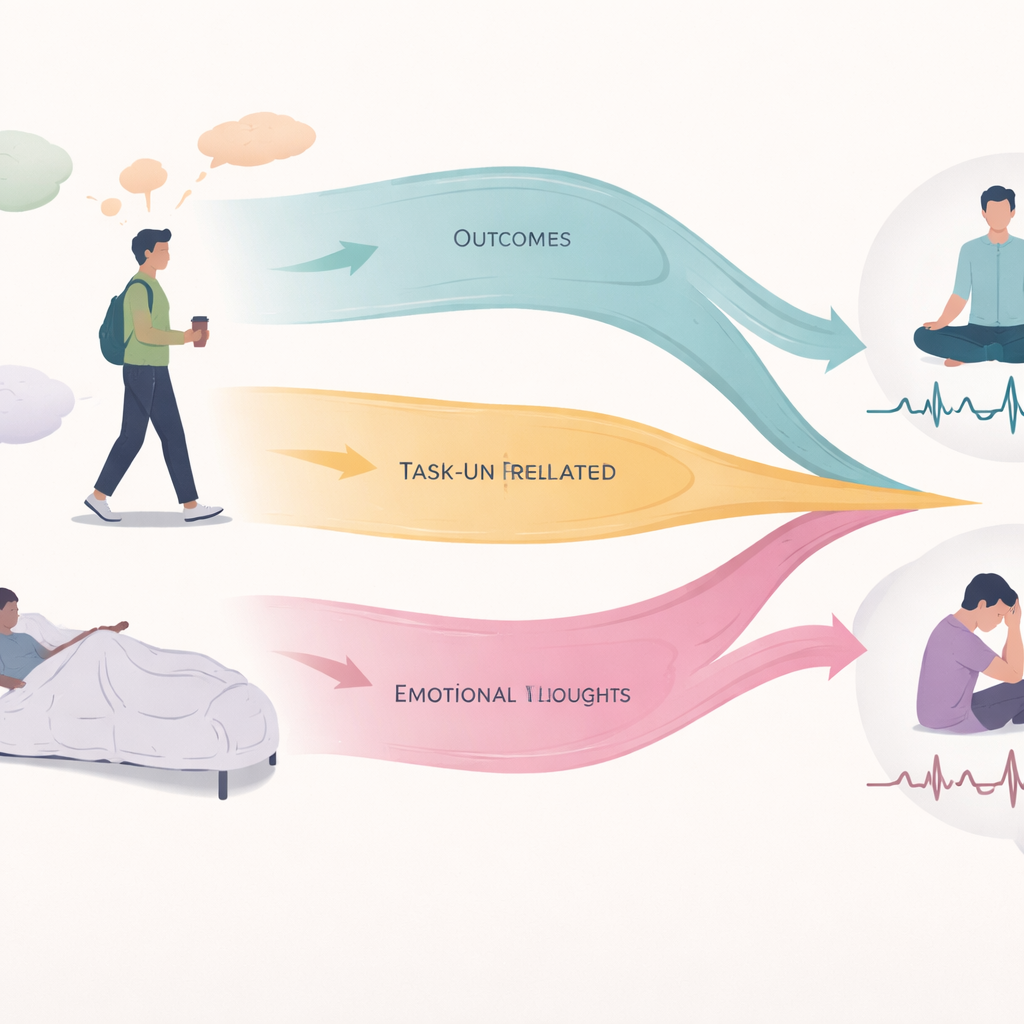
Our thoughts when life is happening
The researchers focused on “task-unrelated thoughts” – moments when people mentally step away from what they are doing, without any clear outside trigger. Instead of arguing over labels like mind-wandering, rumination, or daydreaming, they treated all such episodes as one broad family and zoomed in on their shared features. They grouped these features into three clusters: content (what the thought is about, such as problems or memories), control (whether it feels repetitive, intrusive, or freely moving and intentional), and emotional appraisal (how negative or positive, burdensome, or useful the thought feels). The key question was which of these features actually matter for emotional wellbeing in everyday life.
Following people into their daily routines
Forty-seven university students wore heart monitors around the clock for a week and responded to brief smartphone surveys several times a day. At each prompt, they reported what they had been thinking about, how those thoughts felt, their current mood (happiness, anger, sadness, anxiety), and what they were doing. They also answered short daily questions about sleep quality and how “depressed” their day felt overall, and completed longer questionnaires on daydreaming habits, repetitive negative thinking, and anxiety and depression symptoms. This approach, called ecological momentary assessment, allowed the team to connect fleeting thought patterns to both subjective feelings and a biological marker of stress regulation called heart-rate variability.
Which kinds of thoughts hurt – and which help
When the researchers analyzed thousands of these mini-reports, one dimension stood out: emotional appraisal. Thoughts that felt emotionally burdensome or carried a negative tone were strongly tied to spikes in anxiety, anger, and sadness, and to drops in happiness. Among all specific features, the feeling that a thought was a “burden” was the most consistent warning sign and was even linked to lower heart-rate variability, a pattern often associated with poorer stress regulation. Thoughts that felt more positive and less heavy, or that were experienced as freely moving rather than stuck, tended to go along with better momentary mood. In contrast, some classic “bad thought” features—such as repetitiveness or intrusiveness—mattered much less once other characteristics were taken into account.
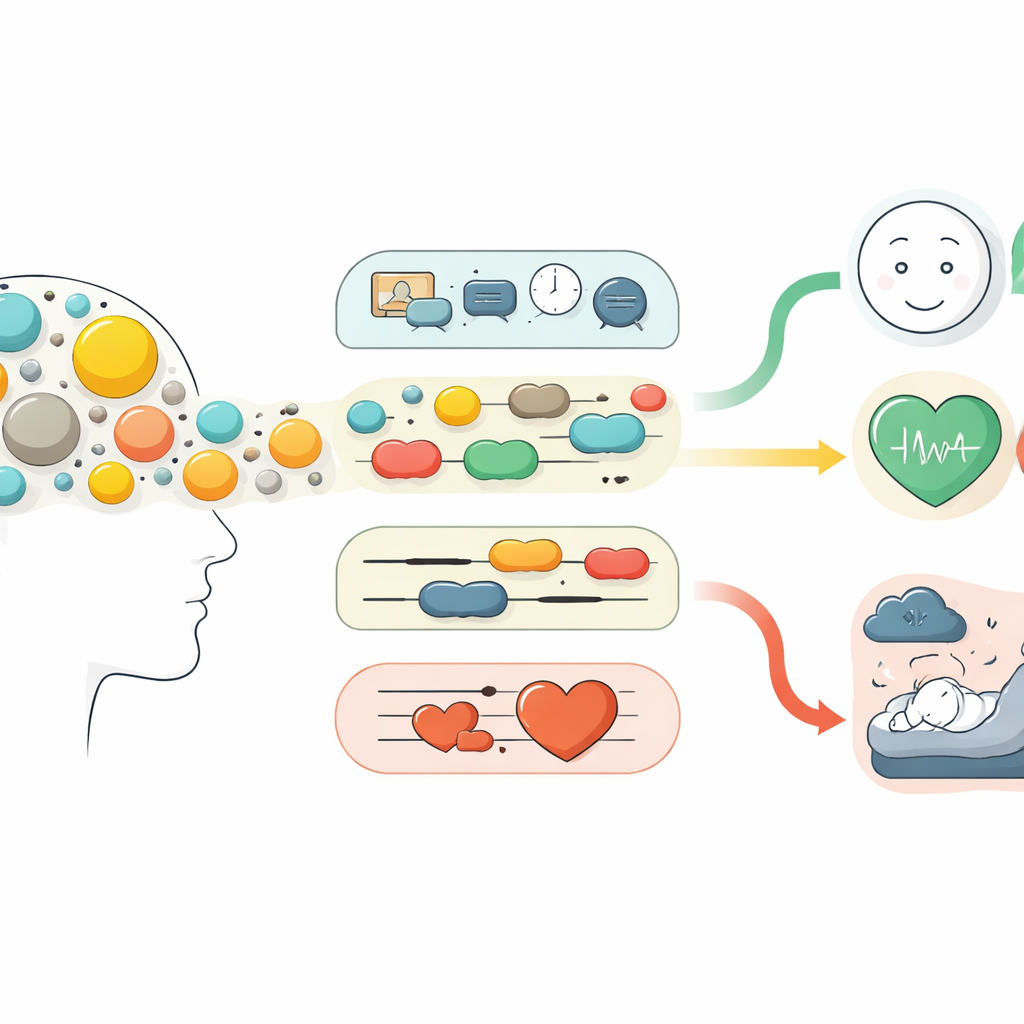
Short-term feelings versus the tone of the whole day
The study also separated immediate feelings from the broader emotional flavor of a day. Here, a different thought feature emerged: usefulness. People who, on average, saw their stray thoughts as more useful or satisfying tended to report fewer depressive feelings across the day, even though usefulness was not strongly tied to moment-to-moment negative emotions. By contrast, the detailed content of thoughts—whether they dealt with problems, the past, or the future—was clearly related to brief shifts in mood but not to daily depressive tone or sleep quality. This suggests that some aspects of thinking leave only short-lived emotional traces, while others slowly shape how good or bad a day feels overall.
Why people differ in how much drifting thoughts affect them
The impact of drifting thoughts was not the same for everyone. For people who frequently daydreamed or engaged in repetitive negative thinking, negative thought content was more strongly tied to anger and sadness. Likewise, those with higher anxiety or depression scores showed different patterns: for example, the link between how negatively a thought was judged and the emotions it stirred tended to be weaker among people with more depressive symptoms. The emotional tone of the ongoing task also mattered. When someone was already doing something they disliked, negatively appraised off-task thoughts were especially connected to feeling sad.
What this means for everyday life
This work suggests that wandering thoughts become most troublesome not simply when they are frequent or off-task, but when they feel heavy, negative, and pointless. At the same time, loose, freely moving thoughts that are seen as helpful or interesting may support emotional balance, even if they pull you away from the task at hand. For clinicians and for individuals trying to manage low mood or stress, the message is nuanced: instead of trying to suppress all mind-wandering, it may be more important to notice how you interpret and emotionally rate your thoughts, and to gently shift the way you relate to them.
Citation: Skorupski, M.S., Krejtz, I., Barnes, S. et al. Not all task-unrelated thoughts (TUT) are created equal - TUT characteristics as predictors of affective states and heart-rate variability. Sci Rep 16, 13292 (2026). https://doi.org/10.1038/s41598-026-42261-0
Keywords: mind wandering, daydreaming, rumination, emotional wellbeing, heart rate variability