Clear Sky Science · en
Ultrasound-assisted extraction and antioxidant activity of polyphenolic compounds from three different fruit form of Lonicera caerulea L.
Why these dark berries matter
Many people are looking for natural ways to protect their health, especially against the slow damage caused by everyday stress, pollution, and aging. Blue honeysuckle, a dark blue berry also called Lonicera caerulea, is rich in colorful plant chemicals that may help defend our cells. This study asks a practical question with real-world impact: in which form should these berries be harvested, stored, and processed—fresh, dried, or freeze‑dried—so that we get the most health‑supporting compounds out of them using a modern, efficient extraction method?
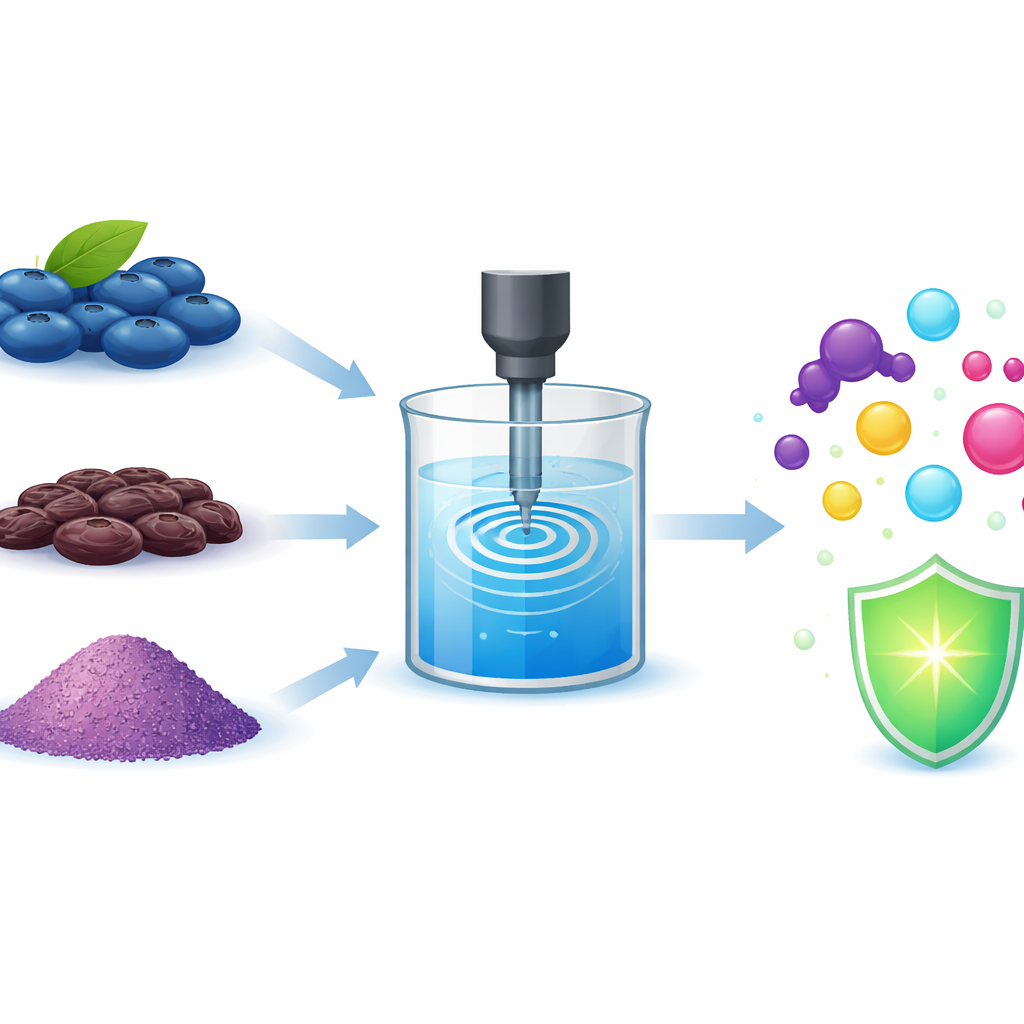
Three ways to handle one powerful berry
The researchers focused on three common ways blue honeysuckle fruit can be used in industry: fresh berries, traditional dried berries, and freeze-dried berry powder. All three are rich in polyphenols, a family of natural substances that includes flavonoids and anthocyanins, the pigments that give the fruit its deep purple color. These compounds are closely linked to antioxidant and anti-inflammatory effects, which may help lower the risk of chronic diseases. Because large-scale production depends on how easily berries can be stored and moved, the team wanted to know which physical form best preserves these valuable plant chemicals while remaining practical for farms and factories.
Shaking loose the good stuff with sound
To pull the beneficial compounds out of the berries, the scientists used ultrasound-assisted extraction. In this technique, high-frequency sound waves pass through a liquid and create tiny bubbles that rapidly form and collapse. That motion gently tears open plant cells, allowing a mixture of water and alcohol to reach the compounds trapped inside, often faster and more efficiently than traditional soaking methods. The team first ran a series of tests changing one factor at a time—such as alcohol strength, treatment time, temperature, and sound power—then used a structured set of experiments to pinpoint the best combination of settings for each group of compounds: total phenolics, flavonoids, and anthocyanins.
Finding the sweet spot for extraction
Careful optimization revealed that each type of compound had its own preferred conditions. In general, medium-to-high alcohol strengths, moderate treatment times, and controlled temperatures gave the best results. For example, total phenolics were most effectively extracted with about 60% alcohol and around half an hour of ultrasound treatment, while flavonoids favored stronger alcohol and a higher liquid-to-berry ratio. Anthocyanins, the deep purple pigments, were best released at slightly warm temperatures and with an alcohol mix adjusted to suit their solubility. Across all these tests, one pattern stood out: the form of the fruit itself—fresh, dried, or freeze-dried—mattered more than any other factor in determining how much of each compound could be recovered.
Why dried berries come out on top
When the optimized conditions were applied, dried berries consistently yielded the highest levels of total phenolics, flavonoids, and anthocyanins, clearly outperforming both fresh berries and freeze-dried powder. The researchers suggest that during drying, water is removed while most beneficial compounds remain, effectively concentrating them in the lighter, drier fruit. In contrast, the more complex freeze-drying process may partially damage some sensitive molecules if not carefully controlled. To evaluate whether these concentrated extracts actually behave like strong antioxidants, the team tested how well they could neutralize two common synthetic free radicals, DPPH and ABTS, widely used as stand-ins for harmful reactive molecules in the body.
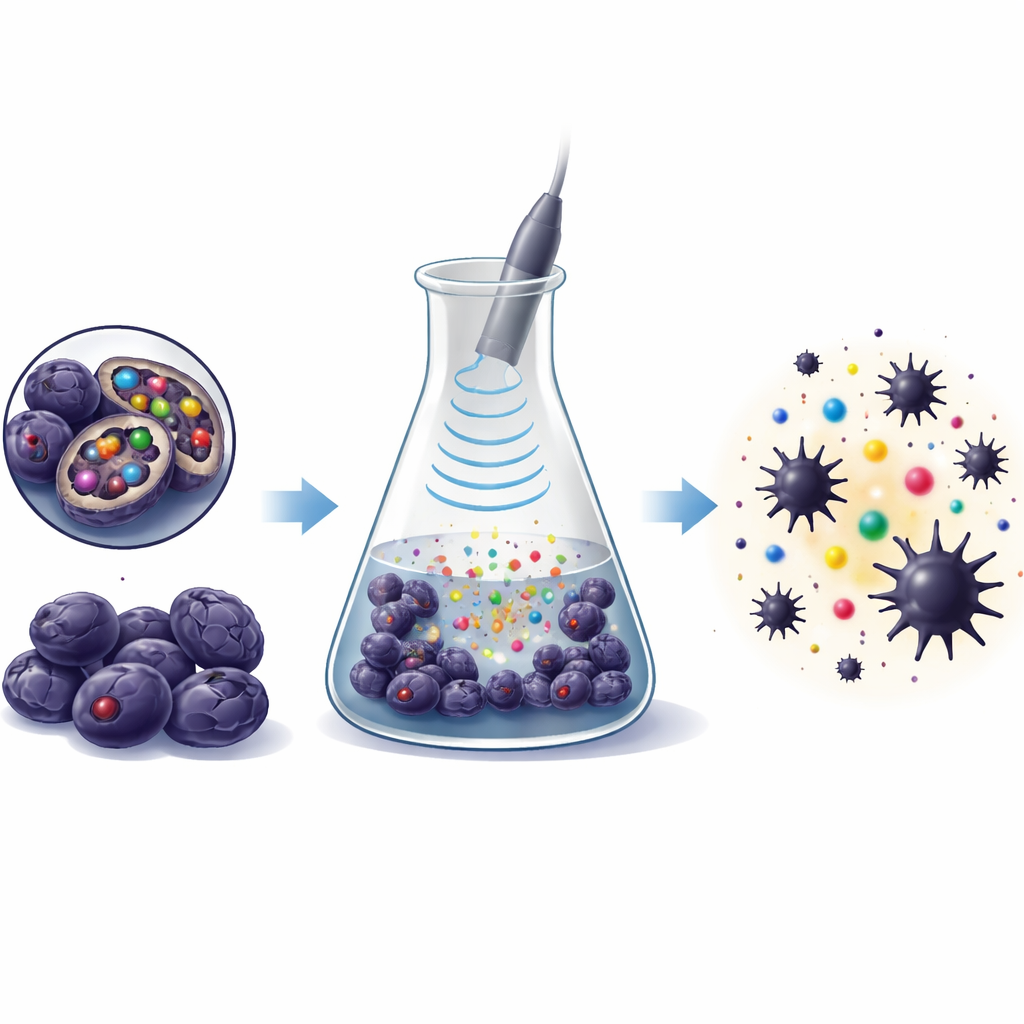
Strong protection in a small package
Extracts from dried berries showed powerful and dose-dependent radical-fighting activity. As the concentration of phenolics, flavonoids, and especially anthocyanins increased, their ability to quench free radicals rose sharply, in some cases matching or even surpassing the performance of vitamin C, a well-known antioxidant. For a layperson, this means that properly dried blue honeysuckle berries are not just convenient to ship and store; they also pack a particularly strong punch of protective plant compounds when processed under the right ultrasound conditions.
What this means for foods and supplements
In simple terms, this work shows that if you want to turn blue honeysuckle into health-promoting juices, powders, or supplements, starting with dried berries and using ultrasound to extract their contents is a smart strategy. It combines high yields of natural antioxidants with practical advantages for storage, transport, and industrial processing. While this study does not test health effects in people directly, it provides a clear roadmap for making more efficient use of this promising berry and for developing concentrated products that may help shield our cells from everyday oxidative stress.
Citation: Yang, M., Liu, Y., Huang, X. et al. Ultrasound-assisted extraction and antioxidant activity of polyphenolic compounds from three different fruit form of Lonicera caerulea L.. Sci Rep 16, 14079 (2026). https://doi.org/10.1038/s41598-026-42257-w
Keywords: blue honeysuckle, natural antioxidants, ultrasound extraction, polyphenols, functional foods